Small Business Guide: Cyber Security

Featured image for Small Business Guide: Cyber Security

Small Business Guide: Cyber Security

How to improve your cyber security; affordable, practical advice for businesses.

Cyber security needn’t be a daunting challenge for small business owners. Following the five quick and easy steps outlined in the guide below could save time, money and even your business’ reputation. This guide can’t guarantee protection from all types of cyber attack, but the steps outlined below can significantly reduce the chances of your business becoming a victim of cyber crime. If you want to improve your cyber security further, then you can also seek certification under the Cyber Essentials scheme, which has the benefit of demonstrating to your clients (or prospective clients) that you take the protection of their data seriously.


Backing up your data

5 things to consider when backing up your data.

View more

Protecting your organisation from malware

5 free and easy-to-implement tips that can help prevent malware damaging your organisation.

View more

Keeping your smartphones (and tablets) safe

5 quick tips that can help keep your mobile devices (and the information stored on them) secure.
View more

Using passwords to protect your data

5 things to keep in mind when using passwords.

View more

Avoiding phishing attacks

Steps to help you identify the most common phishing attacks.

View more

More information

Actions to take

Organisations can carry out certain actions in accordance with the guidance contained in the Small Business Guide

View more

Video collection

A series of videos that introduce the NCSC’s cyber security guidance for small businesses.

View more

Resources

Download a Small Business Guide infographic or a PDF version of the guidance.

View more

Cyber Security Small Business Guide

Download the NCSC small business guide: affordable and practicable advice for businesses.

View more

Featured image for Backing up your data

Backing up your data

5 things to consider when backing up your data.

Think about how much you rely on your business-critical data, such as customer details, quotes, orders, and payment details. Now imagine how long you would be able to operate without them.

All businesses, regardless of size, should take regular backups of their important data, and make sure that these backups are recent and can be restored. By doing this, you’re ensuring your business can still function following the impact of flood, fire, physical damage or theft. Furthermore, if you have backups of your data that you can quickly recover, you can’t be blackmailed by ransomware attacks.

This section outlines 5 things to consider when backing up your data.

Tip 1: Identify what data you need to back up

Your first step is to identify your essential data. That is, the information that your business couldn’t function without. Normally this will comprise documents, photos, emails, contacts, and calendars, most of which are kept in just a few common folders on your computer, phone, tablet or network.

Tip 2: Keep your backup separate from your computer

Whether it’s on a USB stick, on a separate drive or a separate computer, access to data backups should be restricted so that they:

  • are not accessible by staff
  • are not permanently connected (either physically or over a local network) to the device holding the original copy

Ransomware (and other malware) can often move to attached storage automatically, which means any such backup could also be infected, leaving you with no backup to recover from. For more resilience, you should consider storing your backups in a different location, so fire or theft won’t result in you losing both copies. Cloud storage solutions (see below) are a cost-effective and efficient way of achieving this.

Tip 3: Consider the cloud

You’ve probably already used cloud storage during your everyday work and personal life without even knowing – unless you’re running your own email server, your emails are already stored ‘in the cloud’.

Using cloud storage (where a service provider stores your data on their infrastructure) means your data is physically separate from your location. You’ll also benefit from a high level of availability. Service providers can supply your organisation with data storage and web services without you needing to invest in expensive hardware up front. Most providers offer a limited amount of storage space for free, and larger storage capacity for minimal costs to small businesses.

Tip 4: Read our cloud security guidance

Not all service providers are the same, but the market is reasonably mature and most providers have good security practices built-in. By handing over significant parts of your IT services to a service provider, you’ll benefit from specialist expertise that smaller organisations would perhaps struggle to justify in terms of cost. However, before contacting service providers, we encourage you to read the NCSC’s Cloud Security Guidance. This guidance will help you decide what to look for when evaluating their services, and what they can offer.

Tip 5: Make backing up part of your everyday business

We know that backing up is not a very interesting thing to do (and there will always be more important tasks that you feel should take priority), but the majority of network or cloud storage solutions now allow you to make backups automatically. For instance, when new files of a certain type are saved to specified folders. Using automated backups not only saves time, but also ensures that you have the latest version of your files should you need them.

Many off-the-shelf backup solutions are easy to set up, and are affordable considering the business-critical protection they offer. When choosing a solution, you’ll also have to consider how much data you need to back up, and how quickly you need to be able to access the data following any incident.

Content provided by National Cyber Security Centre

Helping to make the UK the safest place to live and work online.

Published on Thu, 03 Feb 2022 10:50:59 GMT
Modified on Wed, 09 Mar 2022 11:32:29 GMT

Featured image for Protecting your organisation from malware

Protecting your organisation from malware

5 free and easy-to-implement tips that can help prevent malware damaging your organisation.

Malicious software (also known as ‘malware’) is software or web content that can harm your organisation, such as the recent WannaCry outbreak. The most well-known form of malware is viruses, which are self-copying programs that infect legitimate software.

This section contains 5 free and easy-to-implement tips that can help prevent malware damaging your organisation.

Tip 1: Install (and turn on) antivirus software

Antivirus software – which is often included for free within popular operating systems – should be used on all computers and laptops. For your office equipment, you can pretty much click ‘enable’, and you’re instantly safer. Smartphones and tablets might require a different approach and if configured in accordance with the NCSC’s EUD guidance, separate antivirus software might not be necessary.

Tip 2: Prevent staff from downloading dodgy apps

You should only download apps for mobile phones and tablets from manufacturer-approved stores (like Google Play or Apple App Store). These apps are checked to provide a certain level of protection from malware that might cause harm. You should prevent staff from downloading third party apps from unknown vendors/sources, as these will not have been checked.

Staff accounts should only have enough access required to perform their role, with extra permissions (i.e. for administrators) only given to those who need it. When administrative accounts are created, they should only be used for that specific task, with standard user accounts used for general work.

Tip 3: Keep all your IT equipment up to date (patching)

For all your IT equipment (so tablets, smartphones, laptops and PCs), make sure that the software and firmware is always kept up to date with the latest versions from software developers, hardware suppliers and vendors. Applying these updates (a process known as patching) is one of the most important things you can do to improve security – the IT version of eating your fruit and veg. Operating systems, programmes, phones and apps should all be set to ‘automatically update’ wherever this is an option.

At some point, these updates will no longer be available (as the product reaches the end of its supported life), at which point you should consider replacing it with a modern alternative. For more information on applying updates, refer to the NCSC’s guidance on Vulnerability Management.

Tip 4: Control how USB drives (and memory cards) can be used

We all know how tempting it is to use USB drives or memory cards to transfer files between organisations and people. However, it only takes a single cavalier user to inadvertently plug in an infected stick (such as a USB drive containing malware) to devastate the whole organisation.

When drives and cards are openly shared, it becomes hard to track what they contain, where they’ve been, and who has used them. You can reduce the likelihood of infection by:

  • blocking access to physical ports for most users
  • using antivirus tools
  • only allowing approved drives and cards to be used within your organisation – and nowhere else

Make these directives part of your company policy to prevent your organisation being exposed to unnecessary risks. You can also ask staff to transfer files using alternative means (such as by email or cloud storage), rather than via USB.

Tip 5: Switch on your firewall

Firewalls create a ‘buffer zone’ between your own network and external networks (such as the Internet). Most popular operating systems now include a firewall, so it may simply be a case of switching this on. For more detailed information on using firewalls, refer to the Network Security section of the NCSC’s 10 Steps to Cyber Security.

Content provided by National Cyber Security Centre

Helping to make the UK the safest place to live and work online.

Published on Fri, 21 Jan 2022 16:20:07 GMT
Modified on Wed, 16 Feb 2022 16:28:56 GMT

Featured image for Keeping your smartphones (and tablets) safe

Keeping your smartphones (and tablets) safe

5 quick tips that can help keep your mobile devices (and the information stored on them) secure.

Mobile technology is now an essential part of modern business, with more of our data being stored on tablets and smartphones. What’s more, these devices are now as powerful as traditional computers, and because they often leave the safety of the office (and home), they need even more protection than ‘desktop’ equipment.

With this in mind, here are 5 quick tips that can help keep your mobile devices (and the information stored on them) secure.

Tip 1: Switch on password protection

A suitably complex PIN or password (opposed to a simple one that can be easily guessed or gleaned from your social media profiles) will prevent the average criminal from accessing your phone. Many devices now include fingerprint recognition to lock your device, without the need for a password. However, these features are not always enabled ‘out of the box’, so you should always check they have been switched on.

Tip 2: Make sure lost or stolen devices can be tracked, locked or wiped

Staff are more likely to have their tablets or phones stolen (or lose them) when they are away from the office or home. Fortunately, the majority of devices include free web-based tools that are invaluable should you lose your device. You can use them to:

  • track the location of a device
  • remotely lock access to the device (to prevent anyone else using it)
  • remotely erase the data stored on the device
  • retrieve a backup of data stored on the device

Setting up these tools on all your organisation’s devices may seem daunting at first, but by using mobile device management software, you can set up your devices to a standard configuration with a single click.

Tip 3: Keep your device up to date

No matter what phones or tablets your organisation is using, it is important that they are kept up to date at all times. All manufacturers (for example Windows, Android, iOS) release regular updates that contain critical security updates to keep the device protected. This process is quick, easy, and free; devices should be set to automatically update, where possible. Make sure your staff know how important these updates are, and explain how to do it, if necessary. At some point, these updates will no longer be available (as the device reaches the end of its supported life), at which point you should consider replacing it with a modern alternative.

Tip 4: Keep your apps up to date

Just like the operating systems on your organisation’s devices, all the applications that you have installed should also be updated regularly with patches from the software developers. These updates will not only add new features, but they will also patch any security holes that have been discovered. Make sure staff know when updates are ready, how to install them, and that it’s important to do so straight away.

Tip 5: Don’t connect to unknown Wi-Fi Hotspots

When you use public Wi-Fi hotspots (for example in hotels or coffee shops), there is no way to easily find out who controls the hotspot, or to prove that it belongs to who you think it does. If you connect to these hotspots, somebody else could access:

  • what you’re working on whilst connected
  • your private login details that many apps and web services maintain whilst you’re logged on

The simplest precaution is not to connect to the Internet using unknown hotspots, and instead use your mobile 3G or 4G mobile network, which will have built-in security. This means you can also use ‘tethering’ (where your other devices such as laptops share your 3G/4G connection), or a wireless ‘dongle’ provided by your mobile network. You can also use Virtual Private Networks (VPNs), a technique that encrypts your data before it is sent across the Internet. If you’re using third party VPNs, you’ll need the technical ability to configure it yourself, and should only use VPNs provided by reputable service providers.

Content provided by National Cyber Security Centre

Helping to make the UK the safest place to live and work online.

Published on Thu, 03 Feb 2022 11:12:08 GMT
Modified on Wed, 16 Feb 2022 16:31:03 GMT

Featured image for Using passwords to protect your data

Using passwords to protect your data

5 things to keep in mind when using passwords.

Your laptops, computers, tablets and smartphones will contain a lot of your own business-critical data, the personal information of your customers, and also details of the online accounts that you access. It is essential that this data is available to you, but not available to unauthorised users.

Passwords – when implemented correctly – are a free, easy and effective way to prevent unauthorised users accessing your devices. This section outlines 5 things to keep in mind when using passwords.

Tip 1: Make sure you switch on password protection

Set a screenlock password, PIN, or other authentication method (such as fingerprint or face unlock). The NCSC blog has some good advice on passwords. If you’re mostly using fingerprint or face unlock, you’ll be entering a password less often, so consider setting up a long password that’s difficult to guess.

Having said this, password protection is not just for smartphones and tablets. Make sure that your office equipment (so laptops and PCs) all use an encryption product (such as BitLocker for Windows) using a Trusted Platform Module (TPM) with a PIN, or FileVault (on macOS) in order to start up. Most modern devices have encryption built in, but encryption may still need to be turned on and configured, so check you have set it up.

Tip 2: Use two-factor authentication for ‘important’ accounts

If you’re given the option to use two-factor authentication (also known as 2FA) for any of your accounts, you should do; it adds a large amount of security for not much extra effort. 2FA requires two different methods to ‘prove’ your identity before you can use a service, generally a password plus one other method. This could be a code that’s sent to your smartphone (or a code that’s generated from a bank’s card reader) that you must enter in addition to your password.

Tip 3: Avoid using predictable passwords

If you are in charge of IT policies within your organisation, make sure staff are given actionable information on setting passwords that is easy for them to understand.

Passwords should be easy to remember, but hard for somebody else to guess. A good rule is ‘make sure that somebody who knows you well, couldn’t guess your password in 20 attempts’. Staff should also avoid using the most common passwords, which criminals can easily guess. The NCSC has some useful advice on how to choose a non-predictable password.

Remember that your IT systems should not require staff to share accounts or passwords to get their job done. Make sure that every user has personal access to the right systems, and that the level of access given is always the lowest needed to do their job, whilst minimising unnecessary exposure to systems they don’t need access to.

Tip 4: Help your staff cope with ‘password overload’

If you’re in charge of how passwords are used in your organisation, there’s a number of things you can do that will improve security. Most importantly, your staff will have dozens of non-work related passwords to remember as well, so only enforce password access to a service if you really need to. Where you do use passwords to access a service, do not enforce regular password changes. Passwords really only need to be changed when you suspect a compromise of the login credentials.

You should also provide secure storage so staff can write down passwords for important accounts (such as email and banking), and keep them safe (but not with the device itself). Staff will forget passwords, so make sure they can reset their own passwords easily.

Consider using password managers, which are tools that can create and store passwords for you that you access via a ‘master’ password. Since the master password is protecting all of your other passwords, make sure it’s a strong one, for example by using three random words.

Tip 5: Change all default passwords

One of the most common mistakes is not changing the manufacturers’ default passwords that smartphones, laptops, and other types of equipment are issued with. Change all default passwords before devices are distributed to staff. You should also regularly check devices (and software) specifically to detect unchanged default passwords.

Content provided by National Cyber Security Centre

Helping to make the UK the safest place to live and work online.

Published on Thu, 20 Jan 2022 16:24:15 GMT
Modified on Wed, 16 Feb 2022 16:32:01 GMT

Featured image for Avoiding phishing attacks

Avoiding phishing attacks

Steps to help you identify the most common phishing attacks.

Steps to help you identify the most common phishing attacks. In a typical phishing attack, scammers send fake emails to thousands of people, asking for sensitive information (such as bank details), or containing links to bad websites. They might try to trick you into sending money, steal your details to sell on, or they may have political or ideological motives for accessing your organisation’s information.

Phishing emails are getting harder to spot, and some will still get past even the most observant users. Whatever your business, however big or small it is, you will receive phishing attacks at some point. This section contains some easy steps to help you identify the most common phishing attacks, but be aware that there is a limit to what you can expect your users to do.

Tip 1: Configure accounts to reduce the impact of successful attacks

You should configure your staff accounts in advance using the principle of ‘least privilege’. This means giving staff the lowest level of user rights required to perform their jobs, so if they are the victim of a phishing attack, the potential damage is reduced. To further reduce the damage that can be done by malware or loss of login details, ensure that your staff don’t browse the web or check emails from an account with Administrator privileges. An Administrator account is a user account that allows you to make changes that will affect other users. Administrators can change security settings, install software and hardware, and access all files on the computer. So an attacker having unauthorised access to an Administrator account can be far more damaging than accessing a standard user account.

Use two-factor authentication (2FA) on your important accounts such as email. This means that even if an attacker knows your passwords, they still won’t be able to access that account.

Tip 2: Think about how you operate

Consider ways that someone might target your organisation, and make sure your staff all understand normal ways of working (especially regarding interaction with other organisations), so that they’re better equipped to spot requests that are out of the ordinary.

Common tricks include sending an invoice for a service that you haven’t used, so when the attachment is opened, malware is automatically installed (without your knowledge) on your computer. Another is to trick staff into transferring money or information by sending emails that look authentic. Think about your usual working practices and how you can help make these tricks less likely to succeed. For example:

  • Do staff know what to do with unusual requests, and where to get help?
  • Ask yourself whether someone impersonating an important individual (a customer or manager) via email should be challenged (or have their identity verified another way) before action is taken.
  • Do you understand your regular business relationships? Scammers will often send phishing emails from large organisations (such as banks) in the hope that some of the email recipients will have a connection to that company. If you get an email from an organisation you don’t do business with, treat it with suspicion.
  • Think about how you can encourage and support your staff to question suspicious or just unusual requests – even if they appear to be from important individuals. Having the confidence to ask ‘is this genuine?’ can be the difference between staying safe, or a costly mishap.

You might also consider looking at how your outgoing communications appear to suppliers and customers. For example, do you send unsolicited emails asking for money or passwords? Will your emails get mistaken for phishing emails, or leave people vulnerable to an attack that’s been designed to look like an email from you? Consider telling your suppliers or customers of what they should look out for (such as ‘we will never ask for your password’, or ‘our bank details will not change at any point’).

Tip 3: Check for the obvious signs of phishing

Expecting your staff to identify and delete all phishing emails is an impossible request and would have a massive detrimental effect on business productivity. However, many phishing emails still fit the mould of a traditional attack, so look for the following warning signs:

  • Many phishing scams originate overseas and often the spelling, grammar and punctuation are poor. Others will try and create official-looking emails by including logos and graphics. Is the design (and quality) what would you’d expect from a large organisation?
  • Is it addressed to you by name, or does it refer to ‘valued customer’, or ‘friend’, or ‘colleague’? This can be a sign that the sender does not actually know you, and that it is part of a phishing scam.
  • Does the email contain a veiled threat that asks you to act urgently? Be suspicious of words like ‘send these details within 24 hours’ or ‘you have been a victim of crime, click here immediately’.
  • Look out for emails that appear to come from a high-ranking person within your organisation, requesting a payment is made to a particular bank account. Look at the sender’s name. Does it sound legitimate, or is it trying to mimic someone you know?
  • If it sounds too good to be true, it probably is. It’s most unlikely that someone will want to give you money, or give you access to some secret part of the Internet.

Email filtering services attempt to send phishing emails to spam/junk folders. However, the rules determining this filtering need to be fine-tuned for your organisation’s needs. If these rules are too open and suspicious emails are not sent to spam/junk folders, then users will have to manage a large number of emails, adding to their workload and leaving open the possibility of a click. However, if your rules are too strict, some legitimate emails could get lost. You may have to change the rules over time to ensure the best compromise.

Tip 4: Report all attacks

Make sure that your staff are encouraged to ask for help if they think that they might have been a victim of phishing, especially if they’ve not raised it before. It’s important to take steps to scan for malware and change passwords as soon as possible if you suspect a successful attack has occurred.

Do not punish staff if they get caught out. It discourages people from reporting in future, and can make them so fearful that they spend excessive time and energy scrutinising every single email they receive. Both these things cause more harm to your business in the long run.

If you believe that your organisation has been the victim of online fraud, scams or extortion, you should report this through the Action Fraud website. Action Fraud is the UK’s national fraud and cyber crime reporting centre. If you are in Scotland contact Police Scotland on 101.

Tip 5: Check your digital footprint

Attackers use publicly available information about your organisation and staff to make their phishing messages more convincing. This is often gleaned from your website and social media accounts (information known as a ‘digital footprint’).

  • Understand the impact of information shared on your organisation’s website and social media pages. What do visitors to your website need to know, and what detail is unnecessary (but could be useful for attackers)?
  • Be aware of what your partners, contractors and suppliers give away about your organisation online.
  • Help your staff understand how sharing their personal information can affect them and your organisation. This is not about expecting people to remove all traces of themselves from the Internet. Instead support them as they manage their digital footprint, shaping their profile so that it works for them and the organisation.
  • CPNI’s Digital Footprint Campaign contains a range of useful materials (including posters and booklets) to help organisations work with employees to minimise online security risks.

Content provided by National Cyber Security Centre

Helping to make the UK the safest place to live and work online.

Published on Fri, 21 Jan 2022 16:39:52 GMT
Modified on Wed, 23 Feb 2022 16:05:58 GMT

Content provided by National Cyber Security Centre

Helping to make the UK the safest place to live and work online.

Published on Thu, 03 Feb 2022 11:56:55 GMT
Modified on Tue, 30 May 2023 15:57:23 GMT

Looking after your eyes

Featured image for Looking after your eyes

Looking after your eyes

Find out why regular eye tests (sight tests) are important and how a healthy lifestyle can help maintain good vision.

Why are regular eye tests so important?

It’s easy to neglect your eyes because they often do not hurt when there’s a problem.

Having an eye test will not just tell you if you need new glasses or a change of prescription – it’s also an important eye health check.

An optician can spot many general health problems and early signs of eye conditions before you’re aware of any symptoms, many of which can be treated if found early enough.

How often should I have an eye test?

The NHS recommends that you should get your eyes tested every 2 years (more often if advised by your ophthalmic practitioner or optometrist).

Find out if you can get an eye test for free on the NHS

What should I do if I notice a change in my sight?

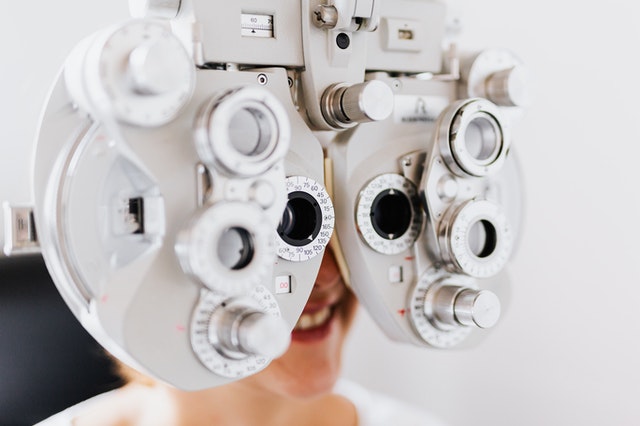
Person getting an eye test

Visit an optician or GP if you’re concerned about any aspect of your vision at any time

📍 Find your nearest NHS optician

Are some people more at risk from eye disease than others?

Some people are more at risk. It’s particularly important to have regular eye tests if you’re:

  • older than 60
  • from a certain ethnic group – people from African-Caribbean communities are at greater risk of developing glaucoma, for example, and people from south Asian and African-Caribbean communities are at greater risk of developing type 2 diabetes (diabetic retinopathy, where the retina becomes damaged, is a common complication of diabetes)
  • someone with a learning disability
  • from a family with a history of eye disease

What about my child’s sight?

Children often do not complain about their sight, but they may show signs of being unable to see properly.

Things to look out for include:

  • sitting close to the TV
  • holding objects very close to their face
  • blinking a lot
  • eye rubbing
  • one eye turning in or out
  • a white reflection in your child’s pupil

There are routine eye checks and tests for children but, if you think your child is having any sort of sight problems, take them to an optician for further investigation. NHS sight tests at opticians are free for children under 16 and for young people under 19 in full-time education.

Children do not have to be able to read letters to have their eyes examined.

Eye care tips for children

Although serious vision problems during childhood are rare, routine eye checks are offered to newborn babies and young children to identify any problems early on. Free NHS sight tests are also available at opticians for children under 16 and for young people under 19 in full-time education.

View more

Eye care tips for over 60s

Because our eyesight changes as we get older, almost all of us will need to wear glasses or contact lenses by the time we're 65. If you have regular eye tests, wear the right lenses and look after your eyes, there's a better chance your sight will remain clear.

View more

Opticians

When you visit an optician for an eye test, you'll be examined by an ophthalmic practitioner or optometrist who is trained to recognise abnormalities and conditions, such as cataracts or glaucoma.

View more

What else can I do to look after my eyes?

Give up smoking

If you smoke you’re much more likely to develop age-related macular degeneration, which is the most common cause of sight loss in the UK, and cataracts, than people who do not smoke.

For help quitting, check out the NHS 10 self-help tips to stop smoking.

Protect your eyes from the sun

Getting out in the sun is important for your general health, but you need to protect yourself.

Never look at the sun directly, even when something exciting such as an eclipse is happening. Doing so can cause irreversible damage to your eyesight and even lead to blindness. Several studies also suggest sunlight exposure is a risk factor for cataracts.

Wearing sunglasses can help protect your eyes from UV rays. The College of Optometrists recommends buying sunglasses. Look for glasses carrying the CE mark or the British Standard BS EN ISO 12312-1:2013, which ensures they offer a safe level of ultraviolet protection.

The College of Optometrists has more information about how to look after your eyes

Go to website

Content provided by NHS.uk

Find information and advice on health conditions, symptoms, healthy living, medicines and how to get help.

Featured image for Eye care tips for children

Eye care tips for children

Although serious vision problems during childhood are rare, routine eye checks are offered to newborn babies and young children to identify any problems early on. Free NHS sight tests are also available at opticians for children under 16 and for young people under 19 in full-time education.

Why eye checks are important

The sooner any eye problem is found, the sooner you and your child will be able to get any treatment and support needed.

Children may not realise they have a vision problem so, without routine tests, there’s a risk a problem may not be spotted. This may affect their development and education.

If you have any concerns about your child’s vision see a GP or go to an opticians.

When will my child’s eyes be checked?

Your child’s eyes may be checked a number of times throughout the first hours, weeks and years of their life.

  • Within 72 hours of birth

    Your child’s eyes will be checked for any obvious physical problems as part of the newborn physical examination.

  • Between 6 and 8 weeks old

    This is a follow-up physical examination to check for any obvious problems that were not picked up soon after birth.

  • Around 1 year, or between 2 and 2-and-a-half years

    You may be asked if you have any concerns about your child’s eyesight as part of your child’s health and development reviews. Eye tests can be arranged if necessary.

  • Around 4 or 5 years old

    Your child’s eyes may be examined soon after they start school. This is called vision screening and it checks for reduced vision in one or both eyes. The aim is to detect any problems early so that treatment can be given if needed.

    Vision screening is usually carried out in your child’s school. However, this does not happen in all areas. If your child’s vision is not checked at school, take them to your local opticians for an eye examination.

Speak to a GP or go to an opticians if you have any concerns about your child’s vision at any stage.

What tests may be carried out?

A number of tests may be carried out to check for vision or eye problems in babies and children.

The red reflex test

The red reflex test is usually carried out alongside a general examination of your baby’s eyes, as part of newborn checks.

It involves using an instrument called an ophthalmoscope that magnifies the eyes and uses a light so they can be examined clearly.

When light is shone into your baby’s eyes, a red reflection should be seen as it’s reflected back. If a white reflection is seen, it could be a sign of an eye problem.

The pupil reflex test

The pupil reflex test involves shining a light into each of your baby’s eyes to check how their pupils (black dots at the centre of the eyes) react to light.

Your baby’s pupils should automatically shrink in response to the light. If they don’t, it could be a sign of a problem.

baby looking into the camera

Attention to visual objects

This is a simple test to check whether a newborn baby pays attention to visual objects.

A midwife or doctor will try to attract your baby’s attention with an interesting object. They then move it to see if the child’s eyes follow.

These sorts of tests can also be used to check the eyesight of older babies and young children who are not yet able to speak.

If your child can speak but is not yet able to recognise letters, pictures may be used instead of objects.

Range of movement tests

To test the range of movement of each eye, a child’s attention will be drawn to an interesting object, which is then moved to 8 different positions: up, down, left, right, and halfway between each of these points.

This tests how well the eye muscles work.

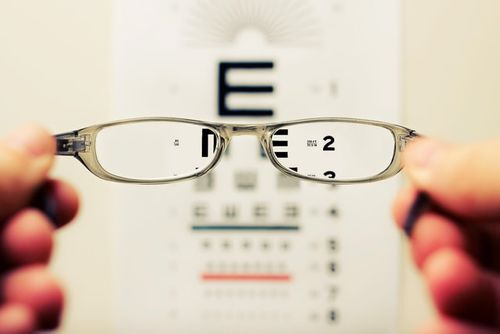
Snellen and LogMAR charts

When your child can recognise or match letters, their vision is tested using charts that have rows of letters and numbers of decreasing sizes.

Your child will be asked to read out or match the letters they can see from a specific distance. These charts are called Snellen or LogMAR charts.

For younger children, a similar test using pictures or symbols may be carried out instead.

Refraction test

A refraction test is carried out by an optometrist at a high-street opticians and is used to check if your child needs glasses and, if so, what prescription they need.

Before the test, your child may be given special eyedrops that widen their pupils so the back of their eyes can be examined more clearly.

Your child will be asked to look at a light, or read letters on a chart if they’re old enough, while different lenses are placed in front of their eyes.

Colour vision deficiency test

Colour vision deficiency tests, also known as colour blindness tests, are usually carried out in older children if a problem is suspected.

One of the tests used to check for colour blindness is the Ishihara test. This involves looking at images made up of dots in 2 different colours. If a child’s colour vision is normal, they’ll be able to recognise a letter or number within the image.

A child who can’t tell the difference between 2 colours won’t be able to see the number or letter, which means they may have a colour vision problem.

Read more about diagnosing colour vision deficiency.

Causes of eye problems in babies and children

There are a number of different eye problems that can be detected during eye tests, including:

Spotting signs of an eye problem

Children can have an eyesight test at any age. They do not need to be able to read, or even speak. An eyesight test is particularly important if there’s a history of childhood eye problems, such as squint or lazy eye, in your family.

Although your child should have regular eye tests as they grow up, it’s still important to look out for signs of any problems and get advice if you have any concerns.

For babies, the checklist in your baby’s personal child health record (red book) can be used to help you check if your child’s vision is developing normally.

In older children, signs of a possible eye problem can include:

  • the eyes not pointing in the same direction
  • complaining of headaches or eye strain
  • problems reading – for example, they may need to hold books close to their face and they may lose their place regularly
  • problems with hand-eye co-ordination – for example, they may struggle to play ball games
  • being unusually clumsy
  • regularly rubbing their eyes
  • sitting too close to the TV

Speak to a GP or go to an opticians if you have any concerns about your child’s eyes or vision. The earlier a problem is picked up the better.

little girl with pink glasses smiling

Content provided by NHS.uk

Find information and advice on health conditions, symptoms, healthy living, medicines and how to get help.

Published on Thu, 27 Jan 2022 11:30:21 GMT
Modified on Mon, 04 Apr 2022 12:50:44 GMT

Featured image for Eye care tips for over 60s

Eye care tips for over 60s

Because our eyesight changes as we get older, almost all of us will need to wear glasses or contact lenses by the time we're 65. If you have regular eye tests, wear the right lenses and look after your eyes, there's a better chance your sight will remain clear.

Have regular eye tests

An eye test is not just good for checking whether your glasses are up-to-date. It’s also a vital check on the health of your eyes.

An eye test can pick up eye diseases, such as glaucoma and cataracts, as well as general health problems, including diabetes and high blood pressure.

The good news is that if you’re 60 or over, you can have a free NHS eye (sight) test as often as you need one.

This is normally every 2 years, but may be more often in certain circumstances.

Your optometrist will be able to advise you as to how often you need to be seen.

If you can’t leave your home because of illness or disability, you can have an NHS eye test at home.

Contact your usual optician to find out if they can visit you at home.

Otherwise, NHS England will have a list of opticians in your area that do home visits.

Wear the right lenses

An eye test will establish whether you need a different prescription for your glasses or contact lenses.

It’s important to wear the correct prescription lenses. This will improve your quality of life and reduce the risk of accidents such as falls.

You may be entitled to help with the cost of NHS glasses or contact lenses, so ask your optician about this.

How to keep your eyes healthy

As well as having regular eye tests and wearing the correct glasses, there are several things to keep your eyes as healthy as possible.

Eat well

Eating a healthy, balanced diet is important for your eyes.

Eating plenty of vegetables and fruit will benefit your overall health and may help protect against some conditions, such as cataracts and age-related macular degeneration (AMD).

Wear sunglasses

Strong sunlight can damage your eyes and may increase your risk of cataracts. Wear sunglasses or contact lenses with a built-in UV filter to protect your eyes from harmful rays.

Quit smoking

Smoking can increase your chances of developing conditions such as cataracts and AMD.

Stay a healthy weight

Being overweight increases your risk of diabetes, which can lead to sight loss.

Exercise

Good circulation and oxygen intake are important for our eye health. Both of these are stimulated by regular exercise.

Sleep well

As you sleep, your eyes are continuously lubricated and irritants, such as dust or smoke, that may have accumulated during the day are cleared out.

Use good lighting

To see well, your eyes need 3 times as much light when you’re 60 as they did when you were 20.

Increase the daylight in your home by keeping windows clean and curtains pulled back.

Make sure you have good electric lighting, too, especially at the top and bottom of stairs so you can see the steps clearly.

For reading or close work, use a direct light from a flexible table lamp, positioned so the light isn’t reflected by the page and causing glare.

Eye problems as you get older

As you get older, you become more likely to get certain eye problems.

Difficulty reading

Eye muscles start to weaken from the age of 45. It’s a natural ageing process of the eye that happens to us all.

By the time you’re 60, you’ll probably need separate reading glasses or an addition to your prescription lenses (bifocals or varifocals).

View more

Floaters

Floaters, which are tiny specks or spots that float across your vision, are normally harmless.

If they persist, see an optician as they may be a sign of an underlying health condition.

View more

Glaucoma

Glaucoma is related to an increase in pressure in the eye that leads to damage of the optic nerve, which connects the eye to the brain.

Left untreated, glaucoma leads to tunnel vision and, ultimately, blindness.

But if it’s detected early enough, these complications can usually be avoided with eye drops.

View more

Macular degeneration

Macular degeneration is a disease of the retina caused by ageing. The retina is the nerve tissue lining the back of your eye.

There are 2 types of macular degeneration. The first type, called dry macular degeneration, gets worse very slowly.

The other type gets worse very quickly. This needs to be seen as an emergency in a hospital eye unit for prompt treatment.

View more

Cataracts

Easily detected in an eye test, this gradual clouding of the eye’s lens is extremely common in over-60s. A simple operation can restore sight.

View more

Content provided by NHS.uk

Find information and advice on health conditions, symptoms, healthy living, medicines and how to get help.

Published on Thu, 27 Jan 2022 11:32:50 GMT
Modified on Tue, 19 Dec 2023 14:50:59 GMT

Featured image for Opticians

Opticians

When you visit an optician for an eye test, you'll be examined by an ophthalmic practitioner or optometrist who is trained to recognise abnormalities and conditions, such as cataracts or glaucoma.

Ophthalmic practitioners prescribe and fit glasses and contact lenses. If necessary, they’ll refer you to a GP or a hospital eye clinic for further investigations. Sometimes, you’ll be referred to a specialist optometrist for a referral refinement (reassessment).

How often should I have a eye test?

Your eyes rarely hurt when something is wrong with them, so having regular eye tests is important to help detect potentially harmful conditions.

The NHS recommends that you should have your eyes tested every 2 years (more often if advised by your ophthalmic practitioner or optometrist).

An NHS sight test is free of charge if you’re in one of the eligible groups and the test is considered clinically necessary. If the ophthalmic practitioner cannot see a clinical need, you’ll have to pay for the test privately.

Private sight tests

If you’re not eligible for a free NHS sight test, you’ll have to pay for a private test.

Charges for private sight tests vary, so it’s advisable to shop around.

If you pay for a private sight test, you won’t be eligible for a free NHS sight test until your next sight test is due.

This will usually be 2 years later, but could be sooner in some cases. The person testing your sight can advise you.

Find out more about free NHS eye tests and optical vouchers.

What happens after an eye test?

Following an eye test your ophthalmic practitioner is legally required to give you your optical prescription or a statement to say you’ve been referred for further tests.

An NHS optical voucher will also be issued immediately if you can prove you’re entitled to one. There are currently 10 voucher values for glasses and lenses. The values depend on the strength of your prescription. The stronger your prescription, the higher the value of your voucher.

You should never feel obliged to buy glasses or redeem an optical voucher from the place where you had your eye test. Shop around for the best value and only buy glasses or contact lenses when you’re happy with the product and cost.

Why does the optician not give me my pupillary distance?

Your ophthalmic practitioner or optometrist is not required by law to include details of the horizontal distance between your pupils (the inter-pupillary distance) in your prescription.

The responsibility for ensuring the lenses are properly centred in your frames lies with the person fitting your glasses (dispensing optician), and they’ll have to do all the measuring.

Any provider of glasses, whether shop- or internet-based, should have arrangements in place to be able to satisfy this requirement.

Eye healthcare professionals explained

Optometrists

An optometrist is trained to recognise abnormalities in your eyes.

They examine the internal and external structure of your eyes to detect conditions such as glaucoma, macular degeneration and cataracts.

They may also test your ability to focus and coordinate your eyes and see depth and colours accurately. If necessary, the optometrist will refer you to your GP or a hospital eye clinic for further investigations.

Optometrists can prescribe and fit glasses, contact lenses and low vision aids, and, if trained to do so, medicines to treat eye conditions.

Dispensing opticians

Dispensing opticians fit glasses and contact lenses working from the prescriptions written by an ophthalmic practitioner or ophthalmologist. They also fit and dispense low vision aids such as magnifying glasses or telescopic spectacles. They do not do eye tests.

A dispensing optician can give you advice on types of lenses, such as single-vision or bifocal (lenses with 2 distinct optical powers) and help you to choose frames and other optical aids. They can also give you advice about wearing and caring for your glasses or contact lenses.

Orthoptists

Orthoptists are specialists in squints and eye movement disorders. They investigate and identify problems relating to the development of the visual system, including:

  • squint and lazy eyes in children (orthoptists often do vision screening of children in schools and community health centres)
  • adults with learning difficulties
  • adults with double vision or a binocular vision problem

Opthalmologists

Ophthalmologists (eye surgeons) are doctors that specialise in the medical and surgical care of the eyes and visual system.

They also look into the prevention of eye disease and injury. An ophthalmologist treats people of all ages, from premature babies to the elderly.

Conditions dealt with in ophthalmology can include eye trauma, cataracts, diabetic eye conditions such as diabetic retinopathy, as well as congenital and genetic eye problems.

Ophthalmic medical practitioners

Ophthalmic medical practitioners are medically qualified doctors specialising in eyecare.

Like optometrists, they examine eyes, test sight, diagnose abnormalities and prescribe suitable corrective lenses.

How can I make a complaint?

If you’re not happy with the service or treatment provided, you have the right to make a complaint.

Wherever possible, complaints should be made directly to the practice as it may be possible to sort out the problem straight away.

  • If you would prefer to talk to someone who is not involved with the practice concerned, you can complain to NHS England. Find out about the NHS complaints procedure.
  • The Optical Consumer Complaints Service (OCCS) may also be able to give you advice or provide some mediation.

Content provided by NHS.uk

Find information and advice on health conditions, symptoms, healthy living, medicines and how to get help.

Published on Thu, 27 Jan 2022 11:34:47 GMT
Modified on Fri, 01 Dec 2023 11:12:21 GMT

Content provided by NHS.uk

Find information and advice on health conditions, symptoms, healthy living, medicines and how to get help.

Published on Thu, 27 Jan 2022 11:22:28 GMT
Modified on Wed, 20 Dec 2023 16:16:50 GMT

Registering with a GP

Featured image for Registering with a GP

Registering with a GP

Anyone in England can register with a GP surgery. It's free to register.

You do not need proof of address or immigration status, ID or an NHS number.

You might be able to register with a GP surgery that’s not in the area you live. Find out about registering with a GP surgery out of your area.

GP surgeries are usually the first contact if you have a health problem. They can treat many conditions and give health advice. They can also refer you to other NHS services.

Registering with a GP

Find a GP that suits what you need. Some GP surgeries offer more services than others. You can look up GP surgeries to see what they offer and how they compare.

Find a GP

Because of coronavirus (COVID-19), try to avoid going into a GP surgery to register.

You can:

  • check the GP surgery website to see if you can register online
  • call or email the GP surgery and ask to be registered as a patient
  • You can download a GMS1 registration form on GOV.UK if you’re asked to complete one.

You do not need proof of ID to register with a GP, but it might help of you have one or more of the following:

  • passport
  • birth certificate
  • HC2 certificate
  • rough sleepers’ identity badge
  • hostel or accommodation registration or mail forwarding letter

If you’re homeless, you can give a temporary address, such as a friend’s address, a day centre or the GP surgery address.

If you need to help registering with a GP surgery

If you need help registering or filling in forms, call the GP surgery and let them know.

You could also ask for help from:

  • local organisations – for example if you’re homeless you could ask a centre that supports homeless people
  • Citizens Advice
  • your local Healthwatch

What to ask your doctor

There are a few things you can prepare in advance that will help you to get the most out of time with the health professional.

View more

GP online consultations

Most GP surgeries now offer online and video consultations.

View more

Video consultations

Most GP surgeries, hospitals, mental health services and community care services now offer video consultations.

View more

Using online services

You may be able to use online services to book appointments, order repeat prescriptons and much more.

View more

Can a GP surgery refuse to register me?

A GP surgery can refuse to register you because:

  • they are not taking any new patients
  • you live outside the practice boundary and they are not accepting patients from out of their area
  • you have been removed from that GP surgery register before
  • it’s a long way from your home and you need extra care, for example home visits

If you have problems registering with a GP surgery

  • all the NHS England Customer Contact Centre on 0300 311 22 33
  • contact your local Healthwatch

Changing GP surgeries

You can change your GP surgery if you need to.

This might be because:

  • you have moved
  • you have had problems with your current practice
  • you were removed from the patient list

You should tell the GP surgery if you change address or move out of the area.

Using a GP surgery you’re not registered with

You can contact any GP surgery if you need treatment and:

  • you’re away from home
  • you’re not registered with a GP surgery
  • it’s a medical emergency

You might need to register as a temporary resident or permanent patient if you need treatment for more than 14 days.

You can register as a temporary resident for up to 3 months. You’ll still be registered with your usual GP surgery if you have one.

Registering with a GP under the Mental Capacity Act The Mental Capacity Act (MCA) is designed to protect and empower people over 16 who are unable to make decisions about their care and treatment.

If a person is unable to register with a GP because they cannot make decisions about their care, registration can be done by:

  • a relative
  • the main carer
  • a lasting power of attorney
  • a person appointed by a court under the Mental Capacity Act

Featured image for Registering with a GP surgery outside the area you live

Registering with a GP surgery outside the area you live

You do not need to register with a GP surgery in the area you live. You can register with a surgery that's more convenient, for example closer to your work or your children's school.

The GP surgery can refuse registration for reasons such as they are not taking new patients or it’s too far away from your home and you need home visits.

How to register with a GP practice outside your area

Look for GP surgeries in the area you want to register. See what they offer and how they compare. Some GP surgeries off different services than others.

Find a GP

When you’ve chosen a GP surgery, ask if they’re accepting registrations outside of the area and ask for a registration form.

Find out more about how to register with a GP surgery

The surgery will decide if they can accept you as a regular patient or accept you without home visits.

Because of the distance to your home, the GP surgery might not be able to offer home visits.

If you are not well enough to go to the GP surgery, other arrangements might be made.

Registering with a practice further away from home can affect decisions about referrals for hospital tests and treatment, or access to community health services. Speak to the GP about your options.

Content provided by NHS.uk

Find information and advice on health conditions, symptoms, healthy living, medicines and how to get help.

Published on Thu, 13 Jan 2022 15:10:47 GMT
Modified on Fri, 14 Jan 2022 15:08:30 GMT

Featured image for GP appointments and bookings

GP appointments and bookings

You can get help from a GP for free, but you'll usually need to make an appointment.

Coronavirus update

To prevent the spread of coronavirus (COVID-19) there have been changes to GP appointments. But it’s still important to get help from a GP if you need it.

You can contact your GP surgery by:

  • visiting their website
  • using the NHS App
  • calling them

You can also order repeat prescriptions online.

Only visit a GP surgery if you have been told to. Find out how to get medical help from home.

How to book, change or cancel an appointment

You should be able to book or change an appointment at your GP surgery:

In some GP surgeries, you may also be able to have a consultation online or over the phone. Speak to your GP surgery for more information about online and phone consultations.

Call your GP surgery if you need an urgent appointment. If your GP surgery is closed, a recorded message will tell you who to contact.

Booking, changing and cancelling appointments online

If you are registered with a GP surgery, you can use their online services to book, check or cancel appointments with a GP, nurse, or other healthcare professional.

If you have already signed up to online services, log in to your usual service provider and book one of the available appointments.

To change an appointment online, you will need to cancel the appointment you already have and book a new one.

Read more about how to start using online services, if you are not signed up to them already.

Important

Your GP surgery may only make some of their appointments available to book online. Online appointments may become available at a certain time of day.

Speak to your GP surgery for more information.

Evening and weekend appointments

You can now see a GP or nurse on:

  • weekday evenings between 6.30pm and 8pm
  • Saturdays and Sundays

Call your GP surgery or use their online services to book evening and weekend appointments. You may be able to get an appointment on the same day.

You may be offered an appointment at:

  • your GP surgery
  • another local GP surgery
  • another local NHS service

If you’re not registered with a GP

You can call any GP surgery to get emergency treatment for up to 14 days if you are not registered with a GP or are away from home.

If your treatment will last longer than 14 days, you’ll have to register as a temporary or permanent resident. Read more about:

Other services

Before you make an appointment to see your GP, think about what other services might be able to help.

  • Go to a pharmacy for advice and treatment for minor conditions that do not need a prescription. Read about services you can get from a pharmacist.
  • Call NHS 111 if you have an urgent medical problem, but you’re not sure what to do.
  • Visit 111.nhs.uk for urgent medical advice for people aged 5 and over only.
  • Visit a sexual health service for testing for sexually transmitted infections and contraception advice.

You do not have to make an appointment or register for these services.

Content provided by NHS.uk

Find information and advice on health conditions, symptoms, healthy living, medicines and how to get help.

Published on Thu, 13 Jan 2022 15:23:15 GMT
Modified on Fri, 14 Jan 2022 11:22:19 GMT

Content provided by NHS.uk

Find information and advice on health conditions, symptoms, healthy living, medicines and how to get help.

Published on Thu, 13 Jan 2022 12:24:02 GMT
Modified on Fri, 04 Mar 2022 15:47:20 GMT

Over the counter medications

Featured image for Over the counter medications

Over the counter medications

Pharmacies are a brilliant asset when you have a minor illness or just need some advice without speaking to your GP. Take a look at some of the commonly used medications, including side effects and dosage information for you and your family.

The type of medicines that you need to treat your pain depend on what type of pain you have.

For pain associated with inflammation, such as back pain or headaches, paracetamol and anti-inflammatory painkillers work best.

The aim of taking medication is to improve your quality of life. All painkillers have potential side effects, so you need to weigh up the advantages of taking them against the disadvantages.

Common problems a pharmacist can help with:

Pharmacists are experts in medicines who can help you with minor health concerns.

As qualified healthcare professionals, they can offer clinical advice and over-the-counter medicines for a range of minor illnesses, such as coughs, colds, sore throats, tummy trouble and aches and pains.

Call a pharmacy or contact them online before going in person. You can get medicines delivered or ask someone to collect them.

If you have a high temperature, a new, continuous cough or a loss or change to your sense of smell or taste, it could be COVID-19.

Get advice about symptoms of COVID-19 and what to do

Cough

If you have a cough, you can ask a pharmacist about:

  • cough syrup
  • cough medicine (some cough medicines should not be given to children under 12)
  • cough sweets

These will not stop your cough, but may help you cough less.

Sore Throat

You can ask a pharmacist about ways of relieving the pain and discomfort of a sore throat, such as:

  • medicated lozenges containing a local anaesthetic, antiseptic, or anti-inflammatory medicine
  • anaesthetic spray (although there’s little proof they help)

You can buy these treatments from a supermarket or from a pharmacist without a prescription.

Common Cold

You can buy cough and cold medicines from pharmacies or supermarkets. A pharmacist can advise you on the best medicine.

You can:

  • ease aches or lower a temperature with painkillers like paracetamol or ibuprofen
  • relieve a blocked nose with decongestant sprays or tablets

Decongestants should not be given to children under 6. Children aged 6 to 12 should take them for no longer than 5 days.

Indigestion

A pharmacist can recommend medicines to ease the burning feeling or pain that can come with indigestion.

Medicines that help reduce acid in your stomach include:

  • antacids
  • proton pump inhibitors

Some indigestion medicines are best to take after eating as their effects last longer. Check the information leaflet that comes with the medicines for more information.

Flu

A pharmacist can give treatment advice and recommend flu remedies.

Be careful not to use flu remedies if you’re taking paracetamol and ibuprofen tablets as it’s easy to take more than the recommended dose.

Medications for adults

Medications for children

Featured image for Paracetamol (adults)

Paracetamol (adults)

Paracetamol is used to treat headaches and most non-nerve pains. Two 500mg tablets of paracetamol up to 4 times a day is a safe dose for adults (never take more than 8 tablets in a 24-hour period).

Paracetamol is a common painkiller used to treat aches and pain. It can also be used to reduce a high temperature.

It’s available combined with other painkillers and anti-sickness medicines. It’s also an ingredient in a wide range of cold and flu remedies.

Paracetamol is widely available as tablets and capsules.

For people who find it difficult to swallow tablets or capsules, paracetamol is also available as a syrup or as soluble tablets that dissolve in water to make a drink.

Key facts:

  • Paracetamol takes up to an hour to work.
  • The usual dose of paracetamol is one or two 500mg tablets at a time.
  • Do not take paracetamol with other medicines containing paracetamol.
  • Paracetamol is safe to take in pregnancy and while breastfeeding, at recommended doses.
  • Brand names include Disprol, Hedex, Medinol and Panadol.

Most people can take paracetamol safely, including pregnant and breastfeeding women.

However, some people need to take extra care with paracetamol.

Check with your doctor or pharmacist if you:

  • have had an allergic reaction to paracetamol or any other medicines in the past
  • have liver or kidney problems
  • regularly drink more than the maximum recommended amount of alcohol (14 units a week)
  • take medicine for epilepsy
  • take medicine for tuberculosis (TB)
  • take the blood-thinner warfarin and you may need to take paracetamol on a regular basis

Paracetamol and pregnancy

Paracetamol is the first choice of painkiller if you’re pregnant or breastfeeding.

It’s been taken by many pregnant and breastfeeding women with no harmful effects in the mother or baby.

For more information about how paracetamol can affect you and your baby during pregnancy, read this leaflet on the Best Use of Medicines in Pregnancy (BUMPS) website.

If you take paracetamol in pregnancy or while breastfeeding, take the lowest dose of paracetamol that works for you for the shortest possible time.

How and when to take it

Paracetamol can be taken with or without food.

Adults can take a maximum of 4 doses (up to eight 500mg tablets in total) in 24 hours. Wait at least 4 hours between doses.

Overdosing on paracetamol can cause serious side effects. Do not be tempted to increase the dose or to take a double dose if your pain is very bad.

What if I take too much?

Taking 1 or 2 extra tablets by accident is unlikely to be harmful, as long as you do not take more than 8 tablets in 24 hours.

Wait at least 24 hours before taking any more paracetamol.

Get help from 111 now if you take:

  • more than 2 extra tablets of paracetamol
  • more than 8 tablets of paracetamol in 24 hours

Taking too much paracetamol can be dangerous and you may need treatment.

If you need to go to your nearest A&E, take the paracetamol packet or leaflet inside it plus any remaining medicine with you.

What if I forget to take it?

If you take paracetamol regularly and miss a dose, take it as soon as you remember. However, skip the missed dose if it’s nearly time for your next dose.

Never take double doses of paracetamol. Do not take an extra dose to make up for a missed one.

Taking paracetamol with other painkillers

It’s safe to take paracetamol with other types of painkiller that don’t contain paracetamol, such as ibuprofen, aspirin and codeine.

Do not take paracetamol alongside other medicines that contain paracetamol. If you take 2 different medicines that contain paracetamol, there’s a risk of overdose.

Before taking any other medicines, check the label to see whether they contain paracetamol.

Side effects

Paracetamol very rarely causes side effects if you take it at the right dosage.

For a full list of possible side effects, see the leaflet inside your medicines packet.

If you’re worried about a side effect or notice anything unusual, talk to your pharmacist or doctor.

In rare cases, it’s possible to have a serious allergic reaction (anaphylaxis) to paracetamol.

Call 999 or go to A&E if:

  • you get a skin rash that may include itchy, red, swollen, blistered or peeling skin
  • you’re wheezing
  • you get tightness in the chest or throat
  • you have trouble breathing or talking
  • your mouth, face, lips, tongue or throat start swelling

You could be having a serious allergic reaction and may need immediate treatment in hospital.

You can report any suspected side effect to the UK safety scheme.

Cautions with other medicines

It’s safe to take paracetamol with most prescription medicines, including antibiotics.

Paracetamol isn’t suitable for some people. Talk to your doctor if you are unsure.

Check with your doctor or pharmacist if you’re taking St John’s wort (a herbal remedy taken for depression) as you may need to reduce your paracetamol dose.

Otherwise, paracetamol isn’t generally affected by also taking herbal remedies or supplements.

For safety, tell your doctor or pharmacist if you’re taking any other medicines, including herbal remedies, vitamins or supplements.

Content provided by NHS.uk

Find information and advice on health conditions, symptoms, healthy living, medicines and how to get help.

Published on Mon, 10 Jan 2022 12:14:09 GMT
Modified on Wed, 06 Apr 2022 12:09:50 GMT

Featured image for Ibuprofen (adults)

Ibuprofen (adults)

Ibuprofen is a commonly used NSAID (Non-steroidal anti-inflammatory drug), but it should not be used for long periods unless you have discussed it with your doctor. Find out more about dosage and uses.

Ibuprofen is an everyday painkiller for a range of aches and pains, including back pain, period pain and toothache. It also treats inflammation such as sprains and strains, and pain from arthritis.

It’s available as tablets, capsules, granules and as a liquid that you swallow. It also comes as a gel, mousse and spray that you rub into your skin.

Ibuprofen is combined with other painkillers in some products. It’s an ingredient in some cold and flu remedies, such as Nurofen Cold and Flu.

You can buy most types of ibuprofen from pharmacies and supermarkets. Some types are only available on prescription.

Key facts

  • Ibuprofen works by reducing hormones that cause pain and swelling in the body.
  • It takes 20 to 30 minutes to work if you take it by mouth, and 1 to 2 days to work if you put it on your skin.
  • Ibuprofen is typically used for period pain or toothache. Some people find ibuprofen better than paracetamol for back pain.
  • Always take ibuprofen tablets, capsules, granules and liquid with food or a drink of milk to reduce the chance of an upset stomach. Do not take it on an empty stomach.
  • If you’re taking tablets, capsules, granules or liquid, take the lowest dose to control your pain for the shortest possible time. Do not take it for more than 10 days (or 3 days if you’re under 18) unless you’ve spoken to your doctor. Do not use the gel, mousse or spray for more than 2 weeks without talking to your doctor.

Who may not be able to take ibuprofen?

Do not take ibuprofen by mouth or apply it to your skin if you:

Tablets, capsules, granules and liquids

To make sure ibuprofen tablets, capsules, granules or liquid is safe for you, tell your doctor or pharmacist if you:

  • have ever had bleeding in your stomach or a hole (perforation) in your stomach caused by an NSAID
  • have had a hole (perforation) in your stomach, bleeding in your stomach or a stomach ulcer more than once
  • have a health problem that means you have an increased chance of bleeding
  • have severe heart failure, severe kidney failure or severe liver failure
  • are trying to get pregnant
  • have high blood pressure that’s not under control
  • have heart disease or mild to moderate heart failure, or have ever had a stroke
  • have kidney or liver problems
  • have asthma, hay fever or allergies
  • have Crohn’s disease or ulcerative colitis
  • have chickenpox or shingles – taking ibuprofen can increase the chance of certain infections and skin reactions

If you’re over 65, ibuprofen can make you more likely to get stomach ulcers. Your doctor will prescribe you a medicine to protect your stomach if you’re taking ibuprofen for a long-term condition.

Always follow your doctor or pharmacist’s advice, and the instructions that come with your medicine.

Dosage

  • Each ibuprofen tablet or capsule contains 200mg, 400mg or 600mg of ibuprofen. Slow-release tablets and capsules contain 200mg, 300mg or 800mg of ibuprofen.

  • Each sachet of granules contains 600mg of ibuprofen.

  • If you’re taking ibuprofen as a liquid, 10ml contains either 200mg or 400mg. Always check the label.

  • The usual dose for adults is one or two 200mg tablets or capsules 3 times a day. In some cases, your doctor may prescribe a higher dose of up to 600mg to take 4 times a day if needed. This should only happen under supervision of a doctor.

  • If you’re taking granules, the usual dose for adults is one sachet 2 or 3 times a day. Some people might need to take it 4 times a day.

  • If you take ibuprofen 3 times a day, leave at least 6 hours between doses. If you take it 4 times a day, leave at least 4 hours between doses.

  • If you have pain all the time, your doctor may recommend slow-release ibuprofen tablets or capsules. You’ll usually take these once a day in the evening or twice a day. Leave a gap of 10 to 12 hours between doses if you’re taking ibuprofen twice a day.

How to take tablets, capsules, granules and liquid

  • Swallow ibuprofen tablets or capsules whole with a drink of water, milk or juice. Do not chew, break, crush or suck them as this could irritate your mouth or throat.

  • For people who find it difficult to swallow tablets or capsules, ibuprofen is available as a tablet that melts in your mouth, granules that you mix with a glass of water to make a drink, and as a liquid.

  • If you’re taking the tablet that melts in your mouth, put it on your tongue, let it dissolve and then swallow. You do not need to drink any water.

  • Take ibuprofen granules by emptying the contents of the sachet into a glass full of water to make an orange flavoured fizzy drink, stir and drink straight away.

  • If you’re taking liquid, it will come with a plastic syringe or spoon to measure your dose. If you do not have a syringe or spoon, ask your pharmacist for one. Do not use a kitchen spoon, as it will not measure the right amount.

  • Take ibuprofen tablets, capsules, granules or liquid with a meal or snack, or with a drink of milk. It will be less likely to upset your stomach. If you take it just after food, ibuprofen may take longer to start working.

How long to take it for

If you’re taking ibuprofen for a short-lived pain like toothache or period pain, you may only need to take it for a day or two.

You may need to take ibuprofen for longer if you have a long-term health problem, such as rheumatoid arthritis.

If you need to take ibuprofen for more than 6 months, your doctor may prescribe a medicine to protect your stomach from any side effects.

If you forget to take ibuprofen tablets, capsules, granules or liquid

If you are prescribed ibuprofen as a regular medicine and forget to take a dose, take the missed dose as soon as you remember, unless it’s almost time for your next dose. In this case, skip the missed dose and take your next dose at the usual time.

Never take a double dose to make up for a forgotten one.

If you often forget doses, it may help to set an alarm to remind you. You could also ask your pharmacist for advice on other ways to help you remember to take your medicine.

If you take too much ibuprofen tablets, capsules, granules or liquid

Taking too much ibuprofen by mouth can be dangerous. It can cause side effects such as:

  • feeling and being sick (nausea and vomiting)
  • stomach pain
  • feeling tired or sleepy
  • black poo and blood in your vomit – a sign of bleeding in your stomach
  • ringing in your ears (tinnitus)
  • difficulty breathing or changes in your heart rate (slower or faster)

Urgent advice: Contact 111 for advice now if

you’ve taken more than it says on the packet of ibuprofen tablets, capsules, granules or liquid

Immediate action required: Go to A&E now if:

you’ve taken more than it says on the packet of ibuprofen tablets, capsules, granules or liquid and:

  • your heart rate (pulse) has slowed down or got faster
  • you’re having difficulty breathing

If you go to A&E, do not drive yourself. Get someone else to drive you or call for an ambulance.

Take the ibuprofen packet, or the leaflet inside it, plus any remaining medicine with you.

Common side effects of tablets, capsules, granules and liquid

These common side effects of ibuprofen taken by mouth happen in more than 1 in 100 people. There are things you can do to help cope with them:

  • Headaches

    Make sure you rest and drink plenty of fluids. Try not to drink too much alcohol. It’s important not to take any other medicines for pain to help with headaches. Talk to your doctor if the headaches last longer than a week or are severe.

  • Feeling dizzy

    If ibuprofen makes you feel dizzy, stop what you’re doing and sit or lie down until you feel better. Avoid coffee, cigarettes and alcohol. If the dizziness does not get better within a couple of days, speak to your pharmacist or doctor. Do not drive or ride a bike while you’re feeling dizzy.

  • Feeling sick (nausea)

    Stick to simple meals. Do not eat rich or spicy food. Always take ibuprofen tablets, capsules, granules or liquid with a meal or snack or with a drink of milk.

  • Being sick (vomiting)

    Have small, frequent sips of water to avoid dehydration. Speak to a pharmacist if you have signs of dehydration, such as peeing less than usual or having dark, strong-smelling pee. Do not take any other medicines to treat vomiting without speaking to a pharmacist or doctor.

    If you take contraceptive pills and you’re being sick, your contraception may not protect you from pregnancy. Check the pill packet for advice.

  • Wind

    Try not to eat foods that cause wind (like lentils, beans and onions). Eat smaller meals, eat and drink slowly, and exercise regularly. There are pharmacy medicines that can also help, such as charcoal tablets or simeticone.

  • Indigestion

    If you get repeated indigestion stop taking ibuprofen and see your doctor as soon as possible. If you need something to ease the discomfort, try taking an antacid, but do not put off going to the doctor.

Speak to a doctor or pharmacist if the advice on how to cope does not help and a side effect is still bothering you or does not go away.

Ibuprofen gel, mousse or spray

To make sure ibuprofen applied to the skin is safe for you, tell your doctor or pharmacist if you have:

Always follow your doctor or pharmacist’s advice, and the instructions that come with your medicine.

Dosage

The amount of ibuprofen you put on your skin depends on the product you’re using. Check the package leaflet carefully for how much to use.

How to use ibuprofen gel, mousse or spray

Gently massage the ibuprofen into the painful area 3 or 4 times a day. Leave at least 4 hours between applications.

Most products must not be used more than 4 times in 24 hours. Check the instructions that come with the medicine to see how many times a day you can use it.

Never use ibuprofen gel, mousse or spray on your eyes, mouth, lips, nose or genital area. It may make them sore. Do not put it on sore or broken skin.

Do not put plasters or dressings over skin you’ve applied ibuprofen to.

Wash your hands after using it, unless you are treating your hands.

Do not smoke or go near naked flames as clothes that have been in contact with ibuprofen gel, mousse or spray burn more easily, even if they have been washed.

If you forget to put it on

Do not worry if you occasionally forget to use ibuprofen gel, mousse or spray, just carry on using it when you remember.

If you put on too much ibuprofen gel, mousse or spray

Putting too much ibuprofen on your skin is unlikely to cause problems.

If you swallow the gel, mousse or spray

If you swallow ibuprofen gel, mousse or spray, you may get symptoms including:

  • headaches
  • being sick (vomiting)
  • feeling sleepy or dizzy

Urgent advice: Contact 111 for advice now if

you swallow ibuprofen gel, mousse or spray and you feel unwell

Common side effects of gel, mousse and spray

You’re less likely to have side effects when you apply ibuprofen to your skin than with tablets, capsules, granules or liquid because less gets into your body. But you may still get the same side effects, especially if you use a lot on a large area of skin.

Applying ibuprofen to your skin can sometimes cause your skin to become more sensitive than normal to sunlight. Speak to your doctor if this is a problem.

Serious side effects

Call a doctor or contact 111 straight away and stop taking ibuprofen if you have:

  • black poo or blood in your vomit – these can be signs of bleeding in your stomach
  • swollen ankles, blood in your pee or not peeing at all – these can be signs of a kidney problem

Immediate action required: Call 999 or go to A&E now if:

  • you have severe chest or stomach pain – these can be signs of a hole in your stomach or gut
  • you have difficulty breathing, or asthma symptoms that become worse
  • you get a severe headache, a high temperature or stiff neck, and a dislike of bright lights – these can be signs or inflammation of the protective membranes that surround the brain and spinal cord (meninges)
  • you have blurred vision or you see or hear things that are not real (hallucinations)

Find your nearest A&E

Serious allergic reaction

In rare cases, it’s possible to have a serious allergic reaction (anaphylaxis) to ibuprofen.

Immediate action required: Call 999 or go to A&E now if:

  • you get a skin rash that may include itchy, red, swollen, blistered or peeling skin
  • you’re wheezing
  • you get tightness in the chest or throat
  • you have trouble breathing or talking
  • your mouth, face, lips, tongue or throat start swelling

You could be having a serious allergic reaction and may need immediate treatment in hospital.

Long term side effects

Ibuprofen can cause ulcers in your stomach or gut, especially if you take it by mouth for a long time or in big doses. If you need to take it for a long time your doctor may also prescribe a medicine to help protect your stomach.

Other side effects

These are not all the side effects of ibuprofen tablets, capsules and syrup. For a full list see the leaflet inside your medicines packet.

Ibuprofen and Pregnancy

Ibuprofen is not usually recommended in pregnancy, unless it’s prescribed by a doctor, especially if you’re more than 30 weeks pregnant. This is because ibuprofen can affect your baby’s circulation and kidneys. There may also be a link between taking ibuprofen in early pregnancy and miscarriage.

Always talk to a doctor or pharmacist before taking ibuprofen if you’re pregnant. Your doctor can advise you about the benefits and possible harms of taking it.

Ibuprofen and Breastfeeding

You can take ibuprofen or use it on your skin while breastfeeding. It is one of the painkillers that’s usually recommended if you’re breastfeeding.

Only tiny amounts get into breast milk and it’s unlikely to cause side effects in your baby. Many people have used it while breastfeeding without any problems.

Taking ibuprofen with other medicines

Ibuprofen does not mix well with some medicines.

It’s safe to take ibuprofen with paracetamol or codeine. But do not take ibuprofen with similar painkillers like aspirin or naproxen without talking to a pharmacist or doctor.

Tell your doctor or pharmacist if you’re taking any other medicines, including herbal remedies, vitamins or supplements.

For more information on taking ibuprofen alongside herbal supplements, visit the NHS website.

Content provided by NHS.uk

Find information and advice on health conditions, symptoms, healthy living, medicines and how to get help.

Published on Thu, 13 Jan 2022 15:44:17 GMT
Modified on Mon, 04 Apr 2022 12:34:45 GMT

Featured image for Paracetamol (Children)

Paracetamol (Children)

Paracetamol is a common painkiller for children. There are different types of paracetamol for children, including 2 strengths of syrup. The strength and dosage depends on your child's age (and sometimes weight), so always read the instructions carefully.

Paracetamol is a common painkiller for children. It’s often used to treat headaches, stomach ache, earache, and cold symptoms. It can also be used to bring down a high temperature (fever).

Paracetamol tablets (including soluble tablets), syrup and suppositories are available on prescription and to buy from shops and pharmacies.

Key facts

  • There are different types of paracetamol for children, including 2 strengths of syrup. The strength and dosage depends on your child’s age (and sometimes weight), so always read the instructions carefully.
  • Your child should start to feel better about 30 minutes after taking tablets or syrup. Suppositories can take up to 60 minutes to work properly.
  • Do not give your child any other medicines that contain paracetamol. These include some cough and cold medicines, so check the ingredients carefully.
  • Paracetamol is an everyday medicine, but it can be dangerous if your child takes too much. Be careful to keep it out of the reach of children.
  • Paracetamol is known by many different brand names, including Disprol, Hedex, Medinol and Panadol. Paracetamol syrup is also known by the brand name Calpol.

Who can and cannot take paracetamol

Children can take paracetamol as:

  • a liquid syrup – from the age of 2 months
  • suppositories – from the age of 2 months
  • tablets (including soluble tablets) – from the age of 6 years
  • Calpol Fast Melts – from the age of 6 years

Do not give paracetamol to babies younger than 2 months old, unless it is prescribed by a doctor.

Check with your doctor or pharmacist before giving your child paracetamol if they:

  • are small for their age, as a lower dose may be better
  • have had liver or kidney problems
  • take medicine for epilepsy
  • take medicine for tuberculosis (TB)
  • take warfarin (a blood-thinning medicine)

Dosage and how often to give it

Paracetamol tablets, syrup and suppositories come in a range of strengths. Children need to take a lower dose than adults, depending on their age.

Ask your doctor or a pharmacist for advice if your child is small or big for their age and you’re not sure how much to give.

Syrup dosages for children

Infant syrup (sometimes called “junior syrup”) is for children under 6 years old. A 5ml dose contains 120mg of paracetamol.

Infant syrup: 120mg/5ml

Age How much? How often?
3 to 6 months 2.5ml Max 4 times in 24 hours
6 to 24 months 5ml Max 4 times in 24 hours
2 to 4 years 7.5ml Max 4 times in 24 hours
4 to 6 years 10ml Max 4 times in 24 hours

Six plus syrup is for children aged 6 years and older. A 5ml dose contains 250mg of paracetamol.

Six plus syrup: 250mg/5ml

Age How much? How often?
6 to 8 years 5ml Max 4 times in 24 hours
8 to 10 years 7.5ml Max 4 times in 24 hours
10 to 12 years 10ml Max 4 times in 24 hours

Do not give your child more than 4 doses of paracetamol in 24 hours. Wait at least 4 hours between doses.

Dosage instructions are different for babies over the age of 2 months (see Giving paracetamol to babies from 2 months).

Tablet dosages for children

Tablets usually come as 500mg. For lower doses break up the tablet to give your child a smaller amount.

Do not give your child more than 4 doses of paracetamol in 24 hours. Wait at least 4 hours between doses.

Age How much? How often?
6 to 8 years 250mg Max 4 times in 24 hours
8 to 10 years 375mg Max 4 times in 24 hours
10 to 12 years 500mg Max 4 times in 24 hours
12 to 16 years 750mg Max 4 times in 24 hours

How often to give paracetamol

If your child needs help with pain day and night for several days (usually up to 3 days), give a dose of paracetamol every 6 hours. This will help to relieve the pain safely without the risk of giving too much paracetamol.

If your child has pain that comes and goes, give a dose of paracetamol when they first complain of pain. Wait at least 4 hours before giving another dose.

What if they take too much?

If you give your child 1 extra dose of paracetamol by mistake, wait at least 24 hours before giving them any more.

Get help from 111 now if:

your child takes 2 extra doses of paracetamol or more.

They may need treatment.

If you need to take your child to hospital, bring the paracetamol packaging or leaflet plus any remaining medicine with you.

When to use 111

How to give paracetamol to your child

Paracetamol can be taken with or without food.

How to give syrup

Shake the bottle well for at least 10 seconds and measure out the right amount using the plastic syringe or spoon that comes with the medicine. If you don’t have a syringe or spoon, ask your pharmacist for one. Do not use a kitchen teaspoon as it will not give the right amount.

If your child doesn’t like the taste, you can give them a drink of milk or fruit juice straight after giving them the syrup.

How to give tablets

Tablets should be swallowed with a glass of water, milk or juice. Tell your child not to chew the tablet.

Soluble tablets should be dissolved in at least half a glass of water. Stir to make sure the tablet has dissolved completely and then give it to your child to drink.

Calpol Fast Melts shouldn’t be swallowed – ask your child to let the tablet dissolve on their tongue.

How to use suppositories

Paracetamol suppositories are medicine that you push gently into your child’s bottom.

Follow the instructions on the leaflet that comes with the medicine.

Find out more information about giving paracetamol to babies from 2 months including treating a high temperature after vaccinations

Giving paracetamol with other painkillers

Ibuprofen is the only safe painkiller to give children alongside paracetamol. However, do not give paracetamol and ibuprofen at the same time.

You need to give these medicines 1 at a time (unless your child’s doctor or nurse gives you different instructions).

For high temperature

If you’ve given your child paracetamol and they still have a high temperature after 1 hour, you could try giving them ibuprofen.

If this helps bring down their temperature, carry on giving them ibuprofen instead of paracetamol. Follow the instructions that come with the medicine.

Do not alternate between paracetamol and ibuprofen to treat a high temperature without advice from a doctor or nurse.

Do not give more than the maximum daily dose of either medicine.

See your doctor if you’ve tried both paracetamol and ibuprofen and they haven’t helped.

For pain (including teething)

If you’ve given your child paracetamol and they’re still in pain 2 hours later, you could try giving ibuprofen.

If this works, continue to alternate between paracetamol and ibuprofen, giving only 1 medicine at a time. The timings for each medicine will depend on how much pain your child is in. If you’re unsure, ask your pharmacist for advice.

Do not give more than the maximum daily dose of either medicine.

See your doctor if you’ve tried alternating paracetamol and ibuprofen and they haven’t helped. Also see your doctor if you don’t know what is causing your child’s pain.

Other medicines containing paracetamol

Do not give your child another medicine with paracetamol in it. If they take 2 different medicines that contain paracetamol, there’s a risk of overdose.

Paracetamol is an ingredient in lots of medicines that you can buy from the pharmacy or supermarket. These include some cough and cold medicines, so check the ingredients carefully.

Side effects in children

Paracetamol rarely causes side effects if you give it in the right doses.

If you’re worried about a side effect or notice anything unusual, talk to your pharmacist or doctor.

Serious allergic reaction

In rare cases, it’s possible to have a serious allergic reaction (anaphylaxis) to paracetamol.

Call 999 or go to A&E if:

  • your child has a skin rash that may include itchy, red, swollen, blistered or peeling skin
  • your child is wheezing
  • your child has tightness in their chest or throat
  • your child has trouble breathing or talking
  • your child’s mouth, face, lips, tongue or throat start swelling

They could be having a serious allergic reaction and may need immediate treatment in hospital.

You can report any suspected side effect using the Yellow Card safety scheme.

Cautions with other medicines

In general, paracetamol doesn’t interfere with prescription medicines, including antibiotics.

However, paracetamol isn’t suitable for some children.

Check with a doctor or pharmacist before giving any herbal remedies or supplements to your child.

Content provided by NHS.uk

Find information and advice on health conditions, symptoms, healthy living, medicines and how to get help.

Published on Tue, 11 Jan 2022 16:46:57 GMT
Modified on Mon, 04 Apr 2022 12:38:40 GMT

Featured image for Ibuprofen (Children)

Ibuprofen (Children)

Ibuprofen is an everyday painkiller for a range of aches and pains. You can buy most types of ibuprofen from pharmacies and supermarkets. Some types are only available on prescription.

Ibuprofen is a common painkiller for children. It’s often used to treat cold symptoms, teething and toothache.

Ibuprofen also treats inflammation, such as aches and pains after an injury like a sprain, or because of a health problem like childhood arthritis. It can also be used to bring down a high temperature (fever).

For children aged 3 months to 12 years, ibuprofen comes as a liquid syrup.

For children aged 7 years or older, ibuprofen is available as tablets, capsules and granules that you dissolve in water to make a drink.

You can buy most types of ibuprofen from pharmacies and supermarkets. Some types, such as ibuprofen granules, are only available on prescription.

Key facts

  • Ibuprofen works by reducing hormones that cause pain and swelling in the body.
  • It takes 20 to 30 minutes to work if you take it by mouth, and 1 to 2 days to work if you put it on your skin.
  • Ibuprofen is typically used for period pain or toothache. Some people find ibuprofen better than paracetamol for back pain.
  • Always take ibuprofen tablets, capsules, granules and liquid with food or a drink of milk to reduce the chance of an upset stomach. Do not take it on an empty stomach.
  • If you’re taking tablets, capsules, granules or liquid, take the lowest dose to control your pain for the shortest possible time. Do not take it for more than 10 days (or 3 days if you’re under 18) unless you’ve spoken to your doctor. Do not use the gel, mousse or spray for more than 2 weeks without talking to your doctor.

Who can and can’t take ibuprofen

Children can take ibuprofen as:

  • a liquid syrup – from the age of 3 months
  • tablets and capsules – from the age of 7 years
  • chewable tablets – from the age of 7 years
  • granules – from the age of 12 years

Ibuprofen is not suitable for some children. Check with your pharmacist or doctor if your child:

  • has had an allergic reaction to ibuprofen or any other medicines in the past
  • has asthma
  • has liver or kidney problems
  • has a health problem that means they have an increased risk of bleeding
  • has an inflammatory bowel disease, such as Crohn’s disease or ulcerative colitis
  • is small or big for their age, as a lower or higher dose may be better

Do not give ibuprofen for chickenpox unless it has been recommended by a doctor – it can cause a serious skin reaction.

Dosage and how often to give it

Ibuprofen is usually given to children 3 or 4 times a day. Your pharmacist or doctor will tell you how often to give it.

If you’re not sure how much to give a child, ask your pharmacist or doctor.

If you give it:

  • 3 times in 24 hours, leave at least 6 hours between doses
  • 4 times in 24 hours, leave at least 4 hours between doses

Ibuprofen syrup dosages for children

Age How much? How often?
3 to 5 months (weighing more than 5kg) 2.5ml Max 3 times in 24 hours
6 to 11 months 2.5ml Max 3 to 4 times in 24 hours
1 to 3 years 5ml Max 3 times in 24 hours
4 to 6 years 7.5ml Max 3 times in 24 hours
7 to 9 years 10ml Max 3 times in 24 hours
10 to 11 years 15ml Max 3 times in 24 hours
12 to 17 years 15ml to 20ml Max 3 to 4 times in 24 hours

Ibuprofen tablet dosages for children

Age How much? How often?
7 to 9 years 200mg Max 3 times in 24 hours
10 to 11 years 200mg to 300mg Max 3 times in 24 hours
12 to 17 years 200mg to 400mg Max 3 times in 24 hours

If your child has pain all the time, your doctor may prescribe slow-release tablets or capsules. These are given once or twice a day.

What if I forget to give it?

Give the missed dose as soon as you remember. If it’s nearly time for their next dose, skip the missed dose and give their next dose as the usual time.

Never give a double dose to make up for a forgotten one.

What if they take too much?

If you give your child 1 extra dose of ibuprofen by mistake, wait at least 12 hours before giving them any more.

Urgent advice: Get help from 111 now if:

your child takes 2 extra doses or more of ibuprofen.

They may need treatment.

If you need to take your child to hospital, take the ibuprofen packaging or leaflet plus any remaining medicine with you.

How to give ibuprofen to your child

It’s best to give ibuprofen to children with food or milk so they do not get an upset tummy.

Syrup

Shake the bottle well and measure out the right amount using a plastic syringe or spoon. These come in the medicine packet. If you do not have a syringe or spoon, ask your pharmacist for one. Do not use a kitchen teaspoon as it will not give the right amount.

To hide the taste of the syrup, you can give the child a drink of milk or fruit juice straight after the medicine. But do not mix ibuprofen syrup with juice or milk as it may mean they do not get the right dose if they do not finish the drink.

Tablets and capsules

Tablets and capsules should be swallowed whole with a glass of water or juice. Tell your child not to chew, break, crush or suck them as this could irritate their mouth or throat.

Children taking chewable tablets should chew them before swallowing.

Granules

Sprinkle or stir the granules into a small amount of soft food (such as yoghurt) or a small drink, or you can mix them with a spoonful of cold water. Do not mix the granules with warm food or liquid.

Your child should then swallow the food or drink it straight away without chewing. Make sure they take it all. Do not keep the granule/food mixture to give later.

Giving ibuprofen with other painkillers

Paracetamol is the only safe painkiller to give children alongside ibuprofen. However, do not give ibuprofen and paracetamol at the same time.

You need to give these medicines 1 at a time (unless your child’s doctor or nurse gives you different instructions).

For high temperature

If you’ve given your child ibuprofen and they still have a high temperature after 1 hour, you could try paracetamol instead.

If this helps bring down their temperature, carry on giving them paracetamol only (following the instructions that come with the medicine).

Call your doctor if you’ve tried both paracetamol and ibuprofen and they have not helped.

Do not alternate between paracetamol and ibuprofen to treat a high temperature without advice from a doctor or nurse.

Do not give more than the maximum daily dose of either medicine.

For pain (including teething)

If you’ve given your child ibuprofen and they’re still in pain 2 hours later, you could try giving paracetamol as well.

If this works, you can alternate paracetamol and ibuprofen, giving only 1 medicine at a time.

Do not give more than the maximum daily dose of either medicine.

See your doctor if you’ve tried alternating paracetamol and ibuprofen and they have not helped. Also see your doctor if you don’t know what is causing your child’s pain.

Never give aspirin to a child under the age of 16, unless their doctor prescribes it.

Side effects in children

Ibuprofen can cause side effects. To reduce the chance of side effects, give your child the lowest dose for the shortest time to control their symptoms.

Common side effects

The common side effects of ibuprofen, which happen in more than 1 in 100 children, are:

  • indigestion, heartburn or feeling or being sick (nausea or vomiting) – you can reduce this by giving ibuprofen with food

If these symptoms carry on or get worse, they may be signs of irritation of the gut or stomach. Talk to your doctor or pharmacist if these side effects bother your child or do not go away.

Serious side effects

Contact a doctor straight away if your child:

  • gets severe stomach pains, vomits blood, or their poo is very dark or black – these may be signs of a stomach ulcer
  • stops peeing or there’s blood in their pee – there may be a problem with their kidneys
  • hears ringing in their ears

Ibuprofen may make asthma worse in some children, but this is uncommon. Talk to your doctor if you’re worried.

In rare cases, it’s possible for your child to have a serious allergic reaction (anaphylaxis) to ibuprofen.

Immediate action required: Call 999 or take your child to A&E if:

  • your child has a skin rash that may include itchy, red, swollen, blistered or peeling skin
  • your child is wheezing
  • your child has tightness in their chest or throat
  • your child has trouble breathing or talking
  • your child’s mouth, face, lips, tongue or throat start swelling

They could be having a serious allergic reaction and may need immediate treatment in hospital.

These are not all the side effects of ibuprofen. For a full list see the leaflet inside your medicines packet.

You can report any suspected side effect using the Yellow Card safety scheme.

Ibuprofen does not mix well with some prescription medicines.

Tell your doctor or pharmacist if your child is taking any other medicine, including herbal remedies, vitamins or supplements.

Content provided by NHS.uk

Find information and advice on health conditions, symptoms, healthy living, medicines and how to get help.

Published on Thu, 13 Jan 2022 15:42:48 GMT
Modified on Thu, 07 Apr 2022 09:32:17 GMT

Featured image for Antihistamines

Antihistamines

Antihistamines are medicines often used to relieve symptoms of allergies, such as hay fever, hives, conjunctivitis and reactions to insect bites or stings. Most antihistamines can be bought from pharmacies and shops, but some are only available on prescription.

Antihistamines are medicines often used to relieve symptoms of allergies, such as hay fever, hives, conjunctivitis and reactions to insect bites or stings.

They’re also sometimes used to prevent motion sickness and as a short-term treatment for insomnia.

Types of antihistamine

There are many types of antihistamine.

They’re usually divided into 2 groups:

They also come in several different forms – including tablets, capsules, liquids, syrups, creams, lotions, gels, eyedrops and nasal sprays.

Which type is best?

There’s not much evidence to suggest any particular antihistamine is better than any other at relieving allergy symptoms.

Some people find certain types work well for them and others do not. You may need to try several types to find one that works for you.

Non-drowsy antihistamines are generally the best option, as they’re less likely to make you feel sleepy. But types that make you feel sleepy may be better if your symptoms stop you sleeping.

Ask a pharmacist for advice if you’re unsure which medicine to try as not all antihistamines are suitable for everyone.

Who can take antihistamines

Most people can safely take antihistamines.

But speak to a pharmacist or GP for advice if you:

Some antihistamines may not be suitable in these cases. A pharmacist or doctor can recommend one that’s best for you.

Loratadine is usually recommended if you need to take an antihistamine in pregnancy. Loratadine or cetirizine are usually OK to take while breastfeeding.

How to take antihistamines

Take your medicine as advised by the pharmacist or doctor, or as described in the leaflet that comes with it.

The advice varies depending on the exact medicine you’re taking. If you’re not sure how to take your medicine, ask a pharmacist.

Side effects of antihistamines

Like all medicines, antihistamines can cause side effects.

Side effects of antihistamines that make you drowsy can include:

  • sleepiness (drowsiness) and reduced co-ordination, reaction speed and judgement – do not drive or use machinery after taking these antihistamines
  • dry mouth
  • blurred vision
  • difficulty peeing

Side effects of non-drowsy antihistamines can include:

  • headache
  • dry mouth
  • feeling sick
  • drowsiness – although this is less common than with older types of antihistamines

Check the leaflet that comes with your medicine for a full list of possible side effects and advice about when to get medical help.

Taking antihistamines with other medicines, food or alcohol

Speak to a pharmacist or GP before taking antihistamines if you’re already taking other medicines.

There may be a risk the medicines do not mix, which could stop either from working properly or increase the risk of side effects.

Examples of medicines that could cause problems if taken with antihistamines include some types of:

Try not to drink alcohol while taking an antihistamine, particularly if it’s a type that makes you drowsy, as it can increase the chances of it making you feel sleepy.

Food and other drinks do not affect most antihistamines, but check the leaflet that comes with your medicine to make sure.

The leaflet that comes in the packet with your medicine will have detailed information about it, including how to take it and what side effects you might get.

You may also find information on individual antihistamines on the Medicines and Healthcare products Regulatory Agency (MHRA): patient information leaflets website.

Content provided by NHS.uk

Find information and advice on health conditions, symptoms, healthy living, medicines and how to get help.

Published on Tue, 11 Jan 2022 16:51:16 GMT
Modified on Mon, 04 Apr 2022 14:57:46 GMT

Featured image for Aspirin

Aspirin

Aspirin is another anti-inflammatory drug which works better when there is an inflammatory cause such as an injury. It is also an NSAID, but isn't as effective as a painkiller. Never give aspirin to a child younger than 16 unless their doctor prescribes it.

Aspirin is an everyday painkiller for aches and pains such as headache, toothache and period pain. It can also be used to treat colds and flu-like symptoms, and to bring down a high temperature.

Aspirin is known as an acetylsalicylic acid. It also belongs to a group of medicines called non-steroidal anti-inflammatory drugs (NSAIDs).

Aspirin combined with other ingredients is also available in some cold and flu remedies.

You can buy most types of aspirin from pharmacies, shops and supermarkets. Some types are only available on prescription.

Aspirin comes as tablets or suppositories – medicine that you push gently into your anus (bottom). It also comes as a gel for mouth ulcers and cold sores.

If you’ve had a stroke or heart attack, or are at high risk of a heart attack, your doctor may recommend that you take a daily low-dose aspirin. Some women may also be prescribed low-dose aspirin while they’re pregnant.

This is different to taking aspirin for pain relief. Only take low-dose aspirin if your doctor recommends it.

Key facts

  • It’s best to take aspirin with food. That way, you’ll be less likely to get an upset stomach or stomach ache.
  • Never give aspirin to children under the age of 16 (unless their doctor prescribes it). It can make children more likely to develop a very rare but serious condition called Reye’s syndrome.
  • You should start to feel better 20 to 30 minutes after taking aspirin.
  • Aspirin is an ingredient in combined medicines such as Anadin Original, Anadin Extra, Alka-Seltzer Original, Alka-Seltzer XS and Beechams Powders.
  • Aspirin as a mouth gel has the brand name Bonjela. Like other aspirin products, it’s only for people aged 16 and over. Bonjela Teething Gel and Bonjela Junior Gel do not contain aspirin, so you can give them to children under 16.

Who can and cannot take aspirin

Most people aged 16 and over can safely take aspirin.

Aspirin is not suitable for some people.

To make sure aspirin as a painkiller (including mouth gel) is safe for you, tell your doctor or pharmacist if you:

  • have ever had an allergy to aspirin or similar painkillers such as ibuprofen
  • have ever had a stomach ulcer
  • have recently had a stroke (although depending on the kind of stroke you’ve had, your doctor may recommend that you take low-dose aspirin to prevent another one)
  • have high blood pressure (hypertension)
  • have indigestion
  • have asthma or lung disease
  • have ever had a blood clotting problem
  • have liver or kidney problems
  • have gout – it can get worse for some people who take aspirin
  • have heavy periods – they can get heavier with aspirin
  • are pregnant, trying to get pregnant or breastfeeding

Taking aspirin for pain

The dose of aspirin that’s right for you depends on the kind of aspirin you’re taking, why you’re taking it and how well it helps your symptoms.

Aspirin tablets

Different aspirin tablets and how to take them

Aspirin tablets come as different types including:

  • standard tablets that you swallow whole with water
  • soluble tablets that you dissolve in a glass of water
  • enteric coated tablets that you swallow whole with water

Enteric tablets have a special coating that are gentler on your stomach. Do not chew or crush them because it will stop the coating working. If you also take indigestion remedies, take them at least 2 hours before or after you take your aspirin. The antacid in the indigestion remedy affects the way the coating on these tablets works.

You can buy standard aspirin tablets and soluble tablets from both pharmacies and supermarkets.

Dosage and strength of aspirin tablets

Aspirin usually comes as 300mg tablets.

The usual dose is 1 or 2 tablets, taken every 4 to 6 hours.

Do not take more than 12 tablets in 24 hours. Wait at least 4 hours between doses.

Aspirin suppositories

How to use aspirin suppositories

Aspirin suppositories are medicine that you push gently into your anus (bottom).

Read the instructions in the leaflet that comes with the suppositories.

  1. Go to the toilet beforehand if you need to.
  2. Wash your hands before and afterwards. Also clean around your anus with mild soap and water, rinse and pat dry.
  3. Unwrap the suppository.
  4. Stand with one leg up on a chair or lie on your side with one leg bent and the other straight.
  5. Gently push the suppository into your anus with the pointed end first. It needs to go in about 2cm to 3cm (1 inch).
  6. Sit or lie still for about 15 minutes. The suppository will melt inside your anus.

Dosage and strength of aspirin suppositories

Aspirin suppositories come in 2 strengths. They contain 150mg or 300mg of aspirin. You can buy them from a pharmacy.

If you’re using:

  • 150mg – the usual dose is 3 to 6 suppositories, this is 450mg to 900mg, used every 4 hours. The maximum dose is 24 of the 150mg suppositories in 24 hours.
  • 300mg – the usual dose is 1 to 3 suppositories, this is 300mg to 900mg, used every 4 hours. The maximum dose is 12 of the 300mg suppositories in 24 hours.

If you need a dose of 450mg or 750mg, your doctor or pharmacist will give you a mixture of strengths and explain how to use them.

Do not use more than 24 of the 150mg suppositories or 12 of the 300mg in 24 hours. Wait at least 4 hours between doses.

Apsirin mouth gel

How to use aspirin mouth gel

For mouth ulcers or sores, massage about a centimetre (half an inch) of gel onto the sore area. Apply it to the inside of your mouth or gums every 3 hours as needed.

If you have dentures (false teeth), take them out before you apply the mouth gel. Then wait at least 30 minutes after applying the gel before putting your dentures back in your mouth.

You can buy aspirin mouth gel (Bonjela) from pharmacies and supermarkets. Do not use Bonjela on children. You can give Bonjela Teething Gel or Bonjela Junior to children as they do not contain aspirin.

How long to take it for

If you’re taking aspirin for a short-lived pain, like toothache or period pain, you may only need to take it for 1 or 2 days.

If you’ve bought it from a shop, supermarket or pharmacy and need to use aspirin for more than 3 days, ask your doctor or pharmacist for advice.

If your doctor has prescribed your aspirin, take it for as long as they recommend.

If you take too much

Taking or using 1 or 2 extra tablets or suppositories is unlikely to be harmful.

The amount of aspirin that can lead to overdose varies from person to person.

Contact 111 for advice now if:

You take more than the daily limit of 12 tablets in 24 hours and get side effects such as:

  • feeling sick (nausea)
  • ringing in the ears (tinnitus)
  • hearing problems
  • confusion
  • feeling dizzy

If you need to go to A&E, do not drive yourself – get someone else to drive you or call for an ambulance.

Take the aspirin packet or leaflet inside it, plus any remaining medicine, with you.

Side effects

Like all medicines, aspirin can cause side effects although not everyone gets them.

It’s best to take the lowest dose that works for you for the shortest possible time. That way, there’s less chance that you’ll get unwanted side effects.

For a full list see the leaflet inside your medicines packet.

Common side effects

These common side effects of aspirin for pain relief happen in more than 1 in 100 people. There are things you can do to help cope with them.

  • Mild indigestion

    Take your aspirin with food to prevent this. If you still get indigestion or it does not go away, it could be a sign that the aspirin has caused a stomach ulcer. Talk to your doctor as they may prescribe something to protect your stomach or switch you to a different medicine.

  • Bleeding more easily than normal

    Be careful when doing activities that might cause an injury or a cut. It might be best to stop doing contact sports such as football, rugby and hockey, while you’re taking aspirin. Wear gloves when you use sharp objects like scissors, knives, and gardening tools. Use an electric razor instead of wet shaving, and use a soft toothbrush and waxed dental floss to clean your teeth. See a doctor if you’re worried about any bleeding.

Talk to your doctor or pharmacist if the side effects bother you or do not go away.

Serious side effects

It happens rarely, but some people have serious side effects after taking aspirin.

Call your doctor or contact 111 now if:

  • you cough up blood or have blood in your pee, poo or vomit
  • the whites of your eyes turn yellow or your skin turns yellow (this may be less obvious on brown or black skin), or your pee gets darker) – this can be a sign of liver problems
  • the joints in your hands and feet are painful – this can be a sign of high levels of uric acid in the blood
  • your hands or feet are swollen – this can be a sign of water retention

Content provided by NHS.uk

Find information and advice on health conditions, symptoms, healthy living, medicines and how to get help.

Published on Thu, 13 Jan 2022 16:03:59 GMT
Modified on Mon, 04 Apr 2022 14:58:46 GMT

Content provided by NHS.uk

Find information and advice on health conditions, symptoms, healthy living, medicines and how to get help.

Published on Tue, 11 Jan 2022 16:23:14 GMT
Modified on Thu, 07 Apr 2022 09:28:59 GMT

Over The Bloody Moon + Corporate partnerships

Featured image for Over The Bloody Moon + Corporate partnerships

Over The Bloody Moon + Corporate partnerships

Supporting people through menopause at work with practical adjustments and emotional support reduces the severity of symptoms. That's good for business, as well as individuals. Get educated, equipped and empowered with our collective of menopause clinicians.

What are the menopause symptoms?

With over 50 associated changes, it can be hard to know what is menopause-related. Here are the most common signs:

Physical

  • Menstruation changes
  • Weight gain
  • Brain fog
  • Hot flushes and night sweats
  • Low libido

Psychological

  • Anxiety and stress
  • Low mood Mood swings
  • Lack of confidence
  • Palpitations

Cognitive

  • Poor sleep
  • Low energy
  • Poor concentration
  • Poor attention to detail
  • Forgetfulness

Corporate partnerships

People want more menopause support from their workplace. Menopause is an Inclusion and Diversity issue. Not supporting people through their transition leads to gender inequality.

  • 83% feel their performance is negatively impacted by menopause
  • out of 10 feel unprepared for menopause
  • out of 3 feel they would like more support from their employers
  • hide their ‘symptoms’ from employers
  • leave their jobs during their menopause transition

Become a menopause trailblazer: as your long-term partner, we can provide you with a number of expert menopause support services. Take a look at our Corporate Partnership options.

Resources and information

Here is a taster of some of the resources available. You will be able to access even more when you become a member of OTBM Club!

Is it Menopause?

It can be hard to know if the way you are feeling is down to hormones, or something else. 1 in 100 are menopausal by the time they are 40 (NHS).
This is a visual of associated menopause signs to help you work out what’s going on.

View more

Clinician Checklist

If you’re not feeling right and are experiencing menopause symptoms, it’s important to book an appointment to see a healthcare professional. This checklist helps you prepare and get the most out of your appointment, as well as spot any red flags.

View more

Menopause Tracker

Tuning into psychological, physical and cognitive changes gives us a sense of agency over our menopause. This worksheet helps us spot triggers for our menopause symptoms and see how they may be inter-related.

View more

Menopause Commandments

This checklist ensures you practice self-care, critical to thriving through this transition.

View more

Exclusive resources available for members

Sign up now

Articles

Join our community

Sign up for our newsletter

Featured image for Corporate partnerships

Corporate partnerships

Removing the muddle of menopause in the workplace.

Address menopause inequality

Menopause inequality costly for organisations and individuals:

  • Greater absenteeism
  • Higher attrition (hard and soft costs)
  • Less female leaders
  • Lower employee satisfaction
  • Poor industry reputation
  • Increased risk of legal disputes

Menopause is a hot topic in work:

  • A movement of menopause advocacy in the workplace
  • Greater vocalisation & action for menopause rights
  • Legislation to provide greater protection is imminent

People want menopause support

  • 83% feel their performance is negatively impacted by menopause
  • out of 10 feel unprepared for menopause
  • out of 3 feel they would like more support from their employers
  • hide their ‘symptoms’ from employers
  • leave their jobs during their menopause transition

Ready to be a menopause trailblazer?

As your long-term partner, we can provide you with the following menopause support services:

Menopause Consultancy

We help you integrate menopause into existing policies, as well as craft stand-alone menopause policy and guidance. We reassure you on accuracy, tonality and inclusivity to suit your organisation’s needs and culture.

View more

Menopause Awareness

Educating all employees is an essential first step to breaking down stigma and cultivating open, supportive conversations. We run interactive, educational sessions to develop empathy and awareness on how to spot the signs and support those impacted by menopause.

View more

Menopause Mentors

Our CPD accredited, digital programme up-skills employees to support appropriately, empathetically, and individually. Learners go at their own pace but are supported remotely by email and a Whatsapp group for all our Mentors.

View more

Menopause Wellbeing

Menopause can feel isolating at work, so our collective classes and cafes help people share, and learn together. We work with Women’s Networks and Employee Resource Groups to create inspiring events & programmes.

View more

Menopause Resources

We provide a range of curated resources to help boost people’s menopause wellbeing and manage different aspects of menopause, so they feel empowered and operating at their new optimum.

View more

Menopause Health

We partner with coaches across every aspect of menopause wellbeing to provide personalised support. Our British Menopause Registered Nurses, clinicians and menopause health specialists run 45 minute virtual consultations and can prescribe HRT, as well as provide additional support.

View more

Content provided by Over The Bloody Moon.

© Over The Bloody Moon. All rights reserved. No part of this publication may be reproduced, distributed, or transmitted in any form or by any means.

Published on Mon, 20 Dec 2021 11:16:47 GMT
Modified on Thu, 28 Jul 2022 14:46:20 GMT

Featured image for Intimacy and Playfulness

Intimacy and Playfulness

It pleases me no end to see the menopause becoming a topic fighting its way out from the chamber of taboo subjects. Recognising that the menopause is an issue for many women and their families, is beginning to change attitudes and make this stage in life less confusing and lonely; it is becoming a shared experience. This in itself is cause for celebration.

As a psychosexual and relationship therapist I have worked with many couples who have struggled through the menopause, not knowing why their relationship has changed or what they can do about it. One of the issues we often talk about, is the changes around intimacy and how to regain an intimate connection.

The effects of the menopause be it physical, hormonal, emotional or psychological, often all four, can cause a change to the way women think about their body and their own sexuality. It is rare to find a woman who easily glides through the menopause without experiencing some sort of change.

We might become more emotionally sensitive, and our energy could take a dive. Perhaps we become more aware of our bodies, how it feels to us and what it’s like to be touched by our partner.

On a physical level our oestrogen will be dropping resulting in the thinning of the vaginal walls and a reduced flow of natural lubricant. This causes penetrative sex to be painful. Some of my clients have described it as feeling like the vaginal walls are being rubbed with sandpaper.

With so many changes going on that directly influence our inclination for physical intimacy, it is little wonder our libido disappears, and we can feel the connection with our partner drifting away.

The intimate links to a positive sex life

We might instantly think of sex when intimacy is mentioned, but there is so much more to it than that. If we lack a psychological closeness, in other words if we find it difficult to understand one another’s opinions and actions or we feel our own are not respected, this will affect our psychological intimacy.

Similarly, if our emotions are not recognised and accepted, we will likely feel dismissed or lacking in worth to our partner.

If our lives are too busy for us to connect as partners and lovers, it could be that our physical intimacy will be lacking in meaning and volume.

These are all links to intimacy that directly affects our sex life and how we feel about one another. The natural changes of the menopause often emphasise these missing links and they tend to become clearer and likely to have more power over how we experience our connection.

I’m sure there is a book ready to be written about menopause and relationships, but for now I will talk about a snippet of it all: how to build and maintain an intimate connection during and beyond the menopause.

Developing intimacy during menopause

There are two sides to developing intimacy during the menopause: a personal nurturing side and the relationship side. Because there are a lot of information about nurturing yourself during every stage of the menopause, I have instead chosen some of the subjects my clients have found useful to explore and that will help you and your partner deepen the intimacy in your relationship.

The intimate links to a positive sex life

We might instantly think of sex when intimacy is mentioned, but there is so much more to it than that. If we lack a psychological closeness, in other words if we find it difficult to understand one another’s opinions and actions or we feel our own are not respected, this will affect our psychological intimacy. Similarly, if our emotions are not recognised and accepted, we will likely feel dismissed or lacking in worth to our partner. If our lives are too busy for us to connect as partners and lovers, it could be that our physical intimacy will be lacking in meaning and volume. These are all links to intimacy that directly affects our sex life and how we feel about one another. With the changes that come with the menopause these missing links tend to become clearer and are likely to have more power over how we experience our connection.

Menopause will be affecting your partner too

One of the reasons why the menopause has been kept a taboo subject for so long is because it’s been named a woman’s issue, men need not pay attention. But, if we think about the symptoms that we experience, it is clear that while we are the ones going through it, what we experience is bound to affect our relationship and our partner.

Find time to talk

Talking about how you both experience the menopause will help you and your partner understand and accept what it is going on for you both. Making it clear that your experience might change from one conversation to the next and that you might not know exactly what is going on. This will help to create an understanding of what is going in on your relationship.

Build a better team

Pulling together as a team will deepen your relationship and allowing yourself to be honest and open not just about your experiences but about the kind of support you need, will give your partner a chance to come on this journey with you.

Introduce moments of playfulness

Laughter and light-heartedness are some of the ingredients of a happy intimate connection with your partner. These are some suggestions that have helped some of my couples:

  • Taking it is turns to choose a piece of music to play for one another. See how your conversation develops from this
  • Have a regular games night. There is plenty of choice: computer games, card games, board games or maybe you already have your favourite game to play.
  • Take it in turns to cook for one another. If you can’t cook, provide a surprise take-away.
  • Watch a movie together. Whether it’s in the cinema or Netflix, try to watch a movie of your partner choice and visa versa.
  • Spontaneously instigate a dance with your partner.
  • While it can be a test during the menopause, taking a lighter view of life can bring smiles for both of you.

Foreplay begins the moment you wake in the morning

Foreplay, as I often talk about in therapy and in my writing, starts the moment you open your eyes in the morning.

I don’t mean that you have to be touching each other up or that you need to get ‘in the mood’. What I mean is this: the way we treat one another from the moment we awake and throughout the day and evening, will pave the way for how we communicate and feel about each other. Being nice to one another is the link to feeling emotionally close. Here are some suggestions:

  • When you wake up, say ‘good morning’ and notice each other before you pick up your mobile phone to check what has come in overnight.
  • Kiss each other goodbye, on the mouth, as you leave the house.
  • Send a short, pleasant text message during the day just to say hello or I love you.
  • Seeking out one another on returning home.
  • Sharing the workload at home and being willing to help.
  • Noticing the effort, you both put into your life together.
  • Making time to be together just the two of you.

This is not the complete list, there are many more suggestions and perhaps you have your own suggestions that mean a lot to how you feel in your relationship.

Sex can be functional

If we for many years have swept the links to intimacy to one side in favour of the demands of life, we can end up with a sex life that is functional; if we are lucky, it satisfies a physical need but that is about all. Having an enjoyable sex life takes time, energy and willingness to talk and have fun together.

The menopause brings an extra aspect to physical intimacy; with a decrease in oestrogen in a woman’s body, comes thinning of the vaginal walls and a decrease in the natural lubrication. Consequently, penetrative sex becomes less enjoyable and for many, painful. A client once told me that penetration was like having her vagina rubbed with sandpaper.

If this resonates with you, then seeing your doctor to get a hormonal vaginal cream, will help enormously with this aspect, but I’m guessing you want more than just the ability to have penetrative sex.

Make intimacy something to rediscover

If any or all of what I have mentioned so far resonates with you, the menopause will likely highlight this as our sensitivity increase and we as women begin to rediscover ourselves and our needs. This increased sense doesn’t have to be a bad thing, it can be a prompt to rediscover your relationship and to build something that is fun and nurturing for you both.

Perhaps you by now are thinking that your partner won’t be interested. Well, I wouldn’t be so certain. When working with couples, I frequently hear partners say that they too have been missing the connection that they used to feel when they first met. Now might be the time to start the conversation and see where it might lead.

So, these are my suggestions:

1. Begin by setting time aside to be together.

This is a time where the two of you can talk and explore with curiosity, how you experience intimacy, the effect of the menopause and what you would might like to change. This is usually a time when couples begin to express unfulfilled needs and that is ok too, though try to talk about our wishes rather than your disappointments. Wishes you can work with, disappointments tend to spark blame and defensiveness.

Imagine having a conversation where your partner is accepting of your experiences without having to take them on as theirs to sort out. Expressing understanding and a willingness to know more about one another, without needing to agree or to blame. This is some of the most non-confrontational and sensual ways of communicating.

2. Connect physically on a regular basis.

Hugs and tactility can be incredibly nurturing. A touch on a shoulder or an arm around a waist, maybe a kiss as you pass each other in the corridor or kitchen. Perhaps a foot massage, one of my favourites. These small gestures can do magic for turning up the intensity of your connection.

Making an appointment with one another, or if you prefer, plan a time each week when you can make space for nurturing your intimate connection. Here is how:

3. Sex can be fulfilling without penetration.

Non-penetrative sex is not a requirement, though it can be a wonderful experience and very enjoyable. Removing the pressure to perform penetrative sex or even to have an orgasm, can ironically ease the way to developing a more intense physical intimacy. Imagine being free to enjoy one another’s nakedness, without feeling the need to sexually satisfy or to reach an orgasm. What would that be like?

Touching, stroking, kissing and exploring one another’s bodies, I don’t mean just the sexual organs, but the whole body giving each part the same attention: try giving a head massage, stroke the ear lopes, kiss the inside of the elbows, and so on. And, while doing this notice what it’s like and how our partner reacts to the touch. This can spark many giggles and soften the connection between you.

It may be that a man gets physically aroused. Being prepared for this and knowing that an erection doesn’t have to control the intimacy shared, might be quite a relief. The focus doesn’t have to be on stimulation to orgasm.

Many women, while enjoying sex, reports that for them it is the physical closeness that is most important, not the penetration or the orgasm. This view and need seem to increase with the menopause. In my experience working with couples, there are many men who have similar feelings. For them it is ok to self-satisfy if they feel the need, as long as they are able to have a physical connection.

Is this Christmas a time for you to reconnect?

So, this Christmas might be the perfect time to seek out the first steps to building a stronger intimate connection between you.

  • Notice and enjoy the small moments of emotional, physical or psychological connection throughout the day and evening
  • Find regular time to connect and make it a regular event
  • Try feeling good about just touching without paying specific attention to sexual satisfaction
  • Be patient with each other, developing intimacy take time.

If all else fails, psychosexual and relationship therapy will help you to create a deeper connection. I can recommend looking at qualified therapists on COSRT, the member association for Psychosexual and Relationship Therapists.

Wishing you a very happy Christmas and an intimate New Year.

Content provided by Over The Bloody Moon.

© Over The Bloody Moon. All rights reserved. No part of this publication may be reproduced, distributed, or transmitted in any form or by any means.

Published on Tue, 14 Dec 2021 15:31:05 GMT
Modified on Tue, 14 Dec 2021 15:57:38 GMT

Featured image for Breaking down the stigma of menopause

Breaking down the stigma of menopause

Historically, women’s health has been seen as ‘other’ and mysterious despite women being half of the population. In the 21st century progress is being made. We have started talking more openly about smear tests and period poverty among other topics. Another women’s health issue we need to bring to the forefront is menopause.

Menopause, alongside menstruation, has often been used as the punchline to jokes and a way to humiliate and degrade women. While hormonal changes might be funny to some, they are normal bodily changes that most women have to experience. Unfortunately, they can come with some difficult side effects that women should be supported through, not made fun of for. This is not new and it is an issue around the world. Did you know in Arabic the word menopause means Age of Despair and in some Asian countries, there is no word for menopause?

Clearly menopause is still a taboo topic. It shouldn’t be. It is a natural change that a lot of women go through and they all deserve support as they do so. The stigma that shrouds menopause in secrecy is having a negative impact on everyone.

The common knowledge of menopause is fairly patchy. Most people know it’s when a woman no longer gets her period. Some might know that hot flushes are a symptom. But knowledge beyond that is lacking even though accurate information is necessary for women to be able to deal with menopause in the first place.

Menopause isn’t a silent change. According to Engender, ‘Up to 65% of women in UK experience menopause transition symptoms, up to 45% find them distressing and around 10% report them as severe’.

Experiencing bodily and emotional changes without knowing the reason behind it is scary. Without being able to join up the dots women can’t get the help they need to deal with this period of their life as easily as they can do. Facts are empowering and right now not enough women know them, never mind the other people in their life that should be supporting them through this time. This knowledge gap has an extremely negative impact.

Menopause is not a woman’s personal issue because it affects all aspects of her life. That’s how she interacts with her family and friends, how she behaves at work and her health. Even small changes like diet and exercise can make a massive difference. Ignoring menopause doesn’t benefit anyone. With open conversation, those experiencing menopause and those around them can put their best foot forward.

A lot of the shame around menopause is caused by negative attitudes towards women. Their objectification means when they are older and no longer fertile, they are seen as less valuable and are instead ‘washed up’. Menopause shouldn’t be seen as the end for women. Women should be just as respected as they were before.

Talking about it to gain support and simply be understood by other women with similar experiences can make a real difference. However, ‘a third cited embarrassment or difficulties in discussing the menopause with their employers and one in five mentioned criticism and even harassment from their Managers’. If we can overcome the negativity surrounding menopause, women can get the support they need and have a much better experience of menopause. The stigma and fear even seeps into medical consultations. A national poll found ‘Nearly half of all women over 50 experience urinary incontinence, but two-thirds haven’t talked to their doctor about it.’

Unless we take action to break down the stigma around menopause those going through it will continue to suffer necessarily in silence and in shame. An inclusive environment where menopausal women are listened to is essential. Remember going through menopause is nothing to be ashamed of.

Lesley Salem, founder of Over The Bloody Moon is on a mission to remove the stigma and muddle from menopause. Spurred on by her own poor mental health triggered by perimenopause, she’s seen first-hand the impact of not being able to have those difficult conversations with colleagues.

Only by sharing experiences can we learn how to support ourselves and each other. Only when we normalise menopause and other transitions and trauma of life can we truly create a cultural shift.

Those who may be in a vulnerable state find it hard to speak out so making menopause events, training and support available can help reduce the chances of women leaving the workplace and start to truly show we really want gender parity. Menopause is not the end for women. It is a new beginning.

Content provided by Over The Bloody Moon.

© Over The Bloody Moon. All rights reserved. No part of this publication may be reproduced, distributed, or transmitted in any form or by any means.

Published on Tue, 14 Dec 2021 15:07:37 GMT
Modified on Wed, 05 Jan 2022 11:55:33 GMT

Featured image for Easy Squeezy

Easy Squeezy

Pelvic health is one of the areas of Women’s health which is affected by the perimenopause and menopause and simply doing Kegels (pelvic floor exercises) everyday will not make these issues magically disappear.

Good health in the pelvic area requires a multifaceted approach.

Mental stress from women’s demanding lives (juggling a career, caring for ageing parents, navigating relationships, and parenting for some) also creates body stress. The more mental stress we experience, the lower our sex hormones impacting on libido but also pelvic health. Exercise can be another cause for pelvic health issues such as doing too little exercise or too much of the wrong type of exercise. This can put strain on the pelvic floor. And don’t underestimate the importance of diet. Not keeping hydrated, a diet low in fibre or eating processed foods, all can create constipation which is a major cause for incontinence. In addition, eating a low fat diet coupled with fluctuating hormone levels spikes levels of stress which may exacerbate symptoms. Previous pelvic health issues such as post childbirth injuries, 3rd degree tears, prolapse and faecal incontinence can also be exacerbated. No surprise then that 60% women will experience pelvic health issues post menopause.

Early warning signs

Symptoms may begin with fluctuating hormones in perimenopause (2 to 10 years before menopause), such as a relative reduction in progesterone, resulting in poor sleep, anxiety and aches and pains or oestrogen dominance resulting in hot flushes, breast tenderness, anxiety, and weight gain. This can be followed by oestrogen depletion as menopause ( ie 365 days after your last period) comes closer, causing vaginal dryness, atrophy ( thinning of the tissues), bladder irritation and incontinence, as well as a reduction in testosterone affecting libido and comfort during sex amongst other symptoms such as energy, bone density and muscle mass.

Good pelvic health requires attention, not only to your pelvic floor muscles but also to your sleep habits, mental health and stress management. It requires joyful connection with nature, friends and family. The good news is that through lifestyle choices, we can influence the health of our pelvis – healthy eating including protein, fibre, good fat, good carbohydrates, and supportive supplements plus exercise/build up to exercise as appropriate.

Seeking help

Many women put up with leaking urine when they sneeze or cough or deal with it by popping a pad in their knickers but issues now will likely worsen in our senior years. With specialist support, such as a women’s health physiotherapist, available on NHS or privately, in many cases, we can improve our pelvic health – in both the now and for our later years.

An integrative Pelvic Health physio will evaluate all of the above plus check for symptoms of pelvic organ prolapse, urinary frequency and urgency incontinence, cystitis, bladder or pelvic pain, stress urinary incontinence, prolapse pain with intercourse (dyspareunia) , constipation and faecal incontinence. A pelvic physio will evaluate your pelvic floor and teach breath coordination and pelvic floor training, including down-training if you have an overactive pelvic floor. You will be taught pressure management strategies, correct lifting techniques, as well as sleep hygiene, stress management, healthy eating and movement to complement your exercise needs and hormone balance.

Invictus Pelvic Health

Hi I am Nicky Travlos, founder of Invictus Pelvic Health. I use my expertise to work with Women who are struggling to juggle family, work and health and who are suffering from bladder and bowel and hormone issues, such as constipation, incontinence, prolapse, pain with intercourse and body aches and pains. I enjoy working with women to restore confidence in themselves, their bodies and their pelvic floor and use an integrative and holistic approach to improve their self care, lifestyles , energy levels, exercise regimes and bladder and bowel health. To sign up to an online course by Nicky, visit the website.

Content provided by Over The Bloody Moon.

© Over The Bloody Moon. All rights reserved. No part of this publication may be reproduced, distributed, or transmitted in any form or by any means.

Published on Tue, 14 Dec 2021 15:10:55 GMT
Modified on Wed, 05 Jan 2022 11:48:50 GMT

Content provided by Over The Bloody Moon.

© Over The Bloody Moon. All rights reserved. No part of this publication may be reproduced, distributed, or transmitted in any form or by any means.

Published on Wed, 05 Jan 2022 10:40:03 GMT
Modified on Thu, 19 Oct 2023 16:44:23 GMT

Cervical screening

Featured image for Cervical screening

Cervical screening

It is important to check the health of your cervix by going for regular cervical screening. Here you can find the answers to some of your questions about why cervical screening is offered, what will happen at your appointment and receiving your results.

Cervical screening (a smear test) checks the health of your cervix. The cervix is the opening to your womb from your vagina.

It’s not a test for cancer, it’s a test to help prevent cancer.

All women and people with a cervix aged 25 to 64 should be invited by letter.

Diagram of anatomy of female reproductive system including ovaries, uterus, cervix and vagina

How to book

You’ll be sent an invitation letter in the post when it’s time to book your cervical screening appointment.

Your letter will tell you where you can go for cervical screening and how to book.

Most cervical screening is done in a GP surgery by a female nurse or doctor.

In some parts of England, you may be able to go to a local sexual health clinic instead.

Call your GP surgery to book an appointment with them. You might be able to book the appointment online.

If you do not have a letter:

Call your GP surgery to book an appointment if you think you need cervical screening but:

  • you have not been sent a letter
  • you have lost the letter

If you’re not registered with a GP:

You’ll still get a letter.

To book a cervical screening appointment, you can:

Try to book your appointment as soon as you get invited. If you missed your last cervical screening, you do not need to wait for a letter.

Read more about booking your smear appointment.

What happens at the appointment

During cervical screening a small sample of cells is taken from your cervix for testing.

The test itself should take less than 5 minutes. The whole appointment should take about 10 minutes.

It’s usually done by a female nurse or doctor.

Before starting, they should explain what will happen during the test and answer any questions you have.

You’re in control of the screening and can ask the nurse to stop at any time.

How cervical screening is done

  1. You’ll need to undress, behind a screen, from the waist down. You’ll be given a sheet to put over you.
  2. The nurse will ask you to lie back on a bed, usually with your legs bent, feet together and knees apart. Sometimes you may need to change position during the test.
  3. They’ll gently put a smooth, tube-shaped tool (a speculum) into your vagina. A small amount of lubricant may be used.
  4. The nurse will open the speculum so they can see your cervix.
  5. Using a soft brush, they’ll take a small sample of cells from your cervix.
  6. The nurse will close and remove the speculum and leave you to get dressed.
smiling doctor

Things to look out for after cervical screening

You may have some spotting or light bleeding after your cervical screening test.

This is very common and should go away after a few hours.

Non-urgent advice:

  • heavy bleeding after cervical screening
  • any bleeding after cervical screening that does not stop after a few hours

Results

Your cervical screening results are usually sent to you in a letter. Sometimes you may be asked to call your GP to get the results.

Try not to worry if it is taking a long time to get your results letter. It does not mean anything is wrong, and most people will have a normal result.

What your results mean

Your results letter will explain what was tested for and what your results mean.

Sometimes you’ll be asked to come back in 3 months to have the test again. This does not mean there’s anything wrong, it’s because the results were unclear. This is sometimes called an inadequate result.

Human papillomavirus (HPV) is not found in your sample:

Most people will not have HPV (an HPV negative result).

This means your risk of getting cervical cancer is very low. You do not need any further tests to check for abnormal cervical cells, even if you have had these in the past.

You’ll be invited for screening again in 3 or 5 years.

HPV is found in your sample:

Your results letter will explain what will happen next if HPV is found in your sample (an HPV positive result).

You may need:

  • another cervical screening test in 1 year
  • a different test to look at your cervix (a colposcopy)

There are 2 different kinds of HPV positive result:

Result What it means
HPV found (HPV positive) but no abnormal cells You’ll be invited for screening in 1 year and again in 2 years if you still have HPV. If you still have HPV after 3 years, you may need to have a colposcopy.
HPV found (HPV positive) and abnormal cells You’ll be asked to have a colposcopy.

HPV is a common virus and most people will get it at some point. You can get it through any kind of sexual contact.

Having a positive HPV result does not mean your partner has had sex with someone else while you have been together.

You might have HPV even if you have not been sexually active or not had a new partner for many years.

If you need a colposcopy

A colposcopy is a simple procedure to look at your cervix.

It’s similar to having cervical screening, but it’s done in hospital.

You might need a colposcopy if your results show changes to the cells of your cervix.

Try not to worry if you have been referred for a colposcopy.

Any changes to your cells will not get worse while you’re waiting for your appointment.

Coronavirus (COVID-19) update: how to contact a GP

It’s still important to get help from a GP if you need it. To contact your GP surgery:

  • visit their website
  • use the NHS App
  • call them

Find out about using the NHS during COVID-19

Content provided by NHS.uk

Find information and advice on health conditions, symptoms, healthy living, medicines and how to get help.

Published on Wed, 22 Dec 2021 15:01:04 GMT
Modified on Thu, 11 May 2023 10:51:11 GMT

Learning Disability Support

Featured image for Learning Disability Support

Learning Disability Support

Regardless of your struggles with learning disabilities, there are support groups and charities to help with all sorts of conditions and in many ways.

Living with a learning disability or caring for someone with one can pose many daily challenges.

There is plenty of support out there to help you, your family and friends learn more about conditions and get support and advice when needed

Angelman UK logo

Angelman UK

AngelmanUK is a United Kingdom-based support group. The trustees are all volunteers with direct experience of Angelman Syndrome either as parents or relatives of children or adults with AS.

National autistic society logo

National Autistic Society

The National Autistic Society exists to champion the rights and interests of all people with Autism and to ensure that they and their families receive quality services appropriate to their needs.

SOFT logo

S.O.F.T UK

S.O.F.T UK provides support for families affected by Patau’s Syndrome (Trisomy 13), Edward’s Syndrome (Trisomy 18), Partial Trisomy, Mosaicism, Rings, Translocation, Deletion, and related Disorders.

Down's Syndrome logo

Down’s Syndrome

The only organisation in this country focusing solely on all aspects of living successfully with Down’s Syndrome, their families and carers, as well as being a resource for interested professionals.

Fragile X logo

Fragile X

Fragile X provides information and practical guidance to support and empower individuals and families living with Fragile X Syndrome and educate the public and professionals about Fragile X.

Turner Syndrome Support Society logo

Turner Syndrome Support Society

The Society Provides accurate and up-to-date information on Turner Syndrome and the many aspects of living with the condition on a daily basis.

Prader-Willi Syndrome logo

Prader-Willi Syndrome Association

A Registered Charity and the only organisation in the UK which is dedicated to supporting people with Prader-Willi Syndrome (PWS), their families, carers, and the professionals who work with them.

Content provided by NHS.uk

Find information and advice on health conditions, symptoms, healthy living, medicines and how to get help.

Published on Fri, 17 Dec 2021 12:05:30 GMT
Modified on Thu, 07 Jul 2022 17:00:57 GMT

How to access healthcare in England if you are visiting from abroad

Featured image for How to access healthcare in England if you are visiting from abroad

How to access healthcare in England if you are visiting from abroad

This information is for people who are visiting England from abroad. It tells you how to access different types of healthcare and whether you might need to pay.

Find out how to access healthcare, including planned treatment, in Wales, Northern Ireland or Scotland.

Coronavirus (COVID-19) update 

Overseas visitors to England, including anyone living in the UK without permission, will not be charged for:

  • testing for coronavirus (even if the test shows you do not have coronavirus)
  • treatment for coronavirus – including for a related problem that affects some children called multisystem inflammatory syndrome
  • vaccination against coronavirus

No immigration checks are needed. 

See GOV.UK: NHS entitlements for migrants for information in other languages.

How to get healthcare

If you’re not sure how to get the help you need, use this checklist to guide you.

  • Call NHS 111 if you urgently need medical help or advice but it’s not a life-threatening situation. You can also call NHS 111 if you’re not sure which NHS service you need.
  • Call 999 if someone is seriously ill or injured and their life is at risk.
  • Go to a walk-in centre, minor injuries unit or urgent treatment centre, if you have a minor illness or injury (cuts, sprains or rashes) and it cannot wait until your GP surgery is open.
  • Ask a local pharmacist for advice – a pharmacist can give you advice about many common minor illnesses, such as diarrhoea, minor infections, headaches, sore throats, or travel health.
  • Make an appointment with your GP if you’re feeling unwell and it’s not an emergency.

For information about conditions and treatments, read the Health A-Z guides.

You will need to pay for some things such as eye tests, dental treatment and prescriptions, just like people who live in England.

Find out more about paying NHS charges

Moving to England from outside the European Economic Area (EEA)

The NHS operates a residence-based healthcare system.

View more

Registering with a doctor

Anyone in England can register with a GP surgery. It's free to register.

View more

Back to the top

General practitioners (GPs)

GPs are the first point of contact for nearly all NHS patients.

They can direct you to other NHS services and are experts in family medicine, preventative care, health education, and treating people with multiple and long-term conditions.

If you’re planning to live and work in England, you need to register with a GP practice.

You’ll need to fill out a GMS1 form using exactly the same details you used when you filled out your visa.

It’s up to the GP practice to decide whether to accept new patients or not, but they can only refuse for non-discriminatory reasons.

But being registered with a GP practice does not in itself mean you’ll be entitled to free NHS hospital treatment.

Being registered with a GP practice may mean you’re invited for NHS screening services, but you may still have to pay for these services when they’re not provided by the GP practice.

If you’re in England for a short visit but need to see a GP, you can register as a temporary patient with a local doctor.

You need to be in the area for more than 24 hours but less than 3 months.

Again, it’s up to the GP practice to decide whether or not they’ll accept new patients.

Treatment will be free of charge, but make sure you present your European Health Insurance Card (EHIC) if you have one (see more information on this page for EU citizens).

📍 Find a GP practice in your area

Download a copy of It’s your practice: a patient guide to GP services (PDF, 1.92Mb), which is produced by the Royal College of General Practitioners, to help you choose, and get the most from, GP practices.

Back to the top

Hospital services

Hospital treatment is free to people who are “ordinarily resident” in the UK.

To be considered ordinarily resident and entitled to free hospital treatment, you must be living in the UK on a lawful and properly settled basis for the time being. You may be asked to prove this.

You cannot be considered ordinarily resident in the UK unless you have indefinite leave to remain or status under the EU Settlement Scheme.

If you’re a visitor from the EU, even if you’re a former UK resident, you can use your EHIC, PRC or S2 when visiting the UK. If you cannot provide these documents, you may be charged for your care.

If you’re a visitor from Norway, you can get medically necessary healthcare using your Norwegian passport.

If you’re a visitor from Norway, Iceland, Liechtenstein or Switzerland whose visit to the UK began on or before 31 December 2020, you may continue to use your EHIC or PRC in the UK for the duration of your visit. You also may complete planned treatment using your S2, as long as authorisation for this was requested from the relevant health authority before 31 December 2020.

If you’re visiting from Iceland, Liechtenstein or Switzerland you may be charged for NHS healthcare. You should check with the relevant health authority where you live before travelling to the UK.

If you’re visiting England for more than 6 months, you’ll need to pay the immigration health surcharge, unless you’re exempt from paying it. The full amount will be paid upfront for the duration of your visa.

You can find full details about healthcare surcharges, including exemptions, on GOV.UK

If you’ve paid the surcharge or are exempt from paying it, and your visa allows you to be here for more than 6 months, you’ll be entitled to free NHS hospital treatment in England on a similar basis to an ordinarily resident person, with the exception of NHS-funded assisted conception services. Your entitlement will apply from the date your visa is granted until it expires. You’ll have to pay some charges, such as prescription or dental charges.

If you’re visiting England for less than 6 months, you should ensure you’re covered for healthcare through personal medical insurance during your visit, even if you’re a former UK resident. If you’re not ordinarily resident in the UK and you need to pay for NHS hospital treatment, you’ll be charged at 150% of the national NHS rate. 

Services that are free to everyone

Some services or treatments carried out in an NHS hospital are exempt from charges, so they’re free to all.

These include:

  • a GP referral is required for all non-emergency hospital treatment
  • for a detailed definition about what ordinarily resident means, see the GOV.UK guidance

Read more about hospital services in England or find a hospital in your area.

Back to the top

Featured image for Moving to England from outside the European Economic Area (EEA)

Moving to England from outside the European Economic Area (EEA)

The NHS operates a residence-based healthcare system.

The NHS operates a residence-based healthcare system.

Most NHS services operates a residence-based healthcare system. Most NHS services are free to people who are ordinarily resident in the UK.

Being ordinarily resident is not dependent on nationality, payment of UK taxes, National Insurance (NI) contributions, being registered with a GP, having an NHS Number or owning property in the UK.

Ordinarily resident means living in the UK on a lawful and properly settled basis for the time being, and you’ll be asked to prove this.

Find out more about moving to England from EU countries or Norway, Iceland, Liechtenstein or Switzerland

Indefinite leave to remain (ILR)

If you’re subject to immigration control, you can only be considered ordinarily resident if you’ve been given the immigration status of indefinite leave to remain (the right to live here on a permanent basis).

But if you’re a family member of an EEA national who’s resident in the UK, you may not be subject to immigration control, even though you yourself are from outside the EEA.

Visit GOV.UK for more information about applying to join family living permanently in the UK

Family members of people of Northern Ireland

If you have a family member who is an eligible person of Northern Ireland and who lives in the UK, you may be able to join that person in the UK without paying the immigration health surcharge.

See GOV.UK for a definition of an eligible person of Northern Ireland

Otherwise you may be eligible to apply for pre-settled or settled status under the EU Settlement Scheme on the basis of that relationship. Once you have either pre-settled or settled status you will not be charged for your healthcare, as long as you live in the UK on a properly settled basis for the time being.

GOV.UK has more information about applying to join family living permanently in the UK

Immigration health surcharge

If you’re coming to the UK on a temporary stay of more than 6 months, you may be required to pay an immigration health surcharge at the time of your visa application.

The standard surcharge fee is:

  • £470 per year per person for students and each of their dependants
  • £624 per year per person for everyone else

The full amount will be paid upfront for the duration of your visa.

There are circumstances when you do not have to pay the surcharge, such as if you’re the dependant of a member of the forces who is not subject to immigration control.

You can find full details about healthcare surcharges, including exemptions, on GOV.UK

If you’ve paid the surcharge or were exempt from paying it, and your visa allows you to be here for more than 6 months, you’ll be entitled to free NHS hospital treatment in England on a similar basis to an ordinarily resident person.

This will apply from the date your visa is granted until it expires.

But any new course of treatment for NHS-funded assisted conception services will not be free to surcharge payers (or people exempt from paying it), unless another exemption applies.

If your visa is curtailed or ended earlier than planned by the Home Office, you can be charged for any further NHS hospital treatment from that date on, even if you have paid the surcharge.

You’ll also have to pay for any chargeable treatment you received before the start date of your visa.

If you apply for an extension of your visa, you might also have to pay a further surcharge.

If you apply for, and are granted, indefinite leave to remain, you will not have to pay the surcharge.

Paying the surcharge only gives you access to services the NHS provides. Paying the surcharge does not mean you’re treated faster.

Doctors will assess the urgency of your condition in the same way ordinarily resident patients are assessed and, if necessary, you’ll be placed on a waiting list.

Patients in England are required to make contributions towards the cost of their NHS care, such as paying prescription costs or dental charges. You’re required to make the same contributions.

Find out more about paying NHS charges

If you’re coming to England for 6 months or less or did not pay the surcharge when you were required to, you’ll be charged for certain NHS services unless an exemption applies.

More information for visitors from outside the EEA

Visas applied for before 6 April 2015

The surcharge was introduced on 6 April 2015. If you’re in the UK now but applied for your visa before that date, you may still be eligible for free NHS hospital treatment in England on the same basis as someone who’s ordinarily resident.

The following must apply to you:

  • you applied for a visa to come to the UK, or to stay in the UK, for more than 6 months before 6 April 2015
  • your visa application was approved and your visa has not expired
  • you’re in the UK now
  • if you applied for your visa after 6 April 2015, you would have had to pay the surcharge, or you would have fallen into one of the exemption categories

If the bullet points apply to you, your care is covered from the date your visa is granted until it expires.

But if your visa is curtailed or ended earlier than planned by the Home Office, you’ll become chargeable for any further NHS healthcare from that date onwards.

If you then wish to apply for a further period of leave to remain, you’ll have to pay the surcharge, unless you fall into one of the exemption categories.

If you wish to apply for, and are granted, indefinite leave to remain, you do not have to pay the surcharge.

Children born in the UK to those here lawfully for more than 6 months

If you give birth to a child in the UK, your child will be entitled to free NHS hospital treatment in England on the same basis as someone who’s ordinarily resident up to 3 months of age, but only if they remain in the UK during that period.

You’ll also need to meet one of these criteria:

  • you have a valid visa of more than 6 months and paid the surcharge for that visa
  • you have a valid visa of more than 6 months, but were exempt from paying the surcharge
  • you have a valid visa of more than 6 months, which you applied for prior to 6 April 2015

You should apply for a visa for your child during the 3-month period after your child’s birth.

If required, you may have to pay the surcharge for your child. Failure to do so means you may be charged for NHS services provided for your child after the 3-month period.

Content provided by NHS.uk

Find information and advice on health conditions, symptoms, healthy living, medicines and how to get help.

Published on Thu, 16 Dec 2021 15:37:33 GMT

Modified on Fri, 17 Dec 2021 16:43:47 GMT

Featured image for Registering with a doctor

Registering with a doctor

Anyone in England can register with a GP surgery. It's free to register.

You do not need proof of address or immigration status, ID or an NHS number.

You might be able to register with a GP surgery that’s not in the area you live. Find out about registering with a GP surgery out of your area

GP surgeries are usually the first contact if you have a health problem. They can treat many conditions and give health advice. They can also refer you to other NHS services.

Registering with a GP

Find a GP that suits what you need. Some GP surgeries offer more services than others. You can look up GP surgeries to see what they offer and how they compare.

Because of coronavirus (COVID-19), try to avoid going into a GP surgery to register.

You can:

  • check the GP surgery website to see if you can register online
  • call or email the GP surgery and ask to be registered as a patient

You can download a GMS1 registration form on GOV.UK if you’re asked to complete one.

You do not need proof of ID to register with a GP, but it might help of you have one or more of the following:

  • passport
  • birth certificate
  • HC2 certificate
  • rough sleepers’ identity badge
  • hostel or accommodation registration or mail forwarding letter

If you’re homeless, you can give a temporary address, such as a friend’s address, a day centre or the GP surgery address.

If you need to help registering with a GP surgery

If you need help registering or filling in forms, call the GP surgery and let them know.

You could also ask for help from:

  • local organisations – for example if you’re homeless you could ask a centre that supports homeless people
  • Citizens Advice
  • your local Healthwatch

Can a GP surgery refuse to register me?

A GP surgery can refuse to register you because:

  • they are not taking any new patients
  • you live outside the practice boundary and they are not accepting patients from out of their area
  • you have been removed from that GP surgery register before
  • it’s a long way from your home and you need extra care, for example home visits

If you have problems registering with a GP surgery:

  • they are not taking any new patients
  • call the NHS England Customer Contact Centre on 0300 311 22 33
  • contact your local Healthwatch

Changing GP surgeries

You can change your GP surgery if you need to.

This might be because:

  • you have moved
  • you have had problems with your current practice
  • you were removed from the patient list

You should tell the GP surgery if you change address or move out of the area.

Using a GP surgery you’re not registered with

You can contact any GP surgery if you need treatment and:

  • you’re away from home
  • you’re not registered with a GP surgery
  • it’s a medical emergency

You might need to register as a temporary resident or permanent patient if you need treatment for more than 14 days.

You can register as a temporary resident for up to 3 months. You’ll still be registered with your usual GP surgery if you have one.

Registering with a GP under the Mental Capacity Act

The Mental Capacity Act (MCA) is designed to protect and empower people over 16 who are unable to make decisions about their care and treatment.

If a person is unable to register with a GP because they cannot make decisions about their care, registration can be done by:

  • a relative
  • the main carer
  • a lasting power of attorney
  • a person appointed by a court under the Mental Capacity Act

GP registration for students

If you have moved to Liverpool for your studies, make sure you register with a local GP.

View more

Liverpool University

Content provided by NHS.uk

Find information and advice on health conditions, symptoms, healthy living, medicines and how to get help.

Published on Thu, 16 Dec 2021 14:49:49 GMT

Modified on Wed, 25 May 2022 15:50:54 GMT

Content provided by NHS.uk

Find information and advice on health conditions, symptoms, healthy living, medicines and how to get help.

Published on Thu, 16 Dec 2021 16:08:33 GMT

Modified on Wed, 25 May 2022 15:46:15 GMT

Over The Bloody Moon Menopause Support

Featured image for Over The Bloody Moon Menopause Support

Over The Bloody Moon Menopause Support

Supporting people through menopause at work with practical adjustments and emotional support reduces the severity of symptoms.

What are the menopause symptoms?

With over 50 associated changes, it can be hard to know what is menopause-related. Here are the most common signs:

Physical

  • Menstruation changes
  • Weight gain
  • Brain fog
  • Hot flushes and night sweats
  • Low libido

Psychological

  • Anxiety and stress
  • Low mood, Mood swings
  • Lack of confidence
  • Palpitations

Cognitive

  • Poor sleep
  • Low energy
  • Poor concentration
  • Poor attention to detail
  • Forgetfulness

Resources and information

Here is a taster of some of the resources available. You will be able to access even more when you become a member of OTBM Club!

Is it Menopause?

It can be hard to know if the way you are feeling is down to hormones, or something else. 1 in 100 are menopausal by the time they are 40 (NHS).
This is a visual of associated menopause signs to help you work out what’s going on.

View more

Clinician Checklist

If you’re not feeling right and are experiencing menopause symptoms, it’s important to book an appointment to see a healthcare professional. This checklist helps you prepare and get the most out of your appointment, as well as spot any red flags.

View more

Menopause Tracker

Tuning into psychological, physical and cognitive changes gives us a sense of agency over our menopause. This worksheet helps us spot triggers for our menopause symptoms and see how they may be inter-related.

View more

Menopause Commandments

This checklist ensures you practice self-care, critical to thriving through this transition.

View more

Exclusive resources available for members

Sign up now

Articles

Intimacy and Playfulness

It pleases me no end to see the menopause becoming a topic fighting its way out from the chamber of taboo subjects. Recognising that the menopause is an issue for many women and their families, is beginning to change attitudes and make this stage in life less confusing and lonely; it is becoming a shared experience. This in itself is cause for celebration.

View more

Over The Bloody Moon

Breaking down the stigma of menopause

Historically, women’s health has been seen as ‘other’ and mysterious despite women being half of the population. In the 21st century progress is being made. We have started talking more openly about smear tests and period poverty among other topics. Another women’s health issue we need to bring to the forefront is menopause.

View more

Over The Bloody Moon

Easy Squeezy

Pelvic health is one of the areas of Women’s health which is affected by the perimenopause and menopause and simply doing Kegels (pelvic floor exercises) everyday will not make these issues magically disappear.

View more

Over The Bloody Moon

Join our community

Sign up for our newsletter

Featured image for Intimacy and Playfulness

Intimacy and Playfulness

It pleases me no end to see the menopause becoming a topic fighting its way out from the chamber of taboo subjects. Recognising that the menopause is an issue for many women and their families, is beginning to change attitudes and make this stage in life less confusing and lonely; it is becoming a shared experience. This in itself is cause for celebration.

As a psychosexual and relationship therapist I have worked with many couples who have struggled through the menopause, not knowing why their relationship has changed or what they can do about it. One of the issues we often talk about, is the changes around intimacy and how to regain an intimate connection.

The effects of the menopause be it physical, hormonal, emotional or psychological, often all four, can cause a change to the way women think about their body and their own sexuality. It is rare to find a woman who easily glides through the menopause without experiencing some sort of change.

We might become more emotionally sensitive, and our energy could take a dive. Perhaps we become more aware of our bodies, how it feels to us and what it’s like to be touched by our partner.

On a physical level our oestrogen will be dropping resulting in the thinning of the vaginal walls and a reduced flow of natural lubricant. This causes penetrative sex to be painful. Some of my clients have described it as feeling like the vaginal walls are being rubbed with sandpaper.

With so many changes going on that directly influence our inclination for physical intimacy, it is little wonder our libido disappears, and we can feel the connection with our partner drifting away.

The intimate links to a positive sex life

We might instantly think of sex when intimacy is mentioned, but there is so much more to it than that. If we lack a psychological closeness, in other words if we find it difficult to understand one another’s opinions and actions or we feel our own are not respected, this will affect our psychological intimacy.

Similarly, if our emotions are not recognised and accepted, we will likely feel dismissed or lacking in worth to our partner.

If our lives are too busy for us to connect as partners and lovers, it could be that our physical intimacy will be lacking in meaning and volume.

These are all links to intimacy that directly affects our sex life and how we feel about one another. The natural changes of the menopause often emphasise these missing links and they tend to become clearer and likely to have more power over how we experience our connection.

I’m sure there is a book ready to be written about menopause and relationships, but for now I will talk about a snippet of it all: how to build and maintain an intimate connection during and beyond the menopause.

Developing intimacy during menopause

There are two sides to developing intimacy during the menopause: a personal nurturing side and the relationship side. Because there are a lot of information about nurturing yourself during every stage of the menopause, I have instead chosen some of the subjects my clients have found useful to explore and that will help you and your partner deepen the intimacy in your relationship.

The intimate links to a positive sex life

We might instantly think of sex when intimacy is mentioned, but there is so much more to it than that. If we lack a psychological closeness, in other words if we find it difficult to understand one another’s opinions and actions or we feel our own are not respected, this will affect our psychological intimacy. Similarly, if our emotions are not recognised and accepted, we will likely feel dismissed or lacking in worth to our partner. If our lives are too busy for us to connect as partners and lovers, it could be that our physical intimacy will be lacking in meaning and volume. These are all links to intimacy that directly affects our sex life and how we feel about one another. With the changes that come with the menopause these missing links tend to become clearer and are likely to have more power over how we experience our connection.

Menopause will be affecting your partner too

One of the reasons why the menopause has been kept a taboo subject for so long is because it’s been named a woman’s issue, men need not pay attention. But, if we think about the symptoms that we experience, it is clear that while we are the ones going through it, what we experience is bound to affect our relationship and our partner.

Find time to talk

Talking about how you both experience the menopause will help you and your partner understand and accept what it is going on for you both. Making it clear that your experience might change from one conversation to the next and that you might not know exactly what is going on. This will help to create an understanding of what is going in on your relationship.

Build a better team

Pulling together as a team will deepen your relationship and allowing yourself to be honest and open not just about your experiences but about the kind of support you need, will give your partner a chance to come on this journey with you.

Introduce moments of playfulness

Laughter and light-heartedness are some of the ingredients of a happy intimate connection with your partner. These are some suggestions that have helped some of my couples:

  • Taking it is turns to choose a piece of music to play for one another. See how your conversation develops from this
  • Have a regular games night. There is plenty of choice: computer games, card games, board games or maybe you already have your favourite game to play.
  • Take it in turns to cook for one another. If you can’t cook, provide a surprise take-away.
  • Watch a movie together. Whether it’s in the cinema or Netflix, try to watch a movie of your partner choice and visa versa.
  • Spontaneously instigate a dance with your partner.
  • While it can be a test during the menopause, taking a lighter view of life can bring smiles for both of you.

Foreplay begins the moment you wake in the morning

Foreplay, as I often talk about in therapy and in my writing, starts the moment you open your eyes in the morning.

I don’t mean that you have to be touching each other up or that you need to get ‘in the mood’. What I mean is this: the way we treat one another from the moment we awake and throughout the day and evening, will pave the way for how we communicate and feel about each other. Being nice to one another is the link to feeling emotionally close. Here are some suggestions:

  • When you wake up, say ‘good morning’ and notice each other before you pick up your mobile phone to check what has come in overnight.
  • Kiss each other goodbye, on the mouth, as you leave the house.
  • Send a short, pleasant text message during the day just to say hello or I love you.
  • Seeking out one another on returning home.
  • Sharing the workload at home and being willing to help.
  • Noticing the effort, you both put into your life together.
  • Making time to be together just the two of you.

This is not the complete list, there are many more suggestions and perhaps you have your own suggestions that mean a lot to how you feel in your relationship.

Sex can be functional

If we for many years have swept the links to intimacy to one side in favour of the demands of life, we can end up with a sex life that is functional; if we are lucky, it satisfies a physical need but that is about all. Having an enjoyable sex life takes time, energy and willingness to talk and have fun together.

The menopause brings an extra aspect to physical intimacy; with a decrease in oestrogen in a woman’s body, comes thinning of the vaginal walls and a decrease in the natural lubrication. Consequently, penetrative sex becomes less enjoyable and for many, painful. A client once told me that penetration was like having her vagina rubbed with sandpaper.

If this resonates with you, then seeing your doctor to get a hormonal vaginal cream, will help enormously with this aspect, but I’m guessing you want more than just the ability to have penetrative sex.

Make intimacy something to rediscover

If any or all of what I have mentioned so far resonates with you, the menopause will likely highlight this as our sensitivity increase and we as women begin to rediscover ourselves and our needs. This increased sense doesn’t have to be a bad thing, it can be a prompt to rediscover your relationship and to build something that is fun and nurturing for you both.

Perhaps you by now are thinking that your partner won’t be interested. Well, I wouldn’t be so certain. When working with couples, I frequently hear partners say that they too have been missing the connection that they used to feel when they first met. Now might be the time to start the conversation and see where it might lead.

So, these are my suggestions:

1. Begin by setting time aside to be together.

This is a time where the two of you can talk and explore with curiosity, how you experience intimacy, the effect of the menopause and what you would might like to change. This is usually a time when couples begin to express unfulfilled needs and that is ok too, though try to talk about our wishes rather than your disappointments. Wishes you can work with, disappointments tend to spark blame and defensiveness.

Imagine having a conversation where your partner is accepting of your experiences without having to take them on as theirs to sort out. Expressing understanding and a willingness to know more about one another, without needing to agree or to blame. This is some of the most non-confrontational and sensual ways of communicating.

2. Connect physically on a regular basis.

Hugs and tactility can be incredibly nurturing. A touch on a shoulder or an arm around a waist, maybe a kiss as you pass each other in the corridor or kitchen. Perhaps a foot massage, one of my favourites. These small gestures can do magic for turning up the intensity of your connection.

Making an appointment with one another, or if you prefer, plan a time each week when you can make space for nurturing your intimate connection. Here is how:

3. Sex can be fulfilling without penetration.

Non-penetrative sex is not a requirement, though it can be a wonderful experience and very enjoyable. Removing the pressure to perform penetrative sex or even to have an orgasm, can ironically ease the way to developing a more intense physical intimacy. Imagine being free to enjoy one another’s nakedness, without feeling the need to sexually satisfy or to reach an orgasm. What would that be like?

Touching, stroking, kissing and exploring one another’s bodies, I don’t mean just the sexual organs, but the whole body giving each part the same attention: try giving a head massage, stroke the ear lopes, kiss the inside of the elbows, and so on. And, while doing this notice what it’s like and how our partner reacts to the touch. This can spark many giggles and soften the connection between you.

It may be that a man gets physically aroused. Being prepared for this and knowing that an erection doesn’t have to control the intimacy shared, might be quite a relief. The focus doesn’t have to be on stimulation to orgasm.

Many women, while enjoying sex, reports that for them it is the physical closeness that is most important, not the penetration or the orgasm. This view and need seem to increase with the menopause. In my experience working with couples, there are many men who have similar feelings. For them it is ok to self-satisfy if they feel the need, as long as they are able to have a physical connection.

Is this Christmas a time for you to reconnect?

So, this Christmas might be the perfect time to seek out the first steps to building a stronger intimate connection between you.

  • Notice and enjoy the small moments of emotional, physical or psychological connection throughout the day and evening
  • Find regular time to connect and make it a regular event
  • Try feeling good about just touching without paying specific attention to sexual satisfaction
  • Be patient with each other, developing intimacy take time.

If all else fails, psychosexual and relationship therapy will help you to create a deeper connection. I can recommend looking at qualified therapists on COSRT, the member association for Psychosexual and Relationship Therapists.

Wishing you a very happy Christmas and an intimate New Year.

Content provided by Over The Bloody Moon.

© Over The Bloody Moon. All rights reserved. No part of this publication may be reproduced, distributed, or transmitted in any form or by any means.

Published on Tue, 14 Dec 2021 15:31:05 GMT
Modified on Tue, 14 Dec 2021 15:57:38 GMT

Featured image for Breaking down the stigma of menopause

Breaking down the stigma of menopause

Historically, women’s health has been seen as ‘other’ and mysterious despite women being half of the population. In the 21st century progress is being made. We have started talking more openly about smear tests and period poverty among other topics. Another women’s health issue we need to bring to the forefront is menopause.

Menopause, alongside menstruation, has often been used as the punchline to jokes and a way to humiliate and degrade women. While hormonal changes might be funny to some, they are normal bodily changes that most women have to experience. Unfortunately, they can come with some difficult side effects that women should be supported through, not made fun of for. This is not new and it is an issue around the world. Did you know in Arabic the word menopause means Age of Despair and in some Asian countries, there is no word for menopause?

Clearly menopause is still a taboo topic. It shouldn’t be. It is a natural change that a lot of women go through and they all deserve support as they do so. The stigma that shrouds menopause in secrecy is having a negative impact on everyone.

The common knowledge of menopause is fairly patchy. Most people know it’s when a woman no longer gets her period. Some might know that hot flushes are a symptom. But knowledge beyond that is lacking even though accurate information is necessary for women to be able to deal with menopause in the first place.

Menopause isn’t a silent change. According to Engender, ‘Up to 65% of women in UK experience menopause transition symptoms, up to 45% find them distressing and around 10% report them as severe’.

Experiencing bodily and emotional changes without knowing the reason behind it is scary. Without being able to join up the dots women can’t get the help they need to deal with this period of their life as easily as they can do. Facts are empowering and right now not enough women know them, never mind the other people in their life that should be supporting them through this time. This knowledge gap has an extremely negative impact.

Menopause is not a woman’s personal issue because it affects all aspects of her life. That’s how she interacts with her family and friends, how she behaves at work and her health. Even small changes like diet and exercise can make a massive difference. Ignoring menopause doesn’t benefit anyone. With open conversation, those experiencing menopause and those around them can put their best foot forward.

A lot of the shame around menopause is caused by negative attitudes towards women. Their objectification means when they are older and no longer fertile, they are seen as less valuable and are instead ‘washed up’. Menopause shouldn’t be seen as the end for women. Women should be just as respected as they were before.

Talking about it to gain support and simply be understood by other women with similar experiences can make a real difference. However, ‘a third cited embarrassment or difficulties in discussing the menopause with their employers and one in five mentioned criticism and even harassment from their Managers’. If we can overcome the negativity surrounding menopause, women can get the support they need and have a much better experience of menopause. The stigma and fear even seeps into medical consultations. A national poll found ‘Nearly half of all women over 50 experience urinary incontinence, but two-thirds haven’t talked to their doctor about it.’

Unless we take action to break down the stigma around menopause those going through it will continue to suffer necessarily in silence and in shame. An inclusive environment where menopausal women are listened to is essential. Remember going through menopause is nothing to be ashamed of.

Lesley Salem, founder of Over The Bloody Moon is on a mission to remove the stigma and muddle from menopause. Spurred on by her own poor mental health triggered by perimenopause, she’s seen first-hand the impact of not being able to have those difficult conversations with colleagues.

Only by sharing experiences can we learn how to support ourselves and each other. Only when we normalise menopause and other transitions and trauma of life can we truly create a cultural shift.

Those who may be in a vulnerable state find it hard to speak out so making menopause events, training and support available can help reduce the chances of women leaving the workplace and start to truly show we really want gender parity. Menopause is not the end for women. It is a new beginning.

Content provided by Over The Bloody Moon.

© Over The Bloody Moon. All rights reserved. No part of this publication may be reproduced, distributed, or transmitted in any form or by any means.

Published on Tue, 14 Dec 2021 15:07:37 GMT
Modified on Wed, 05 Jan 2022 11:55:33 GMT

Featured image for Easy Squeezy

Easy Squeezy

Pelvic health is one of the areas of Women’s health which is affected by the perimenopause and menopause and simply doing Kegels (pelvic floor exercises) everyday will not make these issues magically disappear.

Good health in the pelvic area requires a multifaceted approach.

Mental stress from women’s demanding lives (juggling a career, caring for ageing parents, navigating relationships, and parenting for some) also creates body stress. The more mental stress we experience, the lower our sex hormones impacting on libido but also pelvic health. Exercise can be another cause for pelvic health issues such as doing too little exercise or too much of the wrong type of exercise. This can put strain on the pelvic floor. And don’t underestimate the importance of diet. Not keeping hydrated, a diet low in fibre or eating processed foods, all can create constipation which is a major cause for incontinence. In addition, eating a low fat diet coupled with fluctuating hormone levels spikes levels of stress which may exacerbate symptoms. Previous pelvic health issues such as post childbirth injuries, 3rd degree tears, prolapse and faecal incontinence can also be exacerbated. No surprise then that 60% women will experience pelvic health issues post menopause.

Early warning signs

Symptoms may begin with fluctuating hormones in perimenopause (2 to 10 years before menopause), such as a relative reduction in progesterone, resulting in poor sleep, anxiety and aches and pains or oestrogen dominance resulting in hot flushes, breast tenderness, anxiety, and weight gain. This can be followed by oestrogen depletion as menopause ( ie 365 days after your last period) comes closer, causing vaginal dryness, atrophy ( thinning of the tissues), bladder irritation and incontinence, as well as a reduction in testosterone affecting libido and comfort during sex amongst other symptoms such as energy, bone density and muscle mass.

Good pelvic health requires attention, not only to your pelvic floor muscles but also to your sleep habits, mental health and stress management. It requires joyful connection with nature, friends and family. The good news is that through lifestyle choices, we can influence the health of our pelvis – healthy eating including protein, fibre, good fat, good carbohydrates, and supportive supplements plus exercise/build up to exercise as appropriate.

Seeking help

Many women put up with leaking urine when they sneeze or cough or deal with it by popping a pad in their knickers but issues now will likely worsen in our senior years. With specialist support, such as a women’s health physiotherapist, available on NHS or privately, in many cases, we can improve our pelvic health – in both the now and for our later years.

An integrative Pelvic Health physio will evaluate all of the above plus check for symptoms of pelvic organ prolapse, urinary frequency and urgency incontinence, cystitis, bladder or pelvic pain, stress urinary incontinence, prolapse pain with intercourse (dyspareunia) , constipation and faecal incontinence. A pelvic physio will evaluate your pelvic floor and teach breath coordination and pelvic floor training, including down-training if you have an overactive pelvic floor. You will be taught pressure management strategies, correct lifting techniques, as well as sleep hygiene, stress management, healthy eating and movement to complement your exercise needs and hormone balance.

Invictus Pelvic Health

Hi I am Nicky Travlos, founder of Invictus Pelvic Health. I use my expertise to work with Women who are struggling to juggle family, work and health and who are suffering from bladder and bowel and hormone issues, such as constipation, incontinence, prolapse, pain with intercourse and body aches and pains. I enjoy working with women to restore confidence in themselves, their bodies and their pelvic floor and use an integrative and holistic approach to improve their self care, lifestyles , energy levels, exercise regimes and bladder and bowel health. To sign up to an online course by Nicky, visit the website.

Content provided by Over The Bloody Moon.

© Over The Bloody Moon. All rights reserved. No part of this publication may be reproduced, distributed, or transmitted in any form or by any means.

Published on Tue, 14 Dec 2021 15:10:55 GMT
Modified on Wed, 05 Jan 2022 11:48:50 GMT

Content provided by Over The Bloody Moon.

© Over The Bloody Moon. All rights reserved. No part of this publication may be reproduced, distributed, or transmitted in any form or by any means.

Published on Tue, 14 Dec 2021 17:04:34 GMT
Modified on Mon, 04 Dec 2023 12:39:48 GMT

Dental Health

Featured image for Dental Health

Dental Health

Teeth are vital to our overall health and it is important to know how to take care of them. Follow this advice to keep your teeth and mouth healthy by brushing them with fluoride toothpaste twice a day and being aware of the impact your lifestyle choices can have on your oral health

By the age of 12 to 14, most children have lost all their baby teeth and have their adult teeth.

There are 32 adult teeth in total – 12 more than in the baby set. The last 4 of these, called wisdom teeth, usually emerge later than the others, generally between the ages of 17 and 21.

Wisdom teeth that don’t come through properly, or at all, can be painful and may need to be removed.

Lifestyle tips of healthy teeth

Taking care of your general health and your mouth is the key to making the most of your smile.

Brushing your teeth twice a day (last thing at night before you go to bed and on 1 other occasion) with fluoride toothpaste and having regular check-ups with a dentist can help to keep your teeth healthy.

Diet, smoking and drinking alcohol also have an effect on dental health.

A healthy diet is good for your teeth

What you eat and drink can cause tooth decay, so a healthy diet is important for your teeth.

A balanced diet includes plenty of fruit and vegetables, as well as starchy foods, such as bread, rice, potatoes and pasta (choose wholegrain versions and eat potatoes with their skin where possible).

You should also eat sources of protein, such as meat, fish, eggs, beans or other non-dairy sources of protein, and some milk and dairy foods (ideally lower fat options).

Only eat small amounts of food and drinks high in fat and sugar. The Eatwell Guide shows how the different types of food should make up your diet.

woman biting an apple

Reduce sugar to prevent tooth decay

Limiting the amount of sugar you eat and drink is important to prevent tooth decay.

A lot of the sugars we eat and drink are in food and drinks such as:

  • sweets, chocolate, cakes and biscuits
  • sugary drinks, including soft drinks, fizzy drinks, milky drinks with added sugar, and alcohol
  • fruit juice, including unsweetened fresh fruit juice and smoothies
  • buns, pastries and fruit pies
  • sponge puddings and other puddings
  • table sugar added to food or drinks, such as tea
  • sugary breakfast cereals
  • jams, marmalades, honey and syrups
  • ice cream and sorbets
  • dried fruit or fruit in syrup
  • syrups and sweet sauces

Stick to 1 glass of fruit juice or smoothie a day

Sugars occur naturally in foods such as fruit and milk, but we don’t need to cut down on these types of sugars.

But when fruit is juiced or blended, as in smoothies, the sugars are released from the structure of the fruit.

Once released, these sugars can damage your teeth, so it’s best to drink fruit juice or smoothies at mealtimes.

Your combined total of drinks from fruit juice, vegetable juice and smoothies shouldn’t be more than 150ml a day, which is a small glass.

For example, if you have 150ml of orange juice and a 150ml smoothie in 1 day, you’ll have exceeded the recommendation by 150ml.

Foods and drinks can stain your teeth

Wine, cigarette smoke, tea and coffee are all teeth-staining culprits. Keep them to a minimum to stop your teeth becoming stained.

Your dentist or hygienist can give your teeth a professional clean, which may help reduce the staining.

If you want to find out about other options, such as teeth whitening, have a chat with your dentist.

How smoking damages teeth

Smoking can stain your teeth yellow, cause bad breath, and increases your risk of gum disease, as well as causing many other serious health problems.

Alcohol and oral health

Alcohol can also erode the outer surface of the teeth, leading to a loss of enamel. If this happens, you may need to go to the dentist for a filling.

Drinking too much has also been linked to an increased risk of developing mouth cancer.

The most important risk factors for mouth cancer are the combined effect of smoking and drinking alcohol.

It’s estimated that heavy drinkers and smokers have a 38 times increased risk of developing mouth cancer than people who neither drink nor smoke.

More advice:

Why is sugar bad for your teeth?

Read More

How can I cut down on sugar?

Read More

Ideas for healthy drinks that won’t harm your teeth

Read More

Get advice on how to stop smoking

Read More

Get tips on how to cut down your drinking

Read More

Answers to common dental health problems

Read More

How to keep your teeth clean

father and son brushing teeth together

Brush your teeth with fluoride toothpaste twice a day for about 2 minutes to help keep your teeth and mouth healthy.

Plaque is a film of bacteria that coats your teeth if you don’t brush them properly. It contributes to gum disease and tooth decay.

Tooth brushing stops plaque building up. Try to make sure you brush every surface of all your teeth.

When should I brush my teeth?

Brush your teeth for about 2 minutes last thing at night before you go to bed and on 1 other occasion every day.

Your dentist or hygienist may give you more advice based on your own dental health and needs.

Should I use an electric or manual toothbrush?

It doesn’t matter whether you use an electric or manual toothbrush.

They’re both equally good, as long as you brush all the surfaces of all your teeth and you use fluoride toothpaste.

But some people find it easier to clean their teeth thoroughly with an electric toothbrush.

What should I look for in a toothbrush?

For most adults, a toothbrush with a small head and a compact, angled arrangement of long and short round-end bristles is fine. Medium or soft bristles are best for most people.

If you’re using an electric brush, one with an oscillating or rotating head may work better than a manual toothbrush.

But making sure you thoroughly clean your teeth at least twice a day is more important than the type of brush you use. If in doubt, ask your dentist.

What type of toothpaste should I use?

It’s important to use a toothpaste with the right concentration of fluoride.

Check the packaging to find out how much fluoride each brand contains.

  • Adults should use a toothpaste that contains at least 1,350 parts per million (ppm) fluoride.
  • Children don’t need to use special children’s toothpaste. Children of all ages can use family toothpaste, as long as it contains 1,350 to 1,500ppm fluoride.
    Children aged 6 and under who don’t have tooth decay can use a lower strength children’s toothpaste, but make sure it contains at least 1,000ppm fluoride.
  • Children under the age of 3 should use just a smear of toothpaste. Children aged 3 to 6 years should use a pea-sized blob of toothpaste. Make sure children don’t lick or eat toothpaste from the tube.

Your dentist may advise you or your child to use a toothpaste with a higher concentration of fluoride, if you need it. Get tips on brushing children’s teeth

How to brush your teeth

Make sure you brush all the surfaces of all your teeth, which should take about 2 minutes.

Remember to brush the inside surfaces, outside surfaces and the chewing surfaces of your teeth.

Don’t rinse with water straight after toothbrushing

After brushing, spit out any excess toothpaste.

Don’t rinse your mouth immediately after brushing, as it’ll wash away the concentrated fluoride in the remaining toothpaste.

This dilutes it and reduces its preventative effects.

Should I use mouthwash?

Using a mouthwash that contains fluoride can help prevent tooth decay, but don’t use mouthwash (even a fluoride one) straight after brushing your teeth or it’ll wash away the concentrated fluoride in the toothpaste left on your teeth.

Choose a different time to use mouthwash, such as after lunch.

Don’t eat or drink for 30 minutes after using a fluoride mouthwash.

How to use dental floss

Flossing isn’t just for dislodging food wedged between your teeth.

Regular flossing may also reduce gum disease and bad breath by removing plaque that forms along the gum line.

It’s best to floss before brushing your teeth.

  • Take 12 to 18 inches (30 to 45cm) of floss or dental tape and grasp it so you have a couple of inches of floss taut between your hands.
  • Slip the floss or dental tape between the teeth and into the area between your teeth and gums, as far as it’ll go.
  • Floss with 8 to 10 strokes, up and down between each tooth, to dislodge food and plaque.

Read about why it’s important to floss.

How to use interdental brushes

You can use interdental brushes or single-tufted brushes instead of flossing, especially if there are gaps between your teeth.

The brush should fit snugly between the teeth.

Never use toothpicks to remove trapped food from between your teeth as you may damage your gums, which could lead to an infection.

Your dentist or hygienist can advise you on the best way to use interdental cleaning for your teeth.

Read more about interdental brushes.

Dental check-ups

You may assume you should have a dental check-up every 6 months, but some people may not need to go so often and others may need more frequent checks.

Your dentist will suggest when you should have your next check-up based on how good your oral health is.

Content provided by NHS.uk

Find information and advice on health conditions, symptoms, healthy living, medicines and how to get help.

Published on Tue, 14 Dec 2021 10:59:59 GMT
Modified on Wed, 25 May 2022 15:43:23 GMT