

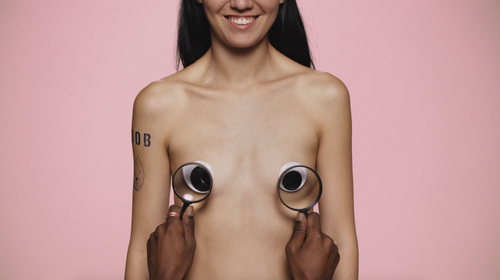
A note on terms
Everyone has breast tissue and people of all genders can get breast cancer. To be clear and consistent, we use the word ‘breasts’ in our health information, rather than boobs, pecs or chest. When we say breasts, we mean the tissue from your rib cage up to your collarbone and armpits, including your nipples. Whether you refer to your boobs, pecs, chest, breasts or something else, it’s important to get to know what’s normal for your body.
There’s no specific technique for checking your breasts, just do whatever feels comfortable for you. Here are a few tips for checking:
- Look AND feel.
- Check roughly once a month.
- Know what’s normal FOR YOU!
- Talk to your doctor if you notice something unusual for you.
Breast changes to be aware of
See a GP if you notice any of the following changes:
- Changes in skin texture, e.g. puckering or dimpling
- Swelling in the armpit or collarbone
- Lumps or thickening
- Constant, unusual pain in the breast or armpit
- Nipple discharge
- A sudden unusual change in size or shape
- Nipple inversion or changes in direction
- Rash or crusting of the nipple or surrounding area

How to check your breasts
A handy video by CoppaFeel! that covers the basics of breast awareness
Always see a GP if you are concerned.
Noticed an unusual change in your breasts? No need to panic. Our bodies change, and if you’ve noticed a change, it’s a good sign that you know your body! There are lots of reasons why you might have changes to your breasts. Most changes are natural and harmless. 9 out of 10 people who are referred to the breast clinic are NOT given a cancer diagnosis. However, if you are concerned about a change to your breasts, make an appointment with your doctor as soon as possible.

Boob check basics
In the shower, when you’re lying down in bed or in the mirror before you get dressed. However you want to check, CoppaFeel! have some handy pointers to help.
Reasons to check
CoppaFeel! exists to help everyone stand the best possible chance of surviving breast cancer, because if found early it is very treatable and survival rates are higher.
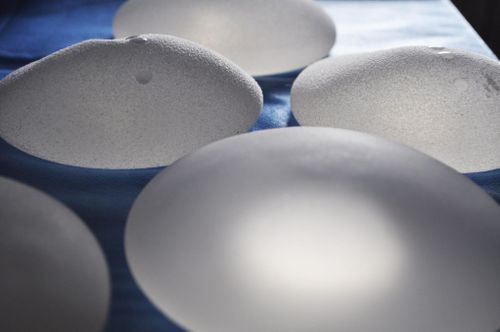
Checking with breast implants
The answer is that there is no special technique for checking your breasts if you have implants, you just need to get to know your normal and check regularly.
Videos
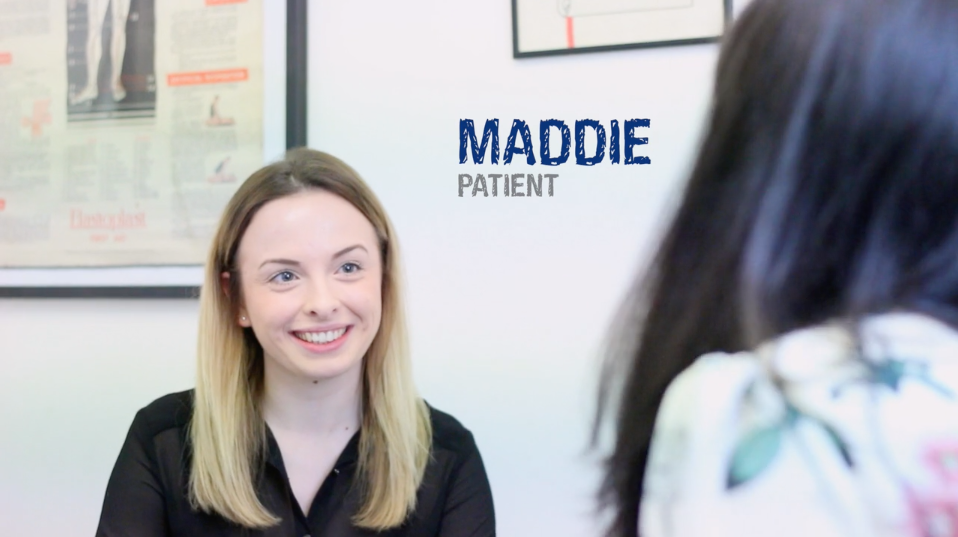
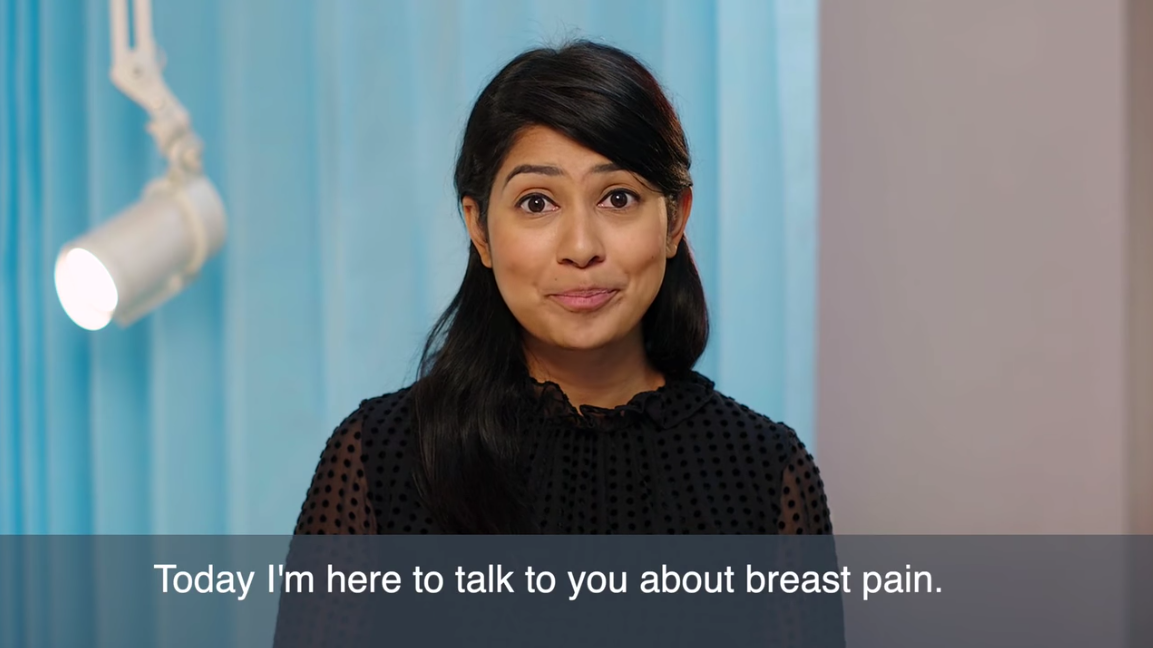
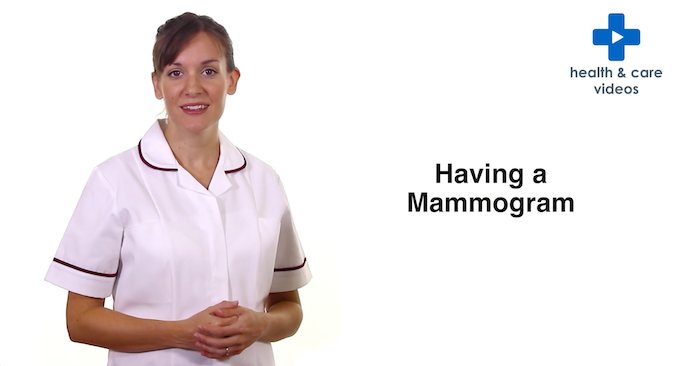
Take a look at the videos below to find out more.
This information was published by CoppaFeel! in February 2022. It is due for review in February 2025.
You can check in any way that feels comfortable for you.
Check regularly
We believe boob checking should be a monthly habit, so that you will notice any unusual changes quickly. By checking on a regular basis, you will also build confidence of knowing what is normal for you each month. Everyone has to start somewhere, so don’t worry if you’re not feeling confident straight away.
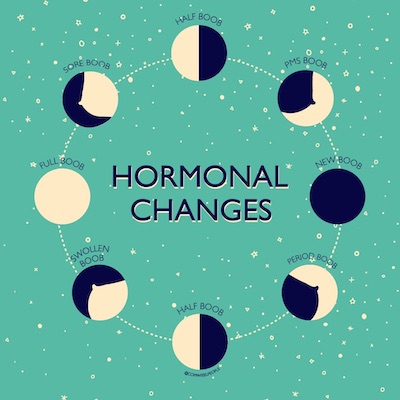
Know what’s normal for you
Being breast aware simply means knowing what is normal for your boobs or pecs. If you have periods, it’s likely you’ll find that your boobs will naturally change as part of your cycle each month. It is important to get to know the normal rhythm of your boobs so you will be able to detect anything unusual quickly.
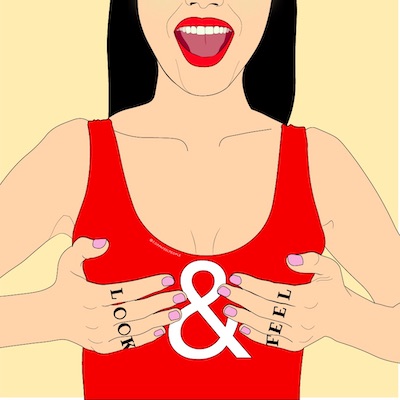
Look and feel
Many of the signs and symptoms of breast cancer are changes you would only notice by looking at the appearance of your boobs. We recommend coppin’ a feel and taking a look during your checks.
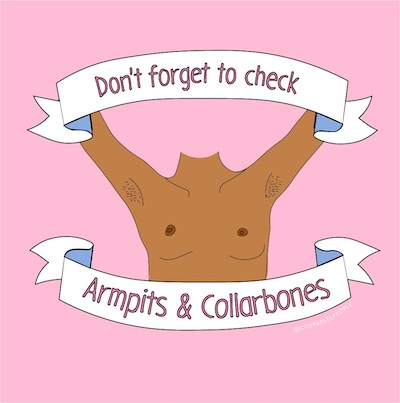
Remember your collarbone and armpits
Breast tissue isn’t only found in your boobs. It reaches all the way up to your collarbone and underneath your armpit so this whole area should be checked each time too. This is the same for both men and women.

If in doubt, get it checked out
Your doctor is the only person who can refer you for further examination so we encourage people to visit their doctor after a week of monitoring the symptom if it doesn’t go away.
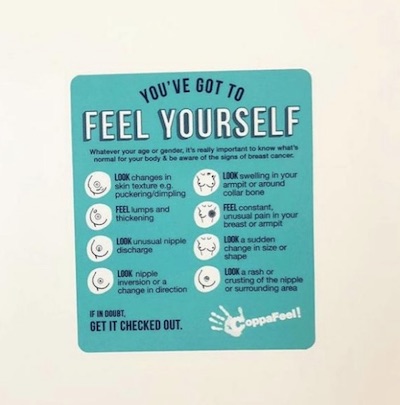
Get clued up on the signs of breast cancer
Breast cancer doesn’t just show up as a lump so getting to know all the symptoms will help you detect anything suspect quickly. Remember that some of these changes might occur naturally with your cycle and can be perfectly normal. Signs and symptoms.
This information was published by CoppaFeel! in February 2022. It is due for review in February 2025.
Content provided by CoppaFeel!
We’re here to help everyone stand the best possible chance of surviving breast cancer by educating you on the importance of getting to know your boobs and pecs!

Published on Wed, 01 Dec 2021 11:40:46 GMT
Modified on Tue, 22 Feb 2022 11:55:08 GMT
You are never too young to start
Although breast cancer is rare in younger people, it can still happen, as all genders have breast tissue, which develops at a young age.
Breast screening is great but limited
In the UK, only women will be invited to routine breast screening from the age of 47-50 years old, which takes place every 3 years. For that reason, checking your boobs is especially important for those who aren’t screened. But even if you have mammograms (the breast screening test) it is important to check in between your appointments.
It isn’t always hereditary
Less than 10% of breast cancers are caused by a family history. Most people who receive a diagnosis, won’t know why the disease has developed.
Everyone has breast tissue
Checking your chest is for guys, gals and non-binary pals as everyone has breast tissue. Around 55,000 women and almost 400 men are diagnosed with breast cancer in the UK every year.
In the UK…
- 1 in 7 women will be affected by breast cancer in their lifetime.
- Around 400 men are diagnosed every year.
- Around 2,300 women are diagnosed aged 39 or under.
- In females aged 25-49, breast cancer is the most common cancer, accounting for more than 4 in 10 (44%) of all cases in 2014-2016.
*Statistics from Cancer Research UK and Breast Cancer Now
Our research shows…
- Younger women aged 18-24 years old consistently check their boobs less than those 25-35 years old.
- Only 36% of women aged 18-35 years old check their boobs monthly.
- Only 54% of women would immediately visit their doctor upon discovering early signs and symptoms.
- Just over half of young women are confident to start checking their boobs.
But
- 78% believe it is important to raise awareness of breast cancer amongst young women.
- Women who are aware of CoppaFeel! are more likely to check their breasts and know the signs and symptoms compared with those who are not.
*Statistics from CoppaFeel! annual research December 2020.
This information was published by CoppaFeel! in February 2022. It is due for review in February 2025.
Content provided by CoppaFeel!
We’re here to help everyone stand the best possible chance of surviving breast cancer by educating you on the importance of getting to know your boobs and pecs!
Published on Fri, 26 Nov 2021 15:49:28 GMT
Modified on Fri, 04 Feb 2022 16:09:48 GMT
Who is invited?
Breast screening uses image scans to look for breast cancer. Breast screening could be by one of two scans:
- Mammogram
- Ultrasound
The national screening programme in the UK uses mammogram, a type of x-ray, to scan women aged 50 – 71. Women in that age group are invited to be scanned every 3 years. It is rare for men to have breast cancer, so they are not invited to be screened as part of a national screening programme.
Why don’t we screen women under 50?
Women with a high risk of breast cancer can be screened at any age. However, low-risk women under 50 are not invited to be screened as part of the national screening programme. This is because the risks of screening women under 50 would outweigh the benefits. X-ray exposes you to a tiny amount of radiation, and any exposure to radiation can very slightly increase your risk of cancer. Mammograms of young women are also more difficult to read, as their breast tissue is denser. Women under 50 would need more frequent scans, so they would have more exposure to radiation.
It is important to get to know your breasts and chest area whether you are screened or not. Make sure you know what is normal for you and your body. If you notice any unusual changes, make an appointment to see your GP, even if you have a scan appointment coming up.
Mammogram
A mammogram is an x-ray of the breast. When you go for a mammogram, a female staff member (mammographer) will be in the room with you. The mammographer will tell you to undress to the waist and stand in front of the mammogram machine. She will help to position you so she can take the best scan of your breast. You will have a scan of one breast first, and then the other breast. Some people find mammograms slightly uncomfortable, but it is over very quickly! You can still have a mammogram if you have breast implants, just let your mammographer know before your scan.
Ultrasound
If you are a woman under 50 and you are high risk, or if you are referred to the breast clinic, you will most likely have an ultrasound scan. Ultrasound is painless. It is a good scan for looking at young breast tissue. That’s because young breast tissue is denser than breast tissue in older people. You can learn more about dense breasts here. For the ultrasound, you will be asked to undress to the waist and sit or lie down on a couch. The doctor will put some clear gel on your breast and armpit, and then move the handheld scanner all over that area. Ultrasound is safe for women who are pregnant or breastfeeding. If you are pregnant or breastfeeding you can still be referred to the breast clinic for tests if you need to be.
This information was published by CoppaFeel! in February 2022. It is due for review in February 2025.
Content provided by CoppaFeel!
We’re here to help everyone stand the best possible chance of surviving breast cancer by educating you on the importance of getting to know your boobs and pecs!
Published on Thu, 02 Dec 2021 10:36:51 GMT
Modified on Fri, 04 Feb 2022 15:25:58 GMT
We often get asked how to check your breasts with breast implants. The answer is that there is no special technique for checking your breasts if you have implants, you just need to get to know your normal and check regularly.
If you have recently had implants, you will need to get used to your new normal. This is the case if you’ve had any surgery to your chest. It can take a while to get used to the changes and how your chest now looks and feels. You might have changes to sensitivity or new scar tissue, but the key is getting to know what’s normal for you, and to contact your doctor if you have any concerns.
Here’s our top tips for checking with implants:
- Look in the mirror and familiarise yourself with how your breasts look now.
- Feel all your breast tissue. Remember your breast tissue goes up to your collarbone and under your armpits.
- Try checking in different positions. For example, try checking while standing up and lying down to get to know your breasts in different positions.
- Take note of anything new after your surgery, such as scars or new firmness.
- Be patient. You will get used to your new normal, just keep checking once a month.
- Talk to your doctor if you notice anything unusual or a new change occurs
Risks
There are risks with all surgery, and there are risks with all implants (prosthesis). However, there is no evidence that breast implants increase your risk of breast cancer.
There is a rare form of cancer called Breast Implant Associated Lymphoma, which is linked to a very small number of breast implants. Breast Implant Associated Lymphoma is not breast cancer, it is a rare cancer of the immune system. These links have been found in about 1 in 24,000 cases. The data tells us that complications linked to breast implant surgeries are rare and not usually serious.
The vast majority of breast implant surgeries are safe. If you are thinking about having breast implants, you can talk to your GP. The NHS also has good advice here.
Related Conditions
Breast Implant Illness is a term sometimes used to describe lots of health conditions that may be linked to breast implants. Breast Implant Illness is not an official diagnosis, because there is currently a lack of evidence that these illnesses are caused by the implants. However, doctors know about Breast Implant Illness because people with implants tell them about symptoms and illnesses following their implant surgery. These symptoms include fatigue, chest pain and ‘brain fog’.
This information was published by CoppaFeel! in February 2022. It is due for review in February 2025.
Content provided by CoppaFeel!
We’re here to help everyone stand the best possible chance of surviving breast cancer by educating you on the importance of getting to know your boobs and pecs!
Published on Wed, 01 Dec 2021 12:15:01 GMT
Modified on Wed, 25 May 2022 15:39:59 GMT
Content provided by CoppaFeel!
We’re here to help everyone stand the best possible chance of surviving breast cancer by educating you on the importance of getting to know your boobs and pecs!
Published on Fri, 04 Feb 2022 16:22:55 GMT
Modified on Thu, 28 Jul 2022 14:47:51 GMT