
Smoking is one of the biggest causes of death and illness in the UK.
Every year around 78,000 people in the UK die from smoking, with many more living with debilitating smoking-related illnesses.
Smoking increases your risk of developing more than 50 serious health conditions.Some may be fatal, and others can cause irreversible long-term damage to your health.
You can become ill:
- If you smoke
- If people around you smoke (passive smoking)
Smoking health risks
Smoking causes around 7 out of every 10 cases of lung cancer.
It also causes cancer in many other parts of the body, including the:
- Mouth
- Throat
- Voice Box
- Bladder
- Bowel
- Oesophagus
- Cervix
- Kidney
- Liver
- Stomach
- Pancreas
Smoking damages your heart, lungs and your blood circulation, increasing your risk of developing conditions such as:
- Coronary heart disease
- Heart attack
- Stroke
- Peripheral vascular disease (damaged blood vessels)
- Cerebrovascular disease (damaged arteries that supply blood to your brain)
- COPD, which incorporates bronchitis and emphysema
- Pneumonia
Smoking can also worsen or prolong the symptoms of respiratory conditions such as asthma, or respiratory tract infections such as the common cold.
In men, smoking can cause impotence because it limits the blood supply to the penis. It can also reduce the fertility of both men and women.
Services to help you quit
Local stop smoking services are free, friendly and can massively boost your chances of quitting for good.

Steps you can take NOW to stop smoking
Practical, quick and simple steps you can take straight away to quit smoking.
What to do if you relapse after quitting
Many people who quit smoking relapse at some point. Don't be put off trying again.
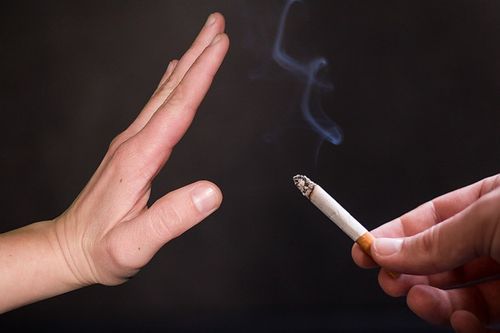
Handling cravings
If you can control your cravings for a cigarette, you'll significantly boost your chances of quitting
These services staffed by expert advisers provide a range of proven methods to help you quit. They’ll give you accurate information and advice, as well as professional support, during the first few months you stop smoking. They also make it easy and affordable for you to get stop smoking treatments, such as:
- Varenicline (Champix)
- Bupropion (Zyban)
- Nicotine replacement therapy, such as patches and gum
One-to-one and group stop smoking services
You’ll normally be offered a one-to-one appointment with an adviser, but many areas also offer group and drop-in services as well. Depending on where you live, the venue could be a local GP surgery, pharmacy, high-street shop, or even a mobile bus clinic.
Jennifer Percival, who trains stop smoking advisers, says that using both treatment and specialist support is proven to give you the best chance of stopping smoking.
“The majority of people who see an adviser will get through the first month after quitting without smoking a cigarette.
“Overall, you’re up to 4 times more likely to stop smoking for good if you use a combination of stop smoking treatment and receive support from an NHS Stop Smoking Service.” she says.
How to contact a stop smoking adviser
Your GP can refer you, or you can phone your local stop smoking service to make an appointment with an adviser.
In England
- Find stop smoking services in England
- Call the Smokefree National Helpline on 0300 123 1044
In Northern Ireland
- Find stop smoking services in NI
- Call a provider in the town or city where you live (telephone numbers can be found on the Want2Stop website)
In Wales
- Find stop smoking services in Wales
- Call the Help Me Quit Helpline on 0800 085 2219
In Scotland
- Find stop smoking services in Scotland
- Call the free Smokeline on 0800 84 84 84
What happens at the first stop smoking session?
At your first meeting with an adviser, you’ll talk about why you smoke and why you want to quit, as well as any attempts you’ve made to quit in the past. You’ll also be able to decide on a quit date.
You’ll be offered a breath test, which shows the level of carbon monoxide – a poisonous gas in cigarette smoke – in your body.
“You don’t need to be sure you want to quit or have a quit plan in mind before this meeting,” says Jennifer.
“You can use the time to talk your situation through with the adviser without making a commitment. If you do decide to quit, the adviser can help you form an action plan and set a quit date, usually in a week or so.”
Stop smoking aids
At your first session, you’ll also discuss NHS-endorsed stop smoking treatments available to help you. These are nicotine replacement products (including patches, gum, lozenges, inhalators and mouth and nasal sprays) and the stop smoking tablets Champix (varenicline) and Zyban (bupropion).
“No one is forced to use treatment,” says Jennifer, “but we’ll encourage it because the results are better. We can help you decide which type of treatment is right for you and how to use it.
“In some cases, we can directly supply you with the treatment before you leave, or we can arrange for you to receive a prescription or a voucher for it.
“In the case of nicotine replacement therapy, it often works out at least a third cheaper than buying it from a pharmacy.”
There’s evidence that e-cigarettes can help people stop smoking. E-cigarettes aren’t currently available as medicines so they can’t be supplied by stop smoking services or prescribed on the NHS but, if you want to use an e-cigarette to help you quit, you can still get advice and support from a stop smoking adviser to give you the best chance of success.
Read more about using e-cigarettes to stop smoking
Jennifer points out that NHS stop smoking advisers only provide evidence-based support. “We won’t suggest or recommend hypnosis or acupuncture as there’s not enough evidence they help you stop smoking.”
Content provided by NHS.uk
Find information and advice on health conditions, symptoms, healthy living, medicines and how to get help.

Published on Fri, 04 Mar 2022 13:54:14 GMT
Modified on Tue, 15 Mar 2022 14:53:31 GMT
Talk to your GP
Many people don’t realise that their GP can help them quit smoking. Your doctor can do a lot, such as enrolling you in a “stop smoking” clinic, and prescribing nicotine replacement therapy, such as patches and gum, or stop smoking medication such as Champix.
10 self-help tips to stop smoking
Join your local stop smoking service
Did you know that you’re up to 4 times more likely to quit successfully with the help of your local stop smoking service?
Services staffed by trained stop smoking advisers are available all over the country. You can join a local group that meets once a week, or have one-to-one support if you prefer. You usually go for a few weeks and work towards a quit date.
Find your nearest NHS Stop Smoking Service, or call the Smokefree National Helpline on 0300 123 1044 to speak to a trained adviser.
Find online support
For online support including apps, communities and motivational emails, visit Better Health.
Have an emergency phone number to hand
Keep an emergency number, perhaps for your local stop smoking service or the national helpline.
“We’re here on 0300 123 1044 from Monday to Friday 9am to 8pm, and Saturday and Sunday 11am to 4pm answering calls from people who are about to have a cigarette and want help not lighting up,” says Chris, one of the helpline advisers. “We can talk about why you want to smoke and how to deal with your cravings.”
Read more about how to cope with cravings
Consider using a nicotine-containing product
Cigarettes are addictive, and self-control alone might not be enough for you to stop entirely. Give yourself a better chance of success by using nicotine replacement therapy (NRT). This is available on prescription from your GP, from your local stop smoking service or from a pharmacist.
You could also consider trying e-cigarettes. While they’re not risk-free, they are much safer than cigarettes and can help people stop smoking.
Read more about using e-cigarettes to stop smoking
Find your nearest NHS stop smoking service, or call 0300 123 1044
Content provided by NHS.uk
Find information and advice on health conditions, symptoms, healthy living, medicines and how to get help.
Published on Fri, 04 Mar 2022 14:08:40 GMT
Modified on Tue, 15 Mar 2022 14:53:56 GMT
If you relapse after quitting, the key is to learn from what went wrong so you’re more likely to succeed next time.
If you’re tempted to start smoking again, call the free NHS Smokefree helpline on 0300 123 1044 to get support from a trained adviser.
When you quit smoking, it’s important to be positive and really believe that you’ll be successful. You shouldn’t expect to start smoking again. A slip-up shouldn’t mean that you’ll return to smoking the way you did before. It’s an opportunity to learn a bit about yourself and what will help you to be more successful in the future.
If you do relapse, don’t worry. It can take a few tries to quit smoking for good.
It can be helpful to commit yourself to the “not a single drag” rule. Promise to yourself and others that you’ll not even have a single drag on a cigarette. By sticking to this simple rule, you can guarantee that you won’t start smoking again.
Preventing slip-ups
Why is it that some people who have stopped return to smoking? The main reason is giving in to cravings. These are powerful urges to smoke, often triggered by stress, seeing other people smoking, getting drunk, or emotional events like arguments.
The best way to withstand cravings is a combination of stop smoking medicines and behavioural changes. It’s also important to stay away from people who smoke. Most people who relapse do so because they’re with other people who are smoking, and this is usually after having asked one of them for a cigarette.
Get practical advice on how to relieve cravings
Help to prevent relapse
The risk of relapse is highest in the first few weeks after stopping. But some people can relapse several months, or even years, after stopping smoking.
Avoiding a relapse is best, but if you do give in to temptation, don’t despair. Really think about what went wrong and plan how you’ll deal with a similar situation in the future.
If you have had a cigarette or two:
- Don’t give up – you can still avoid a full relapse. Commit to the “not a single drag” rule and get back on with it.
- Remind yourself why you want to quit. Then take control again.
- Get support – call the free NHS Smokefree helpline on 0300 123 1014 to speak to a trained adviser. Lines are open Monday to Friday, 9am to 8pm and Saturday and Sunday, 11am to 5pm.
- Make it hard to smoke – avoid places where you can easily ask someone for a cigarette. And don’t buy a packet.
- Stay strong – if you’re tempted to smoke again, force yourself to wait 2 hours. Then decide if you really need the cigarette.
- Keep taking any prescribed stop smoking medicine or using nicotine replacement therapy, unless you go back to regular smoking. It can help you get back on track.
If you have relapsed and are back to regular smoking:
- Don’t become despondent – set a new quit date, maybe in a week or so.
- Learn from your mistakes – what caused you to slip up? Think of ways you could have avoided smoking. Work on your coping skills so you’re prepared next time you’re in the same situation.
- Talk to your doctor or local stop smoking service if you need more help to cope with cravings in your next quit attempt.
- Stay positive – making mistakes or slipping up can be a useful experience if you’re prepared to learn from it. Remember, you’ll be stronger next time because you’ll know what to look out for.
More information
Read the answers to common questions about stopping smoking, including:
- Why should I stop smoking if I’m pregnant?
- Who can use nicotine replacement therapy?
- Where can I get help to stop smoking?
Content provided by NHS.uk
Find information and advice on health conditions, symptoms, healthy living, medicines and how to get help.
Published on Fri, 04 Mar 2022 14:12:15 GMT
Modified on Tue, 15 Mar 2022 14:54:10 GMT
The most effective way to tackle cravings is a combination of stop smoking medicines and behavioural changes.
Going cold turkey may be appealing and works for some, but research suggests that willpower alone isn’t the best method to stop smoking. In fact, only 3 in every 100 smokers manage to stop permanently this way.
Using nicotine replacement therapy (NRT) and other stop smoking medicines can double your chances of quitting successfully compared with willpower alone. This is because untreated cravings often result in lapses.
Read more about stop smoking treatments available on the NHS and privately.
Types of cravings
Cravings happen because your body misses its regular hits of nicotine.
There are 2 types of craving.
The steady and constant background craving for a cigarette decreases in intensity over several weeks after quitting.
Sudden bursts of an intense desire or urge to smoke are often triggered by a cue, such as having a few drinks, feeling very happy or sad, having an argument, feeling stressed, or even having a cup of coffee. These urges to smoke tend to get less frequent over time, but their intensity can remain strong even after many months of quitting.
Tackling Cravings
There are 3 tried and tested ways to tame cravings:
- Nicotine Replacement Therapy
- Prescription stop-smoking medicines
- Behavour changes
Nicotine replacement therapy
Nicotine replacement therapy (NRT) gives your body the nicotine it craves without the toxic chemicals that you get in cigarettes, so it doesn’t cause cancer. It helps you stop smoking without having unpleasant withdrawal symptoms.
NRT won’t give you the same “hit” or pleasure you would expect from a cigarette, but it does help reduce cravings.
NRT is available as gum, patches, lozenges, microtabs, inhalator, nasal spray, mouth spray and oral strips.
It’s important to use the right NRT product for your lifestyle. Some products, like the patch, release nicotine into your system slowly and steadily, so they’re ideal for relieving background cravings. Others, such as the nasal spray and mouth spray, release nicotine quickly in short bursts, so they’re better suited to sudden intense cravings. A good strategy is to use the nicotine patch to manage the steady and constant background cravings, and carry a fast-working product with you to deal with the sudden intense cravings.
Discuss the NRT products available over the counter with your pharmacist, or talk to your local NHS stop smoking adviser or GP about receiving NRT on prescription.
Stop smoking medicicnes
The prescription tablets Zyban (bupropion) and Champix (varenicline) are an alternative to NRT in helping you stop smoking. They don’t contain nicotine, but work on your brain to dampen cravings.
As they take a few days to work fully, you need to start these medicines for a week or two before you stop smoking. Ask your doctor or a local stop smoking adviser whether prescription medicines may help you.
Read more about prescription stop smoking medicines
Change your behaviour
NRT and stop smoking medicines can help curb cravings, but they can’t completely eradicate them. There are some additional things that can help.
Avoid triggers
For you, some events or times of the day may have a strong association with smoking: after food, with a coffee, after putting the kids to bed, when chatting to a friend, or having an alcoholic drink.
Try doing something different at these times. You don’t have to make this change forever, just until you have broken the association with smoking.
Stay strong
Expect your cravings to be at their worst in the first few weeks after quitting. The good news is that they’ll pass, and the quickest way to achieve this is to commit to the “not a single drag” rule.When you’re ready to stop for good, promise yourself “I won’t even have a single drag on a cigarette”.
If you feel like smoking, remember “not a single drag” to help the feeling pass.
Exercise
Physical activity may help reduce your nicotine cravings and relieve some withdrawal symptoms. It may also help you reduce stress and keep your weight down.
When you have the urge to smoke, do something active instead. Going to the gym or local swimming pool are good, as is a little gentle exercise like a short walk, or something useful like doing the housework or gardening.
Find out how to do more exercise
Be prepared
Expect cravings at special events like holidays, funerals or weddings.
You may have never experienced these before as a non-smoker, so you’ll associate them strongly with smoking. Have some fast-acting NRT with you just in case.
Get more self-help tips to stop smoking
Delay
When the urge to smoke strikes, remember that although it may be intense, it’ll be shortlived and will probably pass within a few minutes. Each time you resist a craving, you’re 1 step closer to stopping smoking.
Content provided by NHS.uk
Find information and advice on health conditions, symptoms, healthy living, medicines and how to get help.
Published on Fri, 04 Mar 2022 14:09:34 GMT
Modified on Tue, 15 Mar 2022 14:54:44 GMT
Content provided by NHS.uk
Find information and advice on health conditions, symptoms, healthy living, medicines and how to get help.
Published on Mon, 28 Feb 2022 16:58:44 GMT
Modified on Tue, 15 Mar 2022 14:53:00 GMT