

The key to a healthy diet is to eat the right amount of calories for how active you are so you balance the energy you consume with the energy you use.
It’s recommended that men have around 2,500 calories a day.
Women should have around 2,000 calories a day.
If you eat or drink more than your body needs, you’ll put on weight because the energy you do not use is stored as fat. If you eat and drink too little, you’ll lose weight.
You should also eat a wide range of foods to make sure you’re getting a balanced diet and your body is receiving all the nutrients it needs.
The Eatwell Guide
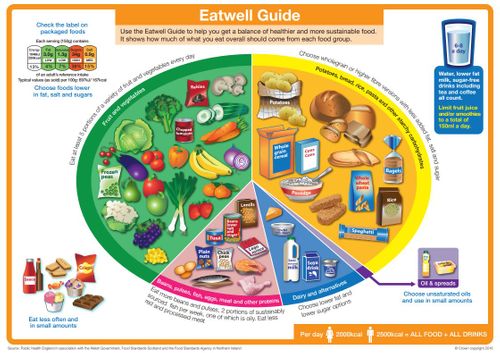
The Eatwell Guide shows how much of what we eat overall should come from each food group to achieve a healthy, balanced diet. You do not need to achieve this balance with every meal, but try to get the balance right over a day or even a week.
Eating a balanced diet
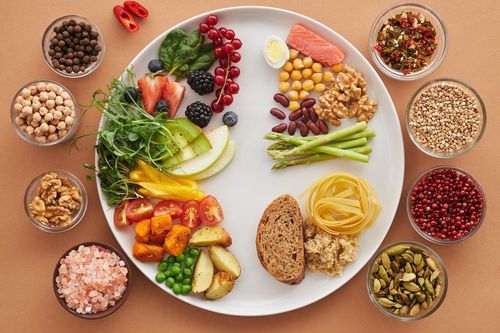
Eating a healthy, balanced diet is an important part of maintaining good health, and can help you feel your best. This means eating a wide variety of foods in the right proportions, and consuming the right amount of food and drink to achieve and maintain a healthy body weight.
Tips to eat well for less
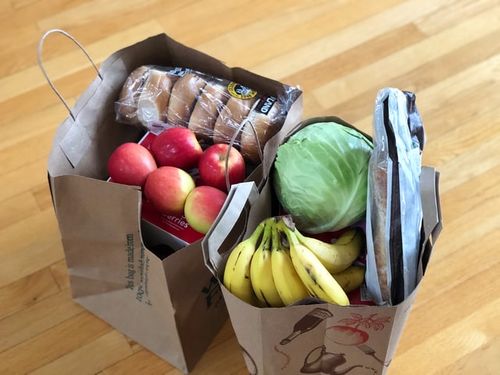
If cost is discouraging you from trying to make changes to your and your family's diet, read on: healthy eating does not have to cost more.


Healthy 100-calorie snack ideas
With these surprising 100-calorie snacks you can enjoy some of the nation's favourite treats without derailing your diet. Most of these low-calorie bites, from dietitian Azmina Govindji, require only 3 ingredients and take less than 5 minutes to prepare.
Support for a healthier lifestyle
Advice, tips and tools to help you make the best choices about your health and wellbeing.
Manage your weight
Being overweight can increase your risk of heart disease. Stick to a healthy, balanced diet low in fat and sugar, with plenty of fruit and vegetables, combined with regular physical activity.
Find out if you’re a healthy weight with the BMI calculator.
If you need to lose weight, you can use the NHS weight loss plan. It’s a free 12-week diet and exercise plan to help you lose weight and develop healthier habits.
Get a FREE personalized health score when you complete this 10 minute quiz.
More ways to kickstart your health
If you want to improve other aspects of your wellbeing, the NHS has many great free tools to support you:
Easy Meals app
Meal ideas, recipes, cooking tips.


Active 10 app
Track and build up your daily walks.
Drink Free Days app
For the days you do not want to drink alcohol.
Food Scanner app
Find out what’s really in your food and drink.
Couch to 5K
A running app for absolute beginners.
How does the Eatwell Guide work?
The Eatwell Guide divides the foods we eat and drink into 5 main food groups.
Try to choose a variety of different foods from each of the groups to help you get the wide range of nutrients your body needs to stay healthy.
Find out how food labels can help you choose between foods and pick those lower in calories, fat, saturated fat, sugar and salt.
Combination foods
Many foods, such as pizzas, casseroles, pasta dishes and sandwiches, are combinations of the food groups in the Eatwell Guide.
With these meals, check the ingredients and think about how these fit with the sections on the guide to help you achieve a balanced diet.
Eat at least 5 portions of a variety of fruit and vegetables a day
Most of us still are not eating enough fruit and vegetables. They should make up over a third of the food we eat each day.
Aim to eat at least 5 portions of a variety of fruit and veg each day. Choose from fresh, frozen, tinned, dried or juiced.
Remember that fruit juice and smoothies should be limited to no more than a combined total of 150ml a day.
Fruit and vegetables are a good source of vitamins, minerals and fibre.
Find out more about how to get your 5 A Day
Base meals on potatoes, bread, rice, pasta or other starchy carbohydrates
Starchy food should make up just over a third of the food we eat. Choose higher fibre wholegrain varieties, such as wholewheat pasta and brown rice, or simply leave skins on potatoes.
There are also higher fibre versions of white bread and pasta.
Starchy foods are a good source of energy and the main source of a range of nutrients in our diet.
Find out more about starchy foods
Have some dairy or dairy alternatives (such as soya drinks and yoghurts)
Milk, cheese, yoghurt and fromage frais are good sources of protein and some vitamins, and they’re also an important source of calcium, which helps keep our bones healthy.
Try to go for lower-fat and lower-sugar products where possible, like 1% fat milk, reduced-fat cheese or plain low-fat yoghurt.
Find out more about milk and dairy foods
Eat some beans, pulses, fish, eggs, meat and other protein
These foods are good sources of protein, vitamins and minerals. Pulses, such as beans, peas and lentils, are good alternatives to meat because they’re lower in fat and higher in fibre and protein, too.
Choose lean cuts of meat and mince, and eat less red and processed meat like bacon, ham and sausages.
Aim for at least 2 portions of fish every week, 1 of which should be oily, such as salmon or mackerel.
Find out about fish, eggs and meat.
Choose unsaturated oils and spreads, and eat in small amounts
Unsaturated fats are healthier fats and include vegetable, rapeseed, olive and sunflower oils.
Remember all types of fat are high in energy and should be eaten sparingly.
Find out more about the different types of fat in our diet
Eat foods high in fat, salt and sugar less often and in small amounts
These foods include chocolate, cakes, biscuits, sugary soft drinks, butter, ghee and ice cream.
They’re not needed in our diet, so should be eaten less often and in smaller amounts.
Get tips on cutting down on sugar
Drink plenty of fluids – the government recommends 6 to 8 cups or glasses a day
Water, lower-fat milks and lower-sugar or sugar-free drinks, including tea and coffee, all count.
Fruit juice and smoothies also count towards your fluid consumption, but they contain free sugars that can damage teeth, so limit these drinks to a combined total of 150ml a day.
Find out more about water, drinks and your health
Download the Eatwell Guide booklet
For more information, including details of which foods are included in the food groups, download GOV.UK’s The Eatwell Guide.
Content provided by NHS.uk
Find information and advice on health conditions, symptoms, healthy living, medicines and how to get help.

Published on Thu, 02 Dec 2021 09:37:15 GMT
Modified on Mon, 04 Apr 2022 11:48:13 GMT
Fruit and Vegetables
Fruit and vegetables are a good source of vitamins and minerals and fibre, and should make up just over a third of the food you eat each day.
It’s recommended that you eat at least 5 portions of a variety of fruit and vegetables every day. They can be fresh, frozen, canned, dried or juiced.
There’s evidence that people who eat at least 5 portions of fruit and vegetables a day have a lower risk of heart disease, stroke and some cancers.
Eating 5 portions is not as hard as it sounds.
A portion is:
- 80g of fresh, canned or frozen fruit and vegetables
- 30g of dried fruit – which should be kept to mealtimes
- 150ml glass of fruit juice or smoothie – but do not have more than 1 portion a day as these drinks are sugary and can damage teeth
Just 1 apple, banana, pear or similar-sized fruit is 1 portion each.
Starchy foods and carbohydrates
Starchy foods are our main source of carbohydrate and have an important role in a healthy diet.
Starchy foods are a good source of energy and the main source of a range of nutrients in our diet. As well as starch, they contain fibre, calcium, iron and B vitamins.
Some people think starchy foods are fattening, but gram for gram they contain fewer than half the calories of fat.
Wholegrain varieties of starchy foods and potatoes (particularly when eaten with their skin on) are good sources of fibre.
Milk and dairy foods (and alternatives)
Milk and dairy foods, such as cheese and yoghurt, are good sources of protein. They also contain calcium, which helps keep your bones healthy.
The total fat content of dairy products can vary a lot. To make healthier choices, look at the nutrition information on the label to check the amount of fat, including saturated fat, salt and sugar, in the dairy products you’re choosing.
Go for lower fat and lower sugar products where possible.
Choose semi-skimmed, 1% fat or skimmed milk, as well as lower fat hard cheeses or cottage cheese, and lower fat, lower sugar yoghurt.
Dairy alternatives, such as soya drinks, are also included in this food group.
When buying alternatives, choose unsweetened, calcium-fortified versions.
Beans, pulses, fish, eggs, meat and other proteins
These foods are all good sources of protein, which is essential for the body to grow and repair itself.
They’re also good sources of a range of vitamins and minerals.
Meat is a good source of protein, vitamins and minerals, including iron, zinc and B vitamins. It’s also one of the main sources of vitamin B12.
Choose lean cuts of meat and skinless poultry whenever possible to cut down on fat. Always cook meat thoroughly.
Try to eat less red and processed meat like bacon, ham and sausages.
Eggs and fish are also good sources of protein, and contain many vitamins and minerals. Oily fish is particularly rich in omega-3 fatty acids.
Aim to eat at least 2 portions of fish a week, including 1 portion of oily fish.
Pulses, including beans, peas and lentils, are naturally very low in fat and high in fibre, protein, vitamins and minerals.
Nuts are high in fibre, and unsalted nuts make a good snack. But they do still contain high levels of fat, so eat them in moderation.
Oils and spreads
Some fat in the diet is essential, but on average people in the UK eat too much saturated fat.
It’s important to get most of your fat from unsaturated oils and spreads.
Swapping to unsaturated fats can help lower cholesterol.
Remember that all types of fat are high in energy and should be eaten in small amounts.
Saturated fat, sugar and salt
Fat is a source of essential fatty acids, which the body cannot make itself.
Saturated fats are found in many foods, both sweet and savoury.
Most of them come from animal sources, including meat and dairy products, as well as some plant foods, such as palm oil and coconut oil.
As part of a healthy diet, you should try to cut down on foods and drinks that are high in saturated fats and trans fats and replace some of them with unsaturated fats.
Too much saturated fat can increase the amount of cholesterol in the blood, which increases your risk of developing heart disease.
Regularly consuming foods and drinks high in sugar increases your risk of obesity and tooth decay.
Eating too much salt can raise your blood pressure, which increases your risk of getting heart disease or having a stroke.
Adults and children aged 11 and over should eat no more than 6g of salt (about a teaspoonful) a day. Younger children should have even less.
Content provided by NHS.uk
Find information and advice on health conditions, symptoms, healthy living, medicines and how to get help.
Published on Mon, 17 Jan 2022 14:43:35 GMT
Modified on Mon, 11 Apr 2022 15:49:19 GMT
Write a shopping list
Draw up a weekly meal plan using up ingredients you already have and make a shopping list of any missing items.
Try not to shop when hungry. People who shop when hungry are more likely to spend more, especially on less healthy foods, such as high-fat and sugary snacks.
Waste nothing
The average family with children throws away almost £60 of good food every month. Be strict about buying only what you’ll actually eat.
Plan your meals so all the ingredients on your list get used. Freeze any unused food. Food storage bags and boxes will come in handy.
Eat leftovers for lunch
Cook extra portions for your evening meal so you can have the leftovers for lunch the next day.
Any leftovers can be frozen for another day. Eventually, you’ll have a freezer full of homemade ready meals on tap.
Buy frozen
Frozen fruit and vegetables are underrated. They come pre-chopped and ready to use, are just as good for you (try to avoid those with added salt, sugar or fat), and are often cheaper than fresh varieties.
Frozen vegetables are picked at the peak of freshness and then frozen to seal in their nutrients.
Try cheaper brands
You could save money by buying cheaper brands than you normally do.
There’s not always much difference between value and premium ranges. Give it a go and let your taste buds be the judge, not the shiny label.
Find out how food labels can help you make healthier choices
Eat more veg
Meat and fish are typically the most expensive food ingredients on a shopping list.
How about adding vegetables to meat dishes like casseroles to make your meals go further? Or try a few vegetarian meals during the week to keep costs down.
Make it fun by joining the thousands of people who regularly take part in meat-free Monday.
Cook with pulses
Pulses, such as beans, lentils and peas, are some of the cheapest foods on the supermarket shelf.
These pulses are low in calories and fat but packed with fibre, vitamins and minerals, and also count towards your 5 A Day.
Use them in dishes to replace some of the chicken or meat, such as a chilli con carne with kidney beans or a chicken curry with chickpeas.
Freeze leftover bread
Bread is one of the most wasted household foods. Reduce waste by freezing bread, preferably in portions (for convenience) and when it’s at its freshest (for taste).
Store bread in an airtight container (such as a freezer bag) to avoid freezer burn.
Know your kitchen
Know what’s in your kitchen store cupboard, fridge and freezer. You may find you have got enough ingredients to make a meal.
Plan your week’s meals to include ingredients you have already got in and avoid buying items you already have.
Check use-by dates to make sure you use up ingredients before they go off.
Buy cheaper cuts
If you’re prepared to take a little more time with your cooking, buying cheaper cuts of meat is a great way to save money.
Choosing a cheaper cut of meat, such as braising steak, shin or shoulder, does not mean missing out on a tasty meal.
Slow cooking gradually breaks down the fibres in cheaper cuts, giving great taste at a lower cost.
Look up cheap recipes
Cheap does not have to mean less tasty. There are plenty of websites offering recipes for cheap eats and leftover ingredients.
Check out Change4Life’s healthy recipes for some inspiration and easy meal ideas.
Eat smaller portions
Try eating smaller portions by saying no to a second helping or using smaller plates.
You’ll have more left over for lunch the next day and your waistline may benefit, too.
Try weighing or measuring out staples such as pasta and rice when cooking to stay in control of portion size and reduce waste.
Cook from scratch
Save money by cutting back on takeaways. Preparing and cooking your own meals is generally cheaper than buying a takeaway or a ready meal, and because it’s easier to control what goes into your dish, it can be healthier.
Buy chicken whole
The cheapest way to buy chicken is to buy a whole chicken. From a whole chicken, you’ll get 2 breasts, 2 thighs, drumsticks and wings, plus a carcass for making stock.
Consider using the deli counter for cheese and cured meats. You can get exact amounts, which is cheaper and less wasteful.
Compare pre-packed with loose
Fruit and vegetables sometimes cost more pre-packed than loose.
Check the price per weight (for example, £/kg). Stores know that consumers want to buy in bulk, so they mix it up: sometimes the packed produce is cheaper, sometimes it’s more expensive.
Also, pre-packed is not always the freshest and you may end up with more than you need.
Cut down on luxuries
If your regular shopping basket tends to include fizzy drinks, crisps, snack bars, biscuits and cakes, try trimming down on these non-essential items.
Many of these are high in sugar and fat, so you’ll be doing your waistline and your bottom line a favour. They can also contain a lot of salt.
Think about cheaper and healthier alternatives, such as sparkling water and fruit juice instead of cola, or fruit and plain yoghurt.
Beware of BOGOF offers
Special discounts, such as buy-one-get-one-free (BOGOF) deals, can offer good value, but be careful.
Only buy items you actually need and are likely to keep and use. Tinned or frozen fruit and veg, or rice and pasta, are good examples.
Markdowns on perishables at the end of the shopping day are another way to bag a saving.
But make sure the item gets used before the use-by date and does not go off sooner than expected.
Toddlers eat the same
If you have a toddler in tow, get them used to eating the same meals as you instead of relying on costly pre-prepared toddler food.
Simply blend or chop up their portion to suit their age and freeze extra child-sized portions for later.
Make sure not to add any salt to their portions, and be careful with spicy food.
Shop online
Search for supermarket price comparisons that let you select a basket of products and then choose the cheapest supplier. The price differences can be significant.
Unlike going to the shops yourself, you’ll know how much you have spent before going to the till, which can make it easier to stay within budget.
Shop during the ‘happy hour’
Most supermarkets discount fresh items towards the end of the day.
But with longer opening hours, it’s a case of finding out just the right time to grab those bargains.
If you time it right, the “reduced to clear shelves” can save you big money. Always check use-by dates.
Content provided by NHS.uk
Find information and advice on health conditions, symptoms, healthy living, medicines and how to get help.
Published on Mon, 17 Jan 2022 16:10:38 GMT
Modified on Tue, 10 May 2022 15:33:14 GMT
Breakfast ideas:
- Breakfast burritos –
Wholewheat soft tortillas are topped with tomato and pepper omelettes, then rolled up. Perfect for a tasty breakfast or wrap up for a packed lunch.
- Three bears breakfast recipe –
Adding fruit to porridge really livens it up – and contributes to your 5 A Day.
- Tomato Pancakes –
Savoury pancakes are the perfect breakfast treat. Excellent for a relaxed weekend!
- Blueberry and banana smoothie –
Make a delicious smoothie with fresh or frozen blueberries blended with bananas and semi-skimmed milk.
Lunch ideas:
- Cheats’ pizza calzone –
Warm wholewheat wraps hold a delicious Italian-style vegetable mixture, to give a lighter version of a folded pizza.
- No-pastry mini mushroom quiches –
Light mini quiches without the pastry, served with a crunchy green salad.
- Tuna and bean jackets –
Fill some jacket potatoes with this fresh, colourful, tasty mixture – ideal for lunch or a light meal.
- Sweet potato chips with simple salsa –
Perfect served with a side salad or as a snack to share. For a twist, try roasting pumpkin or butternut squash instead.
Dinner ideas:
- Chicken and vegetable parcels –
Wrap chicken breasts and finely sliced vegetables in their own little packages to steam to perfection.
- Good old fish ‘n’ chips –
Make your own healthier version of fish and chips at home!
- Pea poppin’ risotto –
A hearty classic packing a healthy veg punch.
- Meatballs ‘n’ sauce –
An easy way to round up a hearty meal for the family and include some of your 5 A Day.
More suggestions:
Eating Well
Healthy, delicious recipes, including quick dinner, easy lunch ideas, snacks, breakfast, soup and more, from the food and nutrition experts at EatingWell.
Change For Life
Get the family involved and make tasty meals from scratch.
Content provided by NHS.uk
Find information and advice on health conditions, symptoms, healthy living, medicines and how to get help.
Published on Thu, 02 Dec 2021 09:35:57 GMT
Modified on Mon, 04 Apr 2022 11:49:57 GMT
Cheese and tomato toastie (93kcal)
A slimmed-down but no less scrumptious version of an all-time British classic. Simply chop the tomato and spring onion, sprinkle them over a slice of crispbread, cover with grated cheese and place under a pre-heated grill for a couple of minutes.
- 1 wholegrain crispbread: 39kcal
- 15g grated 30%-less-fat mature cheese: 47kcal
- 40g tomato: 7kcal
- an optional sprinkling of chopped spring onion (calories nominal)
‘3-fruit’ fruit salad (102kcal)
Refreshing and easy to make, this “3-fruit” fruit salad, which includes store-cupboard-friendly tinned pineapple, provides 2.5 portions of your recommended 5 A Day.
- 50g seedless black grapes, cut in half: 30kcal
- 50g diced apple: 26kcal
- 100g chopped tinned pineapple in juice: 46kcal
Cheese and pickle canapés (100kcal)
Enjoy these party nibbles without breaking the calorie bank. Use a potato peeler to get melt-in-your-mouth, wafer-thin cheese slices, and top with gherkin slices and pickle.
- 3 water biscuits: 42kcal
- 15g 30%-less-fat mature cheddar: 46kcal
- 30g gherkin: 4kcal
- 6g (1tsp) pickle: 8kcal
Smoked salmon and cream cheese parcels (109kcal)
For a touch of sophistication, try these delicate smoked salmon parcels. To prepare, place 4 strips of salmon on an even surface and spread 5g of soft cheese mixed with some dill at one end of each strip. Starting from the cheese end, gently fold each strip into rolls.
- 48g smoked salmon, cut into 4 even strips: 68kcal
- 20g reduced-fat soft cheese (5g per parcel): 39kcal
- a squeeze of lemon juice: 2kcal
- optional sprinkling of fresh dill
Apple and peanut butter (96kcal)
Craving something crunchy and nutty? Fresh apple slices and peanut butter are the perfect combination to keep you going until your next main meal.
- 50g sliced apple: 26kcal
- 12g (1tsp) peanut butter: 70kcal
- optional sprinkling of cinnamon
Baked beans on toast (99kcal)
It’s perhaps the ultimate comfort food, and we believe you should still be able to enjoy it even if you’re watching your calories.
- a 22g slice of toasted wholegrain or wholemeal bread: 48kcal
- 60g baked beans: 51kcal
- optional sprinkling of chives
Homemade popcorn (89kcal)
The smell of freshly made popcorn is right up there with freshly baked bread. As a source of fibre, popcorn will keep you feeling full for longer, making it an ideal snack – plus, it’s really easy to make.
- 20g popping corn: 62kcal
- 3g (1tsp) of vegetable oil: 27kcal
- optional sprinkling of chilli powder and worcester sauce
Content provided by NHS.uk
Find information and advice on health conditions, symptoms, healthy living, medicines and how to get help.
Published on Mon, 17 Jan 2022 15:35:24 GMT
Modified on Tue, 10 May 2022 15:34:25 GMT
Lifestyle advice:
- Stop smoking – Local stop smoking services are free, friendly and can massively boost your chances of quitting for good.
- Alcohol support – Realising you have a problem with alcohol is the first big step to getting help.
Exercise help:

Local support:

Alexandra Rose
The Rose Vouchers for Fruit & Veg Project helps families on low incomes to buy fresh fruit and vegetables and supports them to give their children the healthiest possible start.
Live Your Life Well
Making small changes to your life can have a massive impact on the way you feel. During the Coronavirus (COVID-19) outbreak you may feel anxious, stressed or worried. There are things you can do to help you feel better.
Feeding Liverpool
Find a community Food Space near you
Local Foodbanks
Your local foodbank can provide at least three days’ emergency food and support to people in crisis.
To find out more about Feeding Liverpool and the ‘Good Food Plan,’ click here.
Eating Disorders:
Content provided by NHS.uk
Find information and advice on health conditions, symptoms, healthy living, medicines and how to get help.
Published on Fri, 03 Dec 2021 09:40:42 GMT
Modified on Mon, 04 Apr 2022 11:51:54 GMT
Content provided by NHS.uk
Find information and advice on health conditions, symptoms, healthy living, medicines and how to get help.
Published on Thu, 02 Dec 2021 09:32:51 GMT
Modified on Fri, 23 Jun 2023 10:15:15 GMT